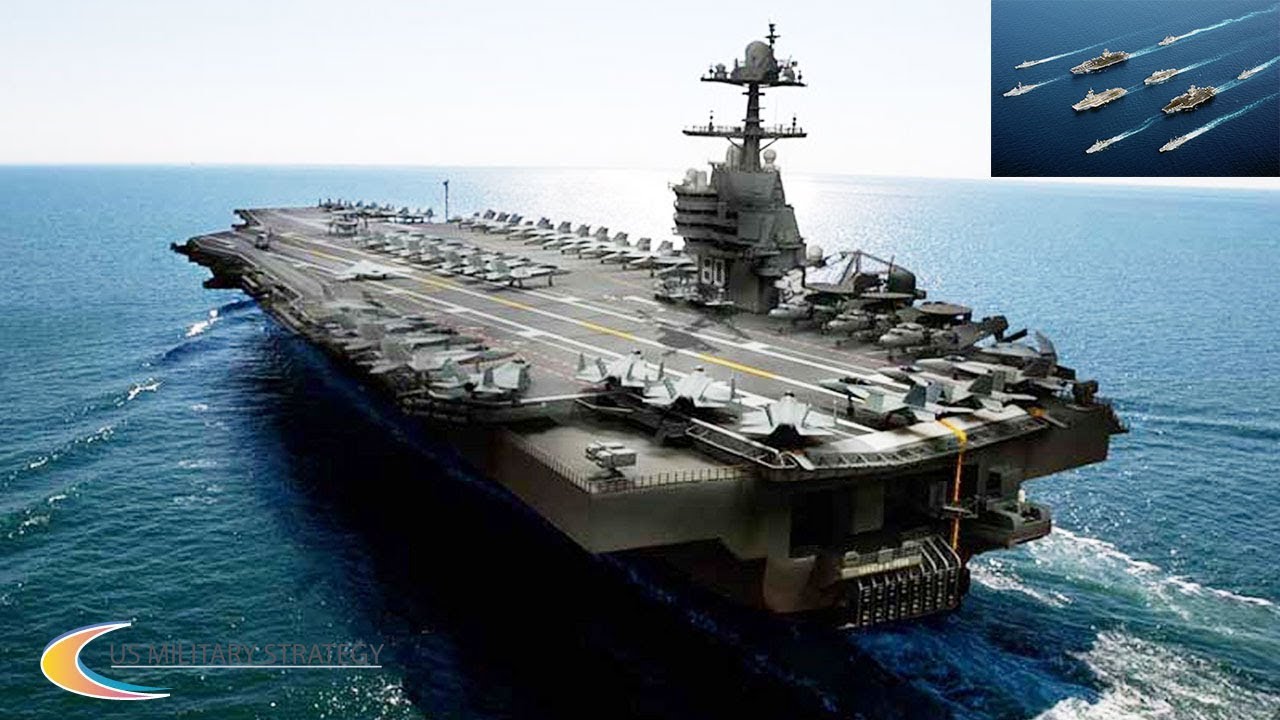
The Navy's USS Enterprise (CVN-80) Aircraft Carrier Changed Naval Warfare Forever
Автор: US Military Strategy
Загружено: 2020-02-15
Просмотров: 4954
Описание:
The Navy's USS Enterprise Aircraft Carrier Changed Naval Warfare Forever
The USS Enterprise, hull number CVN-65, was officially decommissioned back in 2017, which means it is no longer officially on the Navy’s register (the ship was actually transferred to inactive status in 2012, when preparations began to dispose of its nuclear reactor).
The Enterprise, or “Big E,” was commissioned on November 25, 1961. The ship’s subsequent twenty-five deployments read like a history of the Cold War and modern U.S. foreign policy: the Big E participated in the blockade of Cuba during the Cuban Missile Crisis, deployed six times to Vietnam, sailed to the Bay of Bengal during the 1971 India-Pakistan War, flew missions in Bosnia and supported the 2003 invasion of Iraq. Where there was trouble, the Enterprise was there.
But what was really remarkable about the Enterprise was that it marked the debut of nuclear-powered aircraft carriers, which are the backbone of U.S. naval power. Any warship is only as capable as the logistics that sustain it. Sail-powered vessels relied on the wind, which was a renewable resource but wasn’t always available when you needed to get moving. The switch to coal propulsion by World War I offered more reliable power, but coal was bulky and required large crews to shovel it into the engines, as well as nearby bases for replenishment. By World War II, ships ran on oil, but this still meant returning to port to refuel, or performing cumbersome refueling at sea from vulnerable tankers.
However, the nuclear reactors on U.S. aircraft carriers are designed to be refueled every twenty-five years. That doesn’t spare carriers from the need to dock for maintenance, and they still need ammunition, food and rest for the crew. But at least it gives nuclear-powered ships more time to stay at sea. Plus, nuclear fuel generates tremendous energy relative to the small amount of space it takes up. As the Heritage Foundation puts it, “the high density of nuclear power, i.e., the amount of volume required to store a given amount of energy, frees storage capacity for high value/high impact assets such as jet fuel, small craft, remote-operated and autonomous vehicles, and weapons. When compared to its conventional counterpart, a nuclear aircraft carrier can carry twice the amount of aircraft fuel, 30 percent more weapons, and 300,000 cubic feet of additional space (which would be taken up by air intakes and exhaust trunks in gas turbine-powered carriers).”
What’s fascinating is what happened to the U.S. Navy’s nuclear surface fleet. In addition to carriers, the Cold War Navy had nuclear-powered cruisers (the USS Long Beach, history’s first nuclear-powered surface ship, was commissioned just two months before the Enterprise). But no more: by the late 1990s, the Navy’s only nuclear-powered warships were aircraft carriers and submarines.
Source: https://bit.ly/2vCzUfQ
Повторяем попытку...
Доступные форматы для скачивания:
Скачать видео
-
Информация по загрузке: