Traditional Magic Play of India | Jadu khela
Автор: Soyeb Mallick
Загружено: 2026-03-12
Просмотров: 176
Описание:
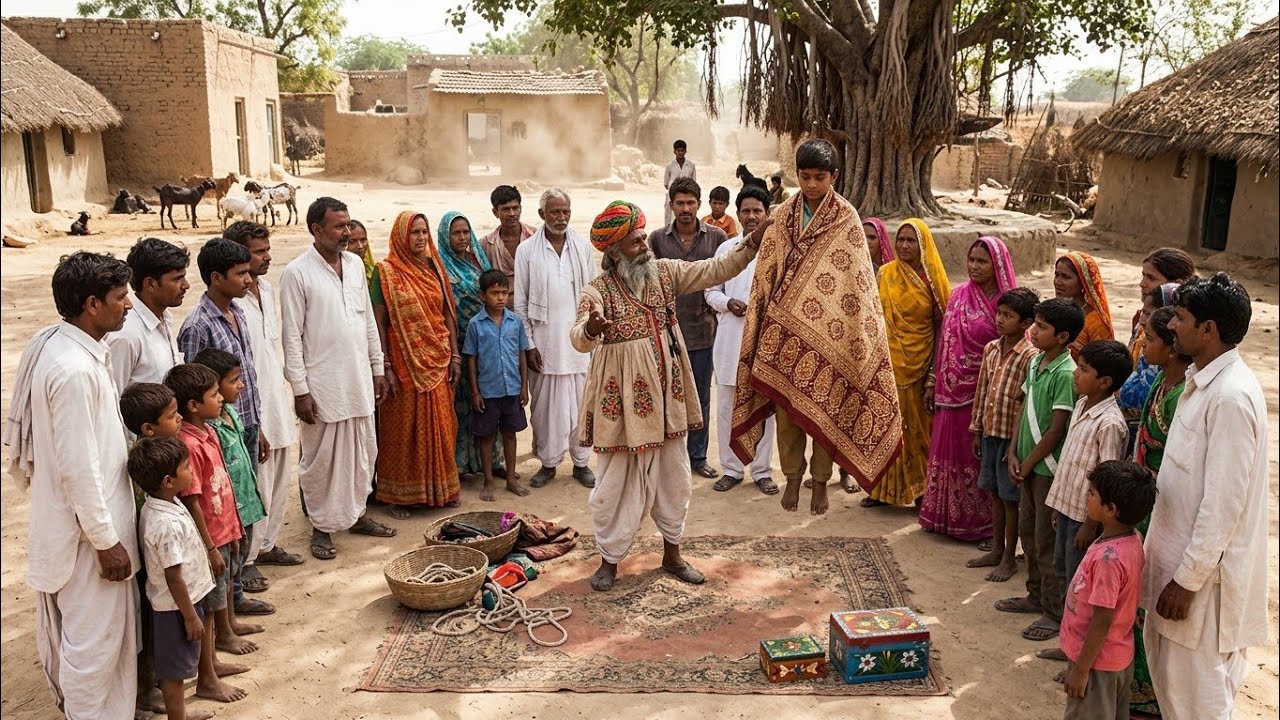
In the heart of India's rural landscape, where the dust of the village square meets the shade of ancient banyan trees, a centuries-old tradition continues to thrive: the Madari or the street magician. Unlike the high-tech illusions of modern stages, traditional Indian magic is raw, intimate, and deeply woven into the cultural fabric of village life.
The Setting and the Performer
The performance usually begins with the rhythmic beat of a dugdugi (a small hand drum) or the shrill note of a flute. A crowd quickly gathers—children sitting cross-legged at the front, elders leaning on wooden staffs at the back. The magician, often dressed in a weathered turban and a colorful, embroidered angarkha, creates a sacred circle in the dirt. This circle is not just a stage; it is a boundary between the mundane and the miraculous.
The Art of the "Jadoo"
The repertoire of a village magician relies heavily on sleight of hand, psychological misdirection, and simple organic materials. One of the most famous acts is the Great Indian Rope Trick, or the more common Indian Mango Trick, where a seed is planted in a pot of soil and, within minutes, appears to sprout and grow into a small leafy plant before the audience's eyes.
Other common feats include:
The Levitation: A young assistant appearing to float mid-air, supported only by a wooden stick.
The Basket Trick: An assistant climbing into a small wicker basket, only for the magician to pierce it with swords, seemingly without harm.
The Vanishing Coins: Making small coins or stones disappear and reappear in the ears or pockets of surprised spectators.
Cultural Significance
Beyond mere entertainment, these performances are a vital form of oral history and community bonding. The magician often punctuates his tricks with witty banter, folk tales, and moral lessons. These performers usually travel from village to village, surviving on the small contributions of the crowd—perhaps a few grains of rice or a handful of coins ranging from ₹10 to ₹50 ($0.12 to $0.60).
Today, this art form faces the challenge of digital entertainment, yet it remains a resilient symbol of India's "Indrajal" (the net of Indra/magic). It serves as a reminder that wonder does not require expensive technology; sometimes, all it takes is a clever pair of hands and the willingness of a crowd to believe in the impossible.
Повторяем попытку...
Доступные форматы для скачивания:
Скачать видео
-
Информация по загрузке:



![Уральские Пельмени | [НОВЫЙ 2025] Хельга | Комедийная группа №1 в России](https://imager.clipsaver.ru/SRaUkTHDwlg/max.jpg)