Better Than Broccoli, Asparagus And Orange Combined. Grows For 20 Years. Yet Few Americans Know It.
Автор: Ancestral Yields
Загружено: 2025-12-20
Просмотров: 56594
Описание:
Illegal to Pick in UK, 2.5x More Vitamin C Than Oranges: The "Forbidden Asparagus" Thomas Jefferson Grew
There is a vegetable so valuable that in its native United Kingdom, picking it from the wild is a crime punishable by law. In the 19th century, it was the ultimate luxury crop, served at the Royal Pavilion. In America, Thomas Jefferson cultivated it with pride at Monticello. Yet, while it remains legal to grow in the US, it has been completely erased from the modern supermarket.
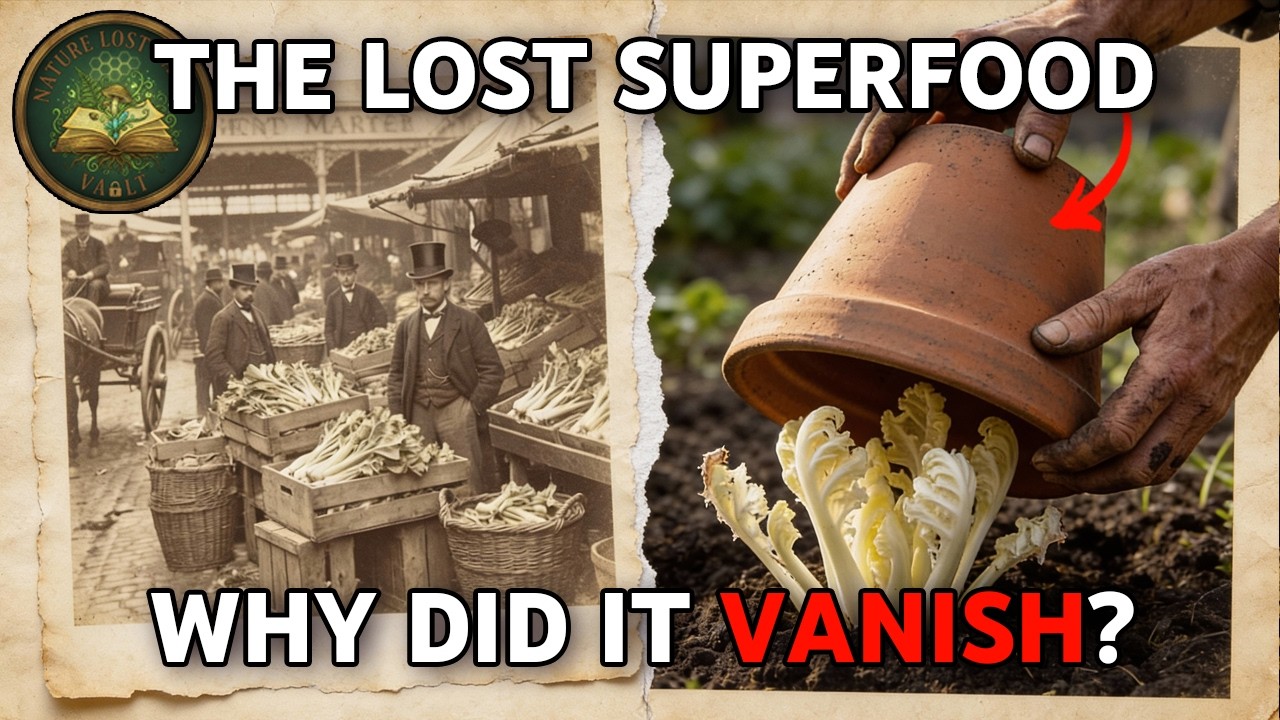
This is the story of Sea Kale (Crambe maritima), the forbidden vegetable of the coast that was loved to death by the Victorians and abandoned by modern industry because it refused to be automated.
🔬 THE SCIENCE:
Analysis reveals that Sea Kale is a nutritional powerhouse compared to modern commercial crops. While the orange is marketed as the gold standard for Vitamin C (approx. 53mg/100g), Sea Kale shoots contain 130mg per 100g—nearly 2.5x more Vitamin C.
As a halophyte (salt-tolerant plant), Sea Kale produces potent defense compounds to survive coastal stress. It is rich in glucosinolates, specifically glucoraphanin. When chewed, this converts to sulforaphane, a compound extensively studied for its anti-cancer properties. Sea Kale packs a defensive punch often exceeding 100mg of glucosinolates per 100g, roughly double the concentration found in standard commercial broccoli (50-60mg).
Historical records confirm its elite status. Thomas Jefferson’s Garden Book (1809) details his planting and blanching of Sea Kale at Monticello. In Britain, the demand was so high during the Regency era that poachers decimated wild populations, stripping beaches bare to sell roots in London markets. This led to its eventual protection under the Wildlife and Countryside Act of 1981, making it illegal to harvest wild crowns in the UK, though it remains a rare heirloom treasure in American gardens.
💰 THE SUPPRESSION:
Sea Kale didn't disappear because it tastes bad—it has a complex, sweet flavor blending hazelnut, cream, and asparagus. It disappeared because of "The Cold Chain" and labor costs.
To achieve its signature sweetness, Sea Kale must be "forced" or blanched (covered from light) in early spring. Victorians used individual terracotta pots for every plant. Modern industrial farming relies on automation; you cannot mechanically harvest a field covered in thousands of clay pots.
Furthermore, the sugars in Sea Kale are volatile. Once cut, they rapidly convert to starch, meaning it cannot survive the two-week trucking distribution system used by modern grocery stores. We traded a nutrient-dense, perennial superfood for asparagus simply because asparagus can be grown in open fields and holds up better in plastic packaging.
📚 SOURCES:
Leclerc, J., & Peron, J. Y. (1989). Mineral, Sugar and Vitamin Contents of Sea Kale (Crambe maritima L.). Acta Horticulturae.
Jefferson, T. (1809). Garden Book. Thomas Jefferson's Monticello.
Traka, M., & Mithen, R. (2009). Glucosinolates, isothiocyanates and human health. Phytochemistry Reviews.
Verkerk, R., et al. (2009). Glucosinolates in Brassica vegetables. Molecular Nutrition & Food Research.
USDA National Nutrient Database. Oranges, raw.
Wildlife and Countryside Act 1981 (c. 69). legislation.gov.uk.
#AncestralYields #SeaKale #FoodHistory #Permaculture #ThomasJefferson #HeirloomVegetables #ForbiddenFood #GardenRebellion #Superfoods #FoodSovereignty Nature Lost Vault
Повторяем попытку...

Доступные форматы для скачивания:
Скачать видео
-
Информация по загрузке: