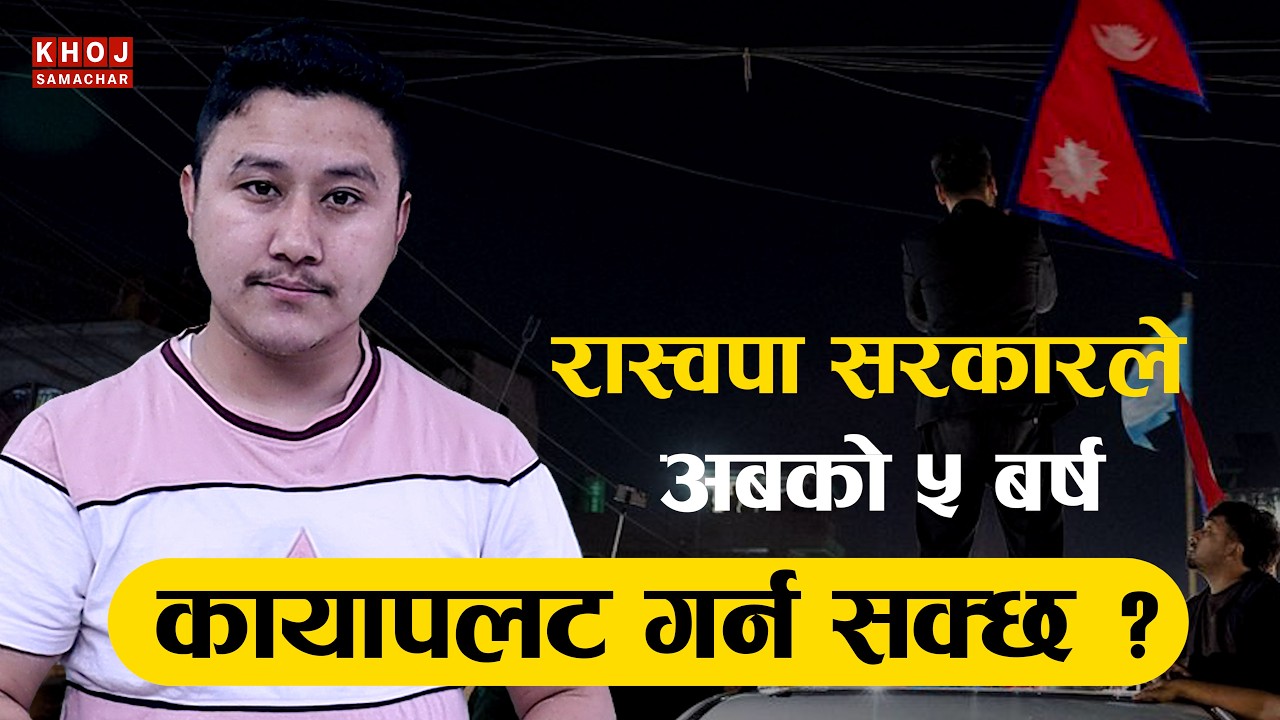
RSP Majority Government in Nepal: What It Can Do in 5 Years & What It Cannot
Автор: Khoj Samachar
Загружено: 2026-03-12
Просмотров: 28554
Описание:
The 2026 election has created a major shift in Nepal’s political landscape, with the Rastriya Swatantra Party (RSP) emerging as the dominant political force in the House of Representatives. With a majority government, many people are asking an important question: what can the RSP majority government actually achieve in the next five years, and what are the limitations under Nepal’s current constitutional system?
In this video, we break down the real power of a majority government in Nepal and explain what reforms and policies can realistically be implemented within the current parliamentary framework.
Under Nepal’s constitution, certain structural changes such as introducing a directly elected executive system, abolishing provinces, or making major constitutional amendments require a two-thirds majority in both the House of Representatives and the National Assembly. However, a majority government still holds significant authority to implement major reforms, improve governance, and bring administrative transformation.
This video explores the key areas where a majority government led by the Rastriya Swatantra Party could make meaningful changes during the next five years.
One of the biggest challenges facing Nepal is corruption. Corruption exists across multiple levels of governance, from local administrations to high political offices. A strong government with political will can strengthen anti-corruption institutions, enforce existing laws, and ensure accountability across the state system.
Another important area is institutional reform. Independent institutions such as the Commission for the Investigation of Abuse of Authority (CIAA), the Revenue Investigation Department, and law enforcement agencies can be strengthened to function independently without political pressure. Institutional independence is a crucial factor in building public trust and ensuring rule of law.
Judicial reform is another major area of discussion. Over the years, public confidence in the judiciary has faced criticism and controversy. A government committed to good governance can introduce transparency, strengthen legal accountability mechanisms, and improve the functioning of the judicial system.
Infrastructure development is also a key priority. Across Nepal, many infrastructure projects including roads and public works have been delayed for years due to contractor inefficiencies and governance challenges. A majority government can enforce stricter project monitoring, hold contractors accountable, and accelerate infrastructure completion across the country.
Economic development and employment creation are equally important. Reviving closed industries, encouraging investment, promoting entrepreneurship, and expanding industrial production can help generate employment opportunities for young people in Nepal.
Administrative modernization and digital transformation are also essential for improving public service delivery. Many public services in Nepal still require citizens to travel long distances to government offices for basic administrative tasks such as recommendations, citizenship services, or passport renewals. Digital governance and e-government services could significantly reduce bureaucracy and make government services more efficient and accessible.
Land management and property transparency is another area where reform is possible. Investigating illegal land ownership, recovering misused government land, and implementing transparent land administration policies can strengthen public confidence in the state.
Additionally, public sector accountability can be strengthened by ensuring that elected representatives and government officials are held responsible for misconduct or corruption. Transparent governance, institutional accountability, and strong leadership are key elements in achieving long-term political reform.
Overall, while a majority government cannot immediately change certain constitutional structures, it still possesses significant authority to transform governance, strengthen institutions, fight corruption, improve infrastructure, modernize administration, and drive economic development.
The next five years could therefore become a crucial period in shaping Nepal’s political future. Ultimately, the success of any government depends not only on political power but also on leadership, commitment to reform, and the ability to deliver results for the people.
Watch this full analysis to understand what the RSP majority government can realistically achieve in Nepal over the next five years and what limitations remain within the current political system.
Повторяем попытку...
Доступные форматы для скачивания:
Скачать видео
-
Информация по загрузке: