A2 GERMAN CHAPTER 14D
Автор: German Life Unlocked🔓 – Learn & Live in Germany
Загружено: 2026-01-27
Просмотров: 2
Описание:
Key Concepts Discussed:
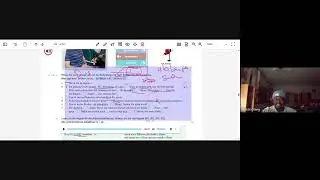
Giving Advice (Subjunctive II/Konjunktiv II): The subjunctive form, particularly with modal verbs like sollen (as sollten or zen), is used for recommendations and advice, rather than orders.
For advice, the Konjunktiv II form of sollen is sollten (or zen).
The subjunctive form is necessary when giving advice to avoid sounding like you are giving an order. For example, a doctor will recommend ("Du solltest...") rather than order ("Du sollst...").
Hypothetical Situations: The Konjunktiv II is used for hypothetical sentences or unreal situations, often introduced by the phrase "If I were you" (Wenn ich du wäre or Wäre ich an deiner Stelle).
The phrase "If I were you" (Wenn ich du wäre) necessitates the use of the Konjunktiv II in the following clause.
The verb sein (to be) requires the nominative case for both the subject and the object because they are the same entity, so the correct form is Wäre ich du (literally, "Were I you") and not Wäre ich dich.
Vocabulary and Phrases:
Kündigen means "to quit" (a job) or "to fire".
Stelle can mean "position" or "job position".
Selbstständig (self-employed) is contrasted with the process of becoming self-employed (sich selbstständig machen).
Sich streiten means "to fight" or "to argue".
Führerschein means "driver's license".
Pflicht means "obligation" or "mandate".
Sentence Structure/Grammar:
Conjunctions like dass ("that") push the verb to the end of the clause.
When mentioning a company's name for employment, the preposition bei ("by" or "with") is used (e.g., Ich arbeite bei BMW), but for a physical place, in ("in") is used (e.g., Ich arbeite in diesem Büro).
The German preposition anstatt ("instead of") is a genitive preposition.
For the verb bitten (to ask for), the correct structure for asking for something is bitten um.
When translating "I am practicing for the exams," German directly uses the accusative object without a preposition (e.g., Ich übe die Prüfungen), unlike English "for".
The speaker also translates and practices German sentences for giving advice with the participants, such as:
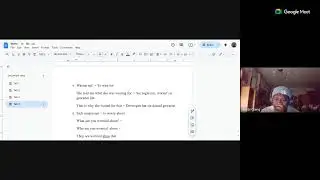
"In your place, I would talk to my boss".
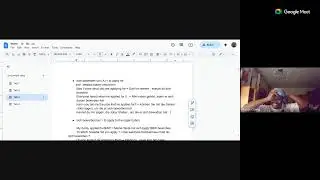
"You could ask your friend for help".
"If I were you, I would save more money".
"You could take the bus instead of a taxi".
"If I were you, I would practice more for the exams".
"You could write an email to your teacher".
The lesson emphasizes that the Konjunktiv II is important for the B1 exams, especially when discussing plans or giving opinions to a partner without forcing them.
On this channel, I teach practical and engaging German lessons for anyone who wants to learn the language. From A1 basics to more advanced topics, my goal is to make learning German easy and fun. I share tips, grammar breakdowns, vocabulary videos, and cultural insights to help you on your language journey.
New LIVE VIDEOS DURING THE WEEK
#GermanLessons #LearnGerman #A1German #GermanForBeginners #DeutschLernen #GermanLanguage
Повторяем попытку...

Доступные форматы для скачивания:
Скачать видео
-
Информация по загрузке: