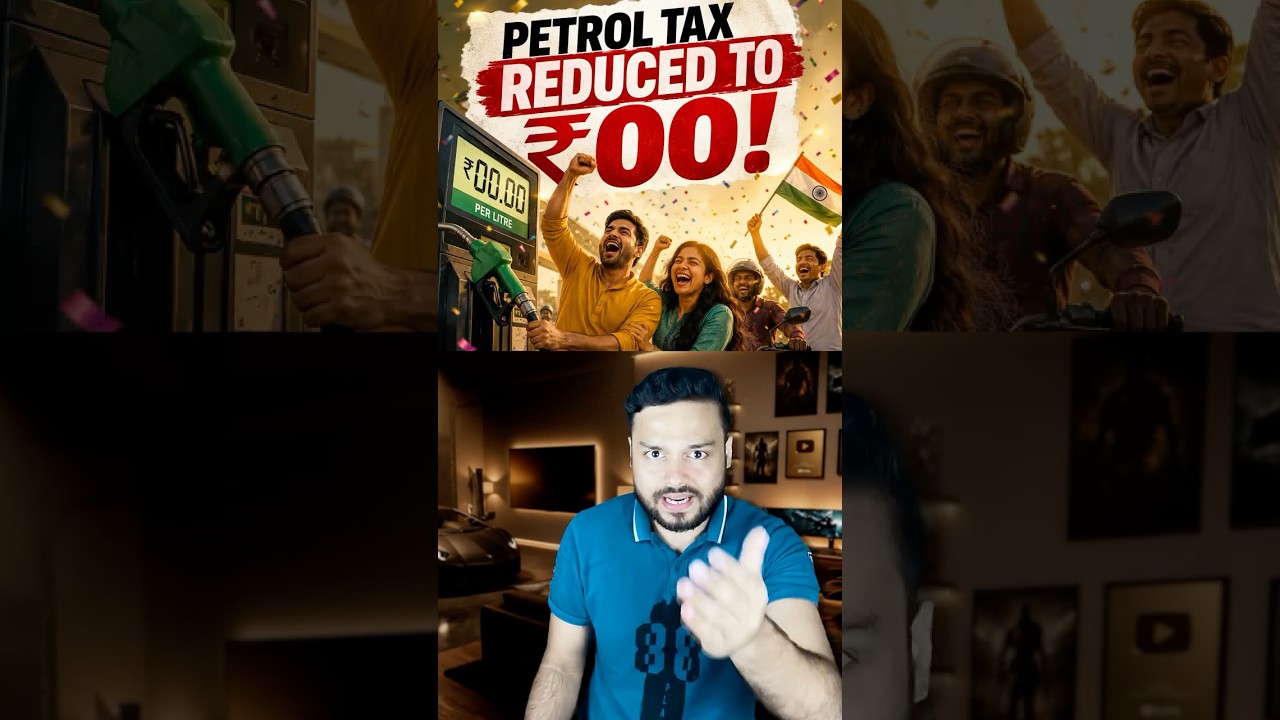
₹00 Petrol Tax! Big WIN For Indians! Latest Petrol Fuel Tax - Indians Want More Discount
Автор: FactTechz
Загружено: 2026-06-12
Просмотров: 1214835
Описание:
Centre Announces Zero Excise Duty on E22 and Higher Ethanol-Blended Petrol, Sparks Consumer Debate
New Delhi: The Indian government has announced a major policy shift by exempting higher ethanol-blended petrol grades from central excise duty, paving the way for fuels such as E22, E25, E27 and E30 to enter the market with greater fiscal support. The move is being seen as the next phase of India's biofuel strategy following the nationwide rollout of E20 petrol.
Under the new notification issued by the Ministry of Finance, petrol containing between 22% and 30% ethanol will attract nil central excise duty. The exemption applies to E22, E25, E27 and E30 fuel blends and follows the recent adoption of Bureau of Indian Standards (BIS) specifications for these fuels. Officials say the measure is intended to encourage the production and use of higher ethanol blends, reduce crude oil imports and strengthen India's energy security.
The decision comes just days after India launched E85 fuel for flex-fuel vehicles and signalled its intention to move beyond the current E20 standard. Government officials argue that higher ethanol usage can reduce dependence on imported oil, support domestic agriculture and lower carbon emissions from the transport sector.
However, the announcement has generated mixed reactions among consumers. While supporters welcomed the tax exemption as a step toward cleaner fuels, many motorists questioned whether the benefits would actually reach consumers through lower fuel prices. Social media users pointed out that despite years of ethanol blending under the E20 programme, petrol prices did not witness a clearly visible reduction for ordinary consumers.
The debate intensified after reports noted that retail petrol and diesel prices remained unchanged immediately after the excise-duty exemption was announced. Critics argued that if the government is providing tax relief for higher ethanol blends, consumers should eventually see a corresponding reduction in fuel costs. Others questioned whether the savings would instead remain within the broader fuel pricing system.
Industry experts have cautioned that the excise exemption does not automatically guarantee cheaper fuel at the pump. Fuel prices depend on multiple factors, including crude oil prices, state taxes, dealer commissions and ethanol procurement costs. Some analysts also noted that the exemption is partly intended to create a regulatory framework for higher-blend fuels rather than provide an immediate consumer subsidy.
The announcement has also revived a broader public discussion about India's biofuel strategy. Supporters view higher ethanol blending as essential for reducing the country's oil import bill and strengthening energy independence. Critics, however, argue that the long-term success of the policy will depend on whether consumers perceive tangible benefits in the form of lower fuel costs, improved energy security or environmental gains.
As India prepares for a future beyond E20 petrol, the introduction of zero excise duty on E22 and higher blends marks one of the most significant developments in the country's fuel policy. Whether the measure translates into lower prices for motorists or remains primarily an incentive for fuel producers and distributors is likely to remain a key point of public debate in the months ahead.
Subscribe to FactTechz
Повторяем попытку...
Доступные форматы для скачивания:
Скачать видео
-
Информация по загрузке: