RIC#72/🛕🕉️📿മഹാമാഘം എങ്ങനെ മാമാങ്കമായി -ഐതിഹ്യവും ചരിത്രവും / The Kumbh Mela at Thirunavaya
Автор: RICH INDIAN CULTURE
Загружено: 2026-01-30
Просмотров: 662
Описание:
Kerala’s “Kumbh Mela" will be celebrated with great splendor from January 18 to February 3 in Thirunavaya. This festival, popularly known as “Mamankam,” is considered Kerala’s version of the Kumbh Mela.
According to legend, the first sacrificial rite (yajna) for the welfare of the world was performed by Parashurama on the banks of the Bharathapuzha at Thirunavaya, in a place called Tapasunur, now known as Thavunur. All the gods are said to have attended this yajna, which was conducted under Brahma’s direction as per Parashurama’s instructions. The sacrificial month of Magha, when the seven sacred rivers converge in the Bharathapuzha (known as Dakshina Ganga), is considered especially auspicious.
The yajna is believed to be repeated every twelve years, giving rise to the Mahamagh Mahotsavam. After the first yajna performed by Brahma, the deity Brihaspati (the guru of the gods) became the first chairman of the festival. Over time, when divine kings ruled the land, the position of chairman was handed over to the Perumals (local rulers), and Brihaspati withdrew. Every twelve years, this cultural festival was held on the banks of the Nila River, showcasing all forms of Kerala’s art, various martial demonstrations, scholarly discourses, and scientific discussions. It also evolved into a major commercial fair of South India.
All the kings of Kerala would gather at the Thirunavaya Mahamagh Mahotsavam, presenting the accounts of their twelve‑year reign before their patron deity. The festival also served as a platform for astrologers to predict upcoming climatic changes and advise on agriculture and lifestyle, and to appoint the next Perumal (ruler) for the next twelve years.
However, after the last Perumal, Cheraman Perumal, left the world from the Thiruvanchikulam Shiva temple with Sundaramurti Nayanar, the festival lost its royal patron. The Kochi‑based Perumbadappu Swaroopam then took over the chairmanship and appointed Valluvanadu’s king, Valluvakkonathiri, as its representative. Later, Samutiri (the Zamorin) seized the chairmanship from Valluvakkonathiri, leading to a period of rivalry between the two royal houses. The “Mamankam” that followed, marked by bloodshed, ended about 250 years ago.
In recent years, inspired by divine intervention, efforts have been made to revive this cultural festival. During the last Prayagraj Kumbh Mela, Swami Anandavan Bharati Maharaj, a senior monk of the Junagadh Akhada, was appointed as the Mahamandaleshwar (chief) for South India. Recognizing the need to revive the ancient Mahamagh Mahotsavam held at Thirunavaya, he decided to organize the event on a grand scale, calling it “Kerala’s Kumbh Mela.”
The current Mahamagh Mahotsavam is presented as a call to defend Sanatan (eternal) culture against growing challenges. It begins with prayers for the souls of the countless warriors who died in the Mamankam battles, seeking their liberation. Sacred lamps from the four Ambika temples established by Parashurama for the protection of Kerala will be brought to the festival venue.
The Bharathapuzha, known as Dakshina Ganga, originates from Thirumurti Hills near Udumalpet in Tamil Nadu. The hills are associated with the sage Atri and his wife Anasuya; the Trimurti (Brahma, Vishnu, Shiva) are said to have appeared there, giving the place its name. It is also the birthplace of Dattatreya, the deity of the Junagadh Akhada.
A chariot procession (rathayatra) will start from Thirumurti Hills on January 19, travel through Udumalpet, Pellachi, Etta Madu, Coimbatore, and other places, and enter Kerala at Palakkad, Thrissur, Shoranur, and Ottapalam before reaching Thirunavaya on January 22. On the same day, the “Dharmadhvaja Arohanam” (hoisting of the sacred flag) will take place at Thirunavaya.
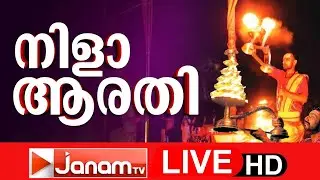
Every day of the festival, the beautiful “Nila Arathi” (worship of the Nila River) will be performed on the banks of the Bharathapuzha. This year, members of all royal families of Kerala, as well as monks from every Kerala math (monastic institution) and from Tamil Nadu, Karnataka, Andhra Pradesh, and Maharashtra, will participate. Followers of all Hindu traditions will conduct their respective rituals and offer prayers.
Special days observed during the festival include Mouni Amavasya, Vasant Panchami, Rathasapthami, Ganesh Jayanti, Shashthi, Bhishmashtami, and Magha Purnima. Bathing in the Bharathapuzha during the Magha month, especially on these sacred days, is considered highly meritorious, as is bathing together with saintly persons.
The Mahamagh Mahotsavam at Thirunavaya, hailed as Kerala’s Kumbh Mela, invites everyone to partake in its spiritual and cultural grandeur.
Повторяем попытку...

Доступные форматы для скачивания:
Скачать видео
-
Информация по загрузке:




![GOSPODARKA WOJENNA ROSJI - CZY PUTIN JUŻ PRODUKUJE CZOŁGI ZAMIAST LODÓWEK [BOJKE]](https://image.4k-video.ru/id-video/g2t5npoRfBA)