The Most Dangerous House in 1930s Italy Was Quietly Human
Автор: Space Shape Scale
Загружено: 2026-01-31
Просмотров: 267
Описание:
Love stories of radical design?
Subscribe to the channel and join us as we uncover the icons of architecture:
/ @spaceshapescale
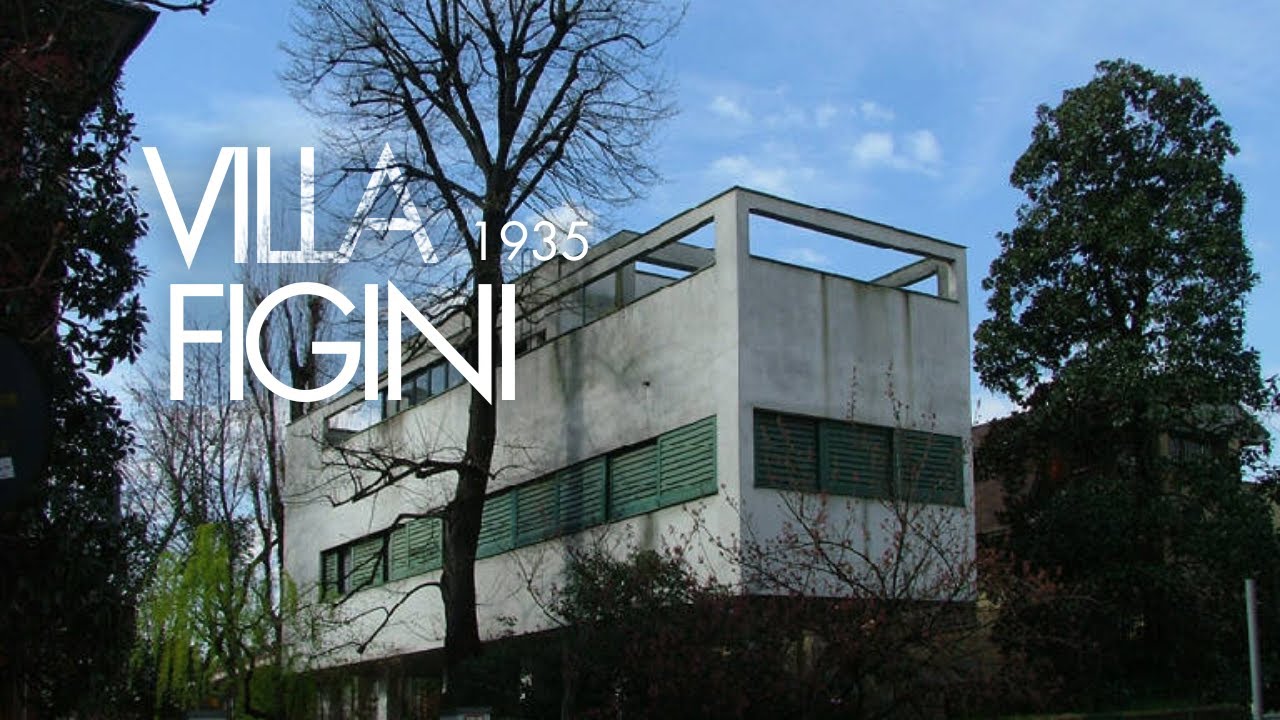
Villa Figini (1935), Milan
Luigi Figini and the Quiet Discipline of Italian Rationalism
Travel to mid-1930s Milan and discover a modern villa that did not seek to impress through grandeur or symbolism, but through precision, clarity, and ethical restraint. Villa Figini, designed in 1935 by Luigi Figini, stands as one of the most refined domestic expressions of Italian Rationalism—a house conceived not as an image, but as a system for living.
In a decade when architecture in Italy was increasingly absorbed into the public language of power, spectacle, and ideological display, Villa Figini represents a quieter, more radical position. Rather than monumental form or rhetorical gesture, Figini pursued order, proportion, and necessity. This was modern architecture not as propaganda, but as method—an attempt to reorganize everyday life through reason without surrendering to authoritarian expression.
Milan vs Rome: Two Visions of Modern Italy
To understand Villa Figini, it must be placed within its cultural geography. In the 1930s, Milan and Rome represented two divergent architectural paths. Rome gravitated toward monumental classicism and symbolic mass, while Milan cultivated a disciplined, industrial modernism rooted in production, design culture, and intellectual rigor. Villa Figini belongs firmly to the Milanese tradition, where architecture was understood as an ethical practice rather than a theatrical one.
Figini, a key member of Gruppo 7, believed that modern architecture should emerge from rational principles: clarity of plan, honesty of construction, and restraint in form. For him, domestic architecture was not a stage for ideology, but a laboratory for modern life.
A House as a System
Villa Figini is organized with almost surgical precision. The plan is clear, legible, and efficient, separating functions without hierarchy or excess. Circulation is direct. Spaces are calibrated rather than dramatized. The villa does not overwhelm the inhabitant—it guides them.
Orthogonal volumes define the exterior, while carefully measured openings regulate light and perception. Windows are placed for rhythm and necessity, not for spectacle. Light becomes an instrument, shaping daily routines and spatial awareness. The architecture avoids ornament entirely, allowing proportion, alignment, and material logic to carry meaning.
This is modernism without romance—and without cruelty.
Control Without Force
One of the most compelling aspects of Villa Figini is the tension it embodies: discipline without domination. In an era when clarity and order were often co-opted by authoritarian ideology, Figini demonstrates that rational architecture could still be humane. The villa raises a subtle but enduring question: when does clarity become coercion—and when can discipline serve life rather than power?
Materials are used honestly and without bravado. Reinforced concrete, modern construction techniques, and rational detailing appear not as technological spectacle, but as quiet infrastructure. The house does not announce its modernity; it practices it.
Figini’s work sits at a crossroads between European rationalism and a uniquely Italian ethical modernism.
Architects Timeline :
Frank Lloyd Wright (1867) — Prairie School / Organic Architecture
Charles Rennie Mackintosh (1868) — Arts & Crafts / Early Modern Abstraction
Peter Behrens (1868) — Industrial Modernism
Adolf Loos (1870) — Anti-Ornament / Raumplan
Auguste Perret (1874) — Reinforced Concrete Rationalism
Walter Gropius (1883) — Bauhaus / Functionalism
Erik Gunnar Asplund (1885) — Nordic Humanism
Ludwig Mies van der Rohe (1886) — Spatial Reduction / Universal Space
Le Corbusier (1887) — Architecture as System
Luigi Figini (1903) — Italian Rationalism / Ethical Domestic Modernism
Villa Figini reminds us that modern architecture was never a single ideology. It contained multiple paths: some monumental, some human; some coercive, some quietly liberating. In today’s world where clarity, efficiency, and control are once again dominant values this house feels unexpectedly contemporary.
It suggests that architecture can be precise without being oppressive, rational without being dehumanizing, and modern without spectacle.
#VillaFigini #LuigiFigini #ItalianRationalism #MilanArchitecture
#ModernArchitecture #RationalArchitecture #Gruppo7
#DomesticModernism #ArchitecturalTheory #DesignHistory
#20thCenturyArchitecture #MinimalArchitecture
#ArchitectureAnalysis #SpaceShapeAndScale
Villa Figini 1935, Luigi Figini architecture, Italian Rationalism Milan, Gruppo 7 architecture, modern villas Italy, rationalist domestic architecture, Milan modernism 1930s, ethical modern architecture, architecture and ideology, minimalist modern houses, Italian modernist villas, Space Shape and Scale
Повторяем попытку...
Доступные форматы для скачивания:
Скачать видео
-
Информация по загрузке:


