Commercial Fishing Safety Requirements - 2021 Virtual Boat Show Series
Автор: Survival At Sea
Загружено: 2021-03-21
Просмотров: 1555
Описание:
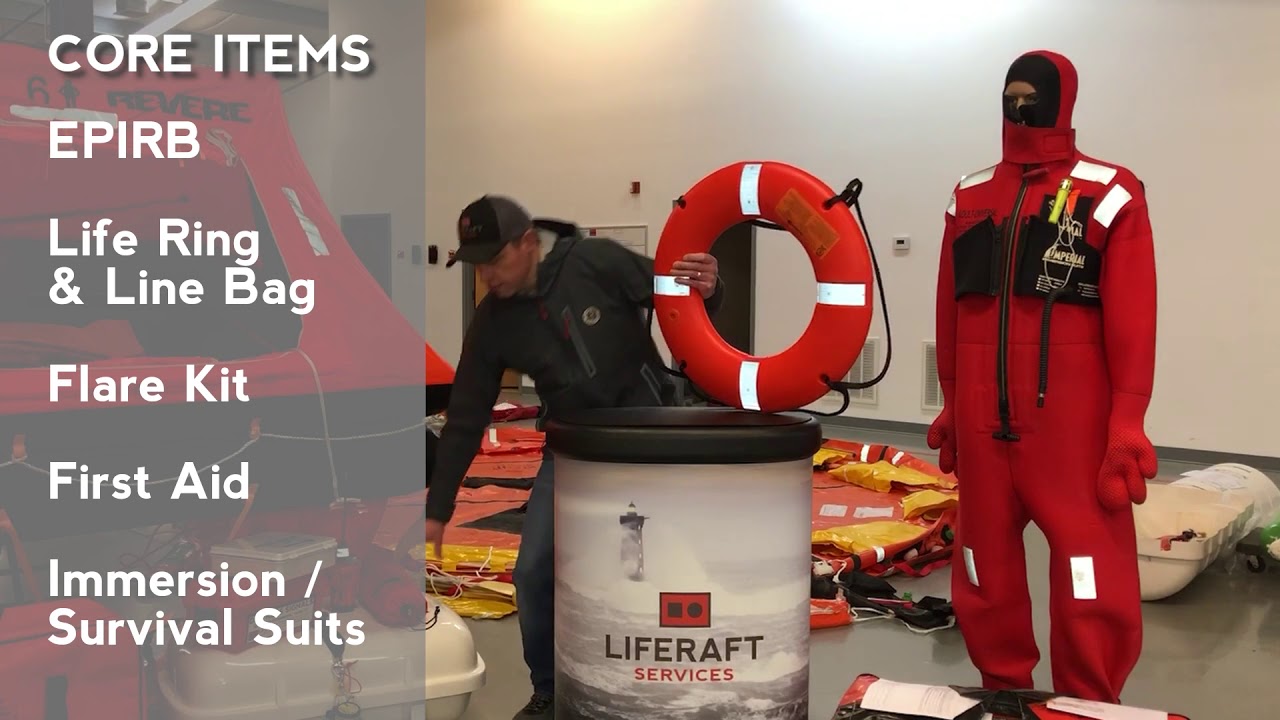
In this video we'll break down the core items required to meet USCG commercial fishing vessel safety requirements, like life rafts, EPIRBs, and survival suits.
There are a lot of different types of commercial vessels and commercial fishing vessels and the rules and regulations can be really confusing. Luckily, this is one of our areas of expertise and we help outfit hundreds of commercial vessels with new liferafts and safety gear every year.
Always check with your local USCG vessel safety examiner to get the final word on what you will need for your exact vessel and situation. There are a ton of variables like length of boat, registration type, number of crew, distance from shore, and so on, that make it impossible for us to explain all of the little variances in this video. Please contact us directly for more help choosing the exact equipment for your boat, and ALWAYS fall back to the Coast Guard for the final approval on your specific boat.
The first big question is whether your boat is state registered or federally documented. The rules are a little more strict for documented boats so let's start there.
There are three main types of commercial liferafts, and the different types are legal out to different distances from shore. Here's how it works on a documented boat:
1. An IBA (or Inflatable Buoyant Apparatus) is the most basic type of commercial raft. It doesn't have a canopy and it's got really basic equipment like a repair kit, a flashlight, and a foot pump. An IBA will get you out to 12 miles from shore on a documented boat. These are available in either a valise or hard container.
2. A Coastal life raft is next in line, which has the same basic equipment as an IBA, but it has a canopy on top to protect you from the elements. The canopy is a thin single layer of material and the floor is also a single layer without any insulation. A coastal raft is legal out to 20 miles on a documented boat. These are also available in either a valise or hard container.
3. Next up are the USCG/SOLAS liferafts which are made to go further offshore. These are available with either SOLAS 'A' equipment or SOLAS 'B' equipment. The raft itself is exactly the same between the two configurations, but the equipment that's packed inside is a little different. The raft itself is similar to the coastal version, but will have a double-layered canopy and insulated floor. SOLAS rafts are not available in a valise, and must be packed in a hard container and mounted to the boat to float free if the boat sinks.
a. A SOLAS 'B' pack raft is legal out to 50 miles on a documented boat and has much more equipment than a coastal raft, including SOLAS grade signaling flares, first aid kit, fishing kit, rainwater bags, and anti-seasick pills.
b. A SOLAS 'A' raft will have twice the number of flares as a SOLAS 'B' plus it will have full food and water rations.
Eventually all boats will need to follow those same guidelines regardless of whether they are state registered or federally documented, but for now the requirements for state registered boats are a lot more lenient. In fact, a state registered boat can use an IBA to go as far from shore as they want as long as they don't enter international waters. That doesn't mean you can't use one of the better rafts if you're state registered, it just means that you aren't required to.
So now that we figured out which liferaft you need, it's time to take a look at the rest of the safety equipment that 's required on a commercial fishing vessel.
1. Life ring - You will need to have an orange life ring with reflective tape and at least 60' of line attached.
2. Commercial flare kit - You'll need a 3-50 mile commercial flare kit if you're fishing between 3 and 50 miles from shore. If you're going beyond 50 miles you will need the over 50 mile kit.
3. Life jackets or immersion suits - If you're only fishing in "warm water" as designated by the USCG, you will need Commercial Type I life jackets for everyone onboard with an approved light and whistle attached. If you are ever operating in "cold water" then you need to have a USCG approved immersion (or survival) suit with an approved light and whistle attached for everyone onboard.
4. EPIRB - If your boat is under 36 feet you are required to carry at least a category II EPIRB onboard. If you're boat is 36' or larger you need to carry a category I EPIRB which is in a white housing that get's mounted outside with a hydrostatic release. If you're thirsty for more information on EPIRBs, check out our last video all about emergency beacons.
5. First aid kit - Depending on how far from shore you will be fishing you may be required to carry an approved first aid kit like this Lifeboat First Aid Kit.
Those are the core items that most boats will be required to carry, but there could be some other things depending on your exact situation.
Повторяем попытку...
Доступные форматы для скачивания:
Скачать видео
-
Информация по загрузке: