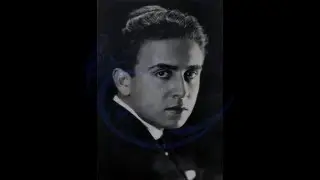
George Cziffra plays Schumann Faschingsschwank aus Wien Op.26
Автор: wittekjmusic
Загружено: 2013-01-17
Просмотров: 79150
Описание:
Very Rare Video - George Cziffra preformed *9. Schumann Faschingsschwank aus Wien Op.26 live in Hungary 1983 03.17. *Georges Cziffra (originally Cziffra György) (Hungarian pronunciation) Born in Budapest Hungary November 5 on 1921 -- January 15, 1994) was a Hungarian virtuoso pianist. He became a French citizen in 1968. Georges Cziffra is most known for his recordings of Franz Liszt's virtuoso works. He also recorded many of Frédéric Chopin's compositions and those of Robert Schumann (his account of Carnaval de Vienne was admired by Alfred Cortot). Cziffra is also well known for his technically demanding transcriptions of several orchestral works for the piano -- among them, one of Nikolai Rimsky-Korsakov's Flight of the Bumblebee, written in interlocking octaves. He is considered to be one of the greatest technicians on piano of the 20th century.
*Gyorgy Cziffra born in Hungary, Budapest on November 5, 1921, and died: January 15, 1994 - Morsang-sur-Orge (Senlis), France. The noted Hungarian-born French pianist, Georges [originally György] Cziffra, was a son of Hungarian Romas (his father, György Cziffra Sr., was a cimbalom player and played in cabaret halls and restaurants in Paris in the 1910's). He became noted at the age of 5, improvising on popular tunes in bars and circuses. His teachers at the Franz Liszt Academy of Music in Budapest included Ernő Dohnányi. His education was interrupted by World War II, when he served in the Hungarian army. After the war he continued his studies at the Franz Liszt Academy with Ferenczi, but was once more distracted from music when he was arrested in 1950 for his rebellious political views, and was held under forced labour. He was released from jail in 1953, but was again endangered by the abortive Hungarian revolt in 1956. In 1956, convinced that he could have no peace under Communist rule, on the eve of the Hungarian insurrection and after a stunning account of Béla Bartók's second piano concerto (EMI References), György Cziffra escaped with his wife (Soleilka - of Egyptian origin) and son to Vienna where his recital at the Brahmsaal caused a sensation. News of this event reached The New Yorker. His Paris debut the following year caused a furore - his London debut at the Royal Festival Hall in Franz Liszt's first concerto and Hungarian Fantasy similarly. His meteoric career continued with concerts throughout Europe and debuts at the Ravinia Festival (Grieg and F. Liszt concertos with Carl Schuricht) and Carnegie Hall New York with Thomas Schippers. He always performed with a large leather wristband, as a memento of his years in labour. In 1968 he became a naturalised French citizen. In 1973 he founded the St.-Frambourg Royal Chapel Foundation in Senlis, France to assist young musicians and artists. He died in Senlis, 72 years old, from a heart attack resulting from series of complications from lung cancer. György Cziffra was best known for his interpretations of works of the Romantic repertoire. He is most known for his brilliant and extravagant recordings of Franz Liszt's virtuoso works. He also recorded many of Frédéric Chopin's compositions and those of Robert Schumann (his account of Carnaval de Vienne admired by Alfred Cortot) Cziffra also made a famous transcription of Nikolai Rimsky-Korsakov's Flight of the Bumblebee, written in interlocking octaves. Many of his recordings are controversial, claimed by some to be showy and unmusical. Others regard these reactions as professional jealousy. In any case there is generally little doubt that Cziffra had a remarkable virtuoso technique and was a master at improvisation. He published Des canons et des fleurs (Paris, 1977). György Cziffra's son, György Cziffra, Jr., was a professional conductor and participated in several concerts and recordings with his father. However, his promising career was cut short due to his death by burning accident in 1981 - said to have been accompanied by a suicide note - an event that sparked a progressively diminishing morale in Cziffra, Sr. Cziffra never again performed or recorded with an orchestra, and some critics have commented that the severe emotional blow had an impact on his playing quality as well. While many thought that his pianism deteriorated after the death of his son, some felt that his playing was deeper than before. **György Cziffra was best known for his interpretations of works of the Romantic repertoire. He is most known for his brilliant and extravagant recordings of Franz Liszt's virtuoso works. that Cziffra had a remarkable virtuoso technique and was a master at improvisation.
Повторяем попытку...

Доступные форматы для скачивания:
Скачать видео
-
Информация по загрузке: