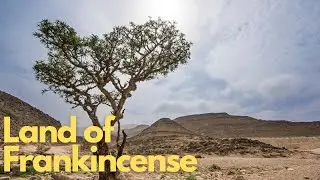
Region's ancient frankincense trade protected by UNESCO
Автор: AP Archive
Загружено: 2018-04-07
Просмотров: 15426
Описание:
(2 Apr 2018) LEAD IN:
The region of southern Oman has long been enriched by frankincense, a fragrant tree sap that's famous the world over.
But the precious commodity is under threat from over-harvesting and the Omani government and UNESCO are now protecting frankincense trees, as well as preserving archaeological sites that tell the story of the ancient trade.
STORY-LINE:
Welcome to the Land of Frankincense.
Wafting up from a burner in this quiet souq is a fragrance that's central to the history and culture of southern Oman.
Known as luban in Arabic, frankincense is a heavily-scented tree sap that's been harvested in the Horn of Africa and the eastern Arabian Peninsula for millennia.
Most people burn it in little censers called "magmar", while some claim that boiling it into a tea and drinking it will cure for all manner of ailments.
High-quality "hoggari" frankincense costs 8 Omani riyals (20 US dollars) a kilo.
"This frankincense here is hoggari, it's a medical treatment. Put it in water and drink it and it will purify you and is good for digestion and other things, really there's a lot of benefits," says trader Fadil Fadil.
The scent of hoggari is ubiquitous across the Sultanate of Oman and its fragrance even greets you at the airport.
"This frankincense here we get from a place called al-Hoggar but there's some from Hasik, Samhan, and also al-Mughsail. The frankincense from there has a black colour because of the humidity there," says Fadil.
Frankincense is famous in the West as one of the gifts that the Magi, or Three Wise Men, gave to the baby Jesus in the Christmas story.
The frankincense trade in Oman has survived across the centuries and in Medieval times it was traded from as far away as China to Greece and Madagascar.
The Ancient Egyptians used it when mummifying the dead and the Romans burned it during religious ceremonies.
But today, the trees are threatened by over-harvesting, grazing animals and construction.
In order to protect the trees, UNESCO has designated this preserve here at Wadi Dawkah a World Heritage Site.
Frankincense is the resin of trees that belong to the Boswellia family. There are several species of Boswellia tree which produce different types of resin.
Frankincense is made by scratching the tree bark and letting the resin seep out and go hard. The lumps of resin are then collected.
Wadi Dawkah site steward Ali al-Khathiri explains that the grove here contains examples of the different types of frankincense trees to protect their diversity.
"Frankincense is still considered a precious wealth. The trees are rare. In order to protect them, we collected trees from many places in the Dhofar province and we protect them at this reserve for natural frankincense trees," he says.
Along with protecting the trees themselves, the Omani authorities and UNESCO are also preserving the history of the frankincense trade in the region.
Since the 1990s, archaeologists have been excavating at al-Baleed archaeological park in Salalah.
Al-Baleed was an ancient port which became an important stop on the Silk Road, where frankincense was traded in exchange for silk, according to UNESCO.
It's one of several trading posts that have been discovered in the Dhofar region.
UNESCO has listed al-Baleed as part of a World Heritage Site called Land of Frankincense, along with the port of Kor Rori, a desert outpost called Shisr, and the Wadi Dawka tree preserve.
Ghanim al-Shanfari, director of the Land of Frankincense Museum, says the excavations of al-Baleed have uncovered some remarkable finds.
Find out more about AP Archive: http://www.aparchive.com/HowWeWork
Twitter: / ap_archive
Facebook: / aparchives
Instagram: / apnews
You can license this story through AP Archive: http://www.aparchive.com/metadata/you...
Повторяем попытку...

Доступные форматы для скачивания:
Скачать видео
-
Информация по загрузке: