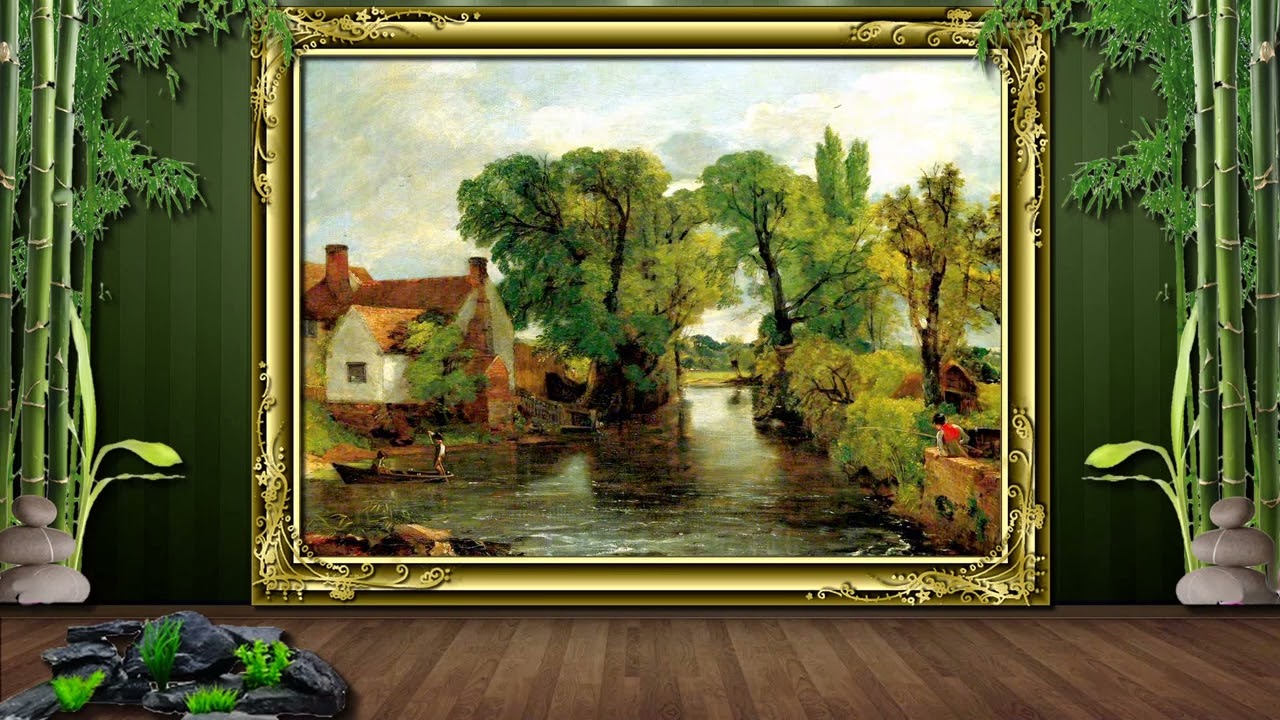
John Constable painter
Автор: BlueangelMrs
Загружено: 2022-12-04
Просмотров: 1485
Описание:
John Constable painter
Music, Eugen Doga
http://eugendoga.musicaneo.com/
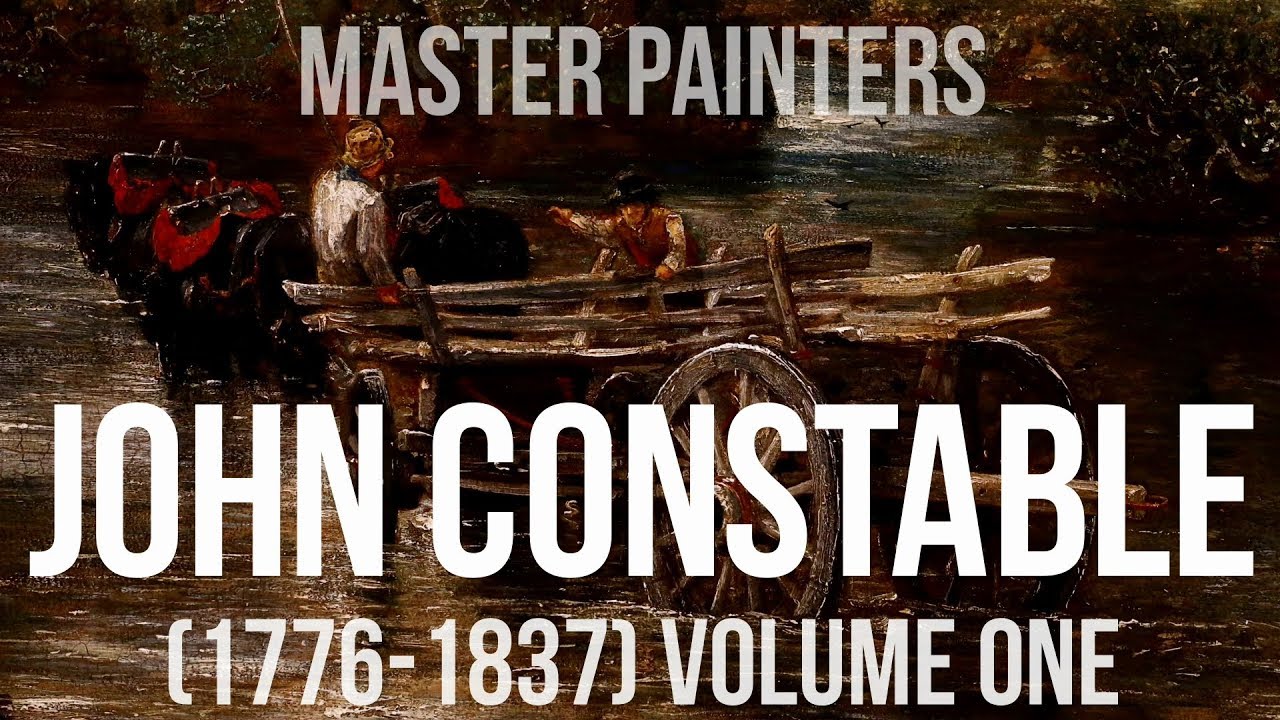
John Constable (11 June 1776 – 31 March 1837) was born in East Bergholt, a village on the River Stour in Suffolk, to Golding and Ann Constable. His father was a wealthy corn merchant, owner of Flatford Mill in East Bergholt and, later, Dedham Mill. Golding Constable also owned his own small ship, The Telegraph, which he moored at Mistley on the Stour estuary and used to transport corn to London. Although Constable was his parents' second son, his older brother was mentally handicapped and so John was expected to succeed his father in the business, and after a brief period at a boarding school in Lavenham, he was enrolled in a day school in Dedham. Constable worked in the corn business after leaving school, but his younger brother Abram eventually took over the running of the mills.
In his youth, Constable embarked on amateur sketching trips in the surrounding Suffolk countryside that was to become the subject of a large proportion of his art. These scenes, in his own words, "made me a painter, and I am grateful"; "the sound of water escaping from mill dams etc., willows, old rotten planks, slimy posts, and brickwork, I love such things." He was introduced to George Beaumont, a collector, who showed him his prized Hagar and the Angel by Claude Lorrain, which inspired Constable. Later, while visiting relatives in Middlesex, he was introduced to the professional artist John Thomas Smith, who advised him on painting but also urged him to remain in his father's business rather than take up art professionally.
In 1799, Constable persuaded his father to let him pursue art, and Golding even granted him a small allowance. Entering the Royal Academy Schools as a probationer, he attended life classes and anatomical dissections as well as studying and copying Old Masters. Among works that particularly inspired him during this period were paintings by Thomas Gainsborough, Claude Lorrain, Peter Paul Rubens, Annibale Carracci and Jacob van Ruisdael. He also read widely among poetry and sermons, and later proved a notably articulate artist. By 1803, he was exhibiting paintings at the Royal Academy.
In 1802 he refused the position of drawing master at Great Marlow Military College, a move which Benjamin West (then master of the RA) counselled would mean the end of his career. In that year, Constable wrote a letter to John Dunthorne in which he spelled out his determination to become a professional landscape painter:
"For the last two years I have been running after pictures, and seeking the truth at second hand. I have not endeavoured to represent nature with the same elevation of mind with which I set out, but have rather tried to make my performances look like the work of other men... There is room enough for a natural painter. The great vice of the present day is bravura, an attempt to do something beyond the truth."
His early style has many of the qualities associated with his mature work, including a freshness of light, colour and touch, and reveals the compositional influence of the Old Masters he had studied, notably of Claude Lorrain. Constable's usual subjects, scenes of ordinary daily life, were unfashionable in an age that looked for more romantic visions of wild landscapes and ruins. He did, however, make occasional trips further afield. For example, in 1803 he spent almost a month aboard the East Indiaman ship Coutts as it visited south-east coastal ports, and in 1806 he undertook a two-month tour of the Lake District. But he told his friend and biographer Charles Leslie that the solitude of the mountains oppressed his spirits; Leslie went on to write:
"His nature was peculiarly social and could not feel satisfied with scenery, however grand in itself, that did not abound in human associations. He required villages, churches, farmhouses and cottages."
In order to make ends meet, Constable took up portraiture, which he found dull work-though he executed many fine portraits. He also painted occasional religious pictures, but according to John Walker, "Constable's incapacity as a religious painter cannot be overstated."
Constable adopted a routine of spending the winter in London and painting at East Bergholt in the summer. And in 1811 he first visited John Fisher and his family in Salisbury, a city whose cathedral and surrounding landscape were
To https://www.john-constable.org/biography.html inspire some of his greatest paintings.
I do not own any of the pictures that are used in this video. The images used remain the property of the respectful copyright owners. If any of the owners have a problem with me uploading your music please send me a message and I will remove the video
Повторяем попытку...
Доступные форматы для скачивания:
Скачать видео
-
Информация по загрузке: