Building an Anglo-Saxon Pit House with Hand Tools - Part III | Medieval Primitive Bushcraft Shelter
Автор: Gesiþas Gewissa | Anglo-Saxon Heritage
Загружено: 2023-09-18
Просмотров: 332709
Описание:
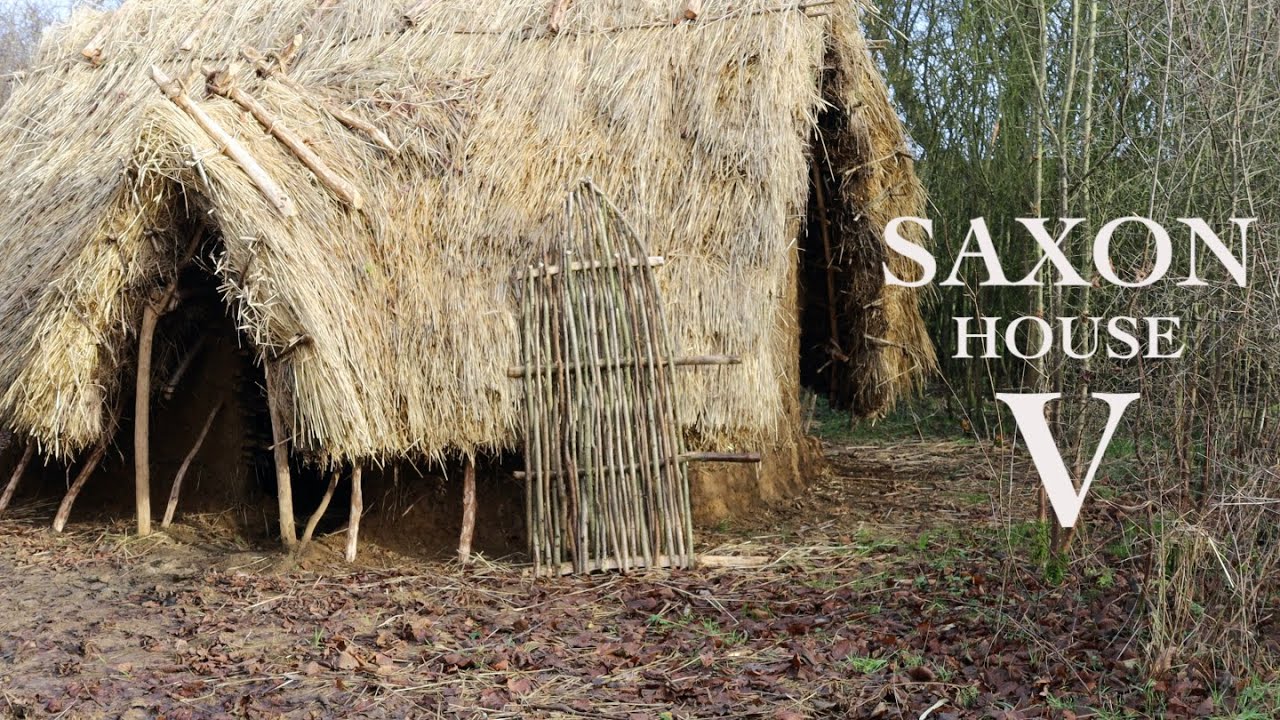
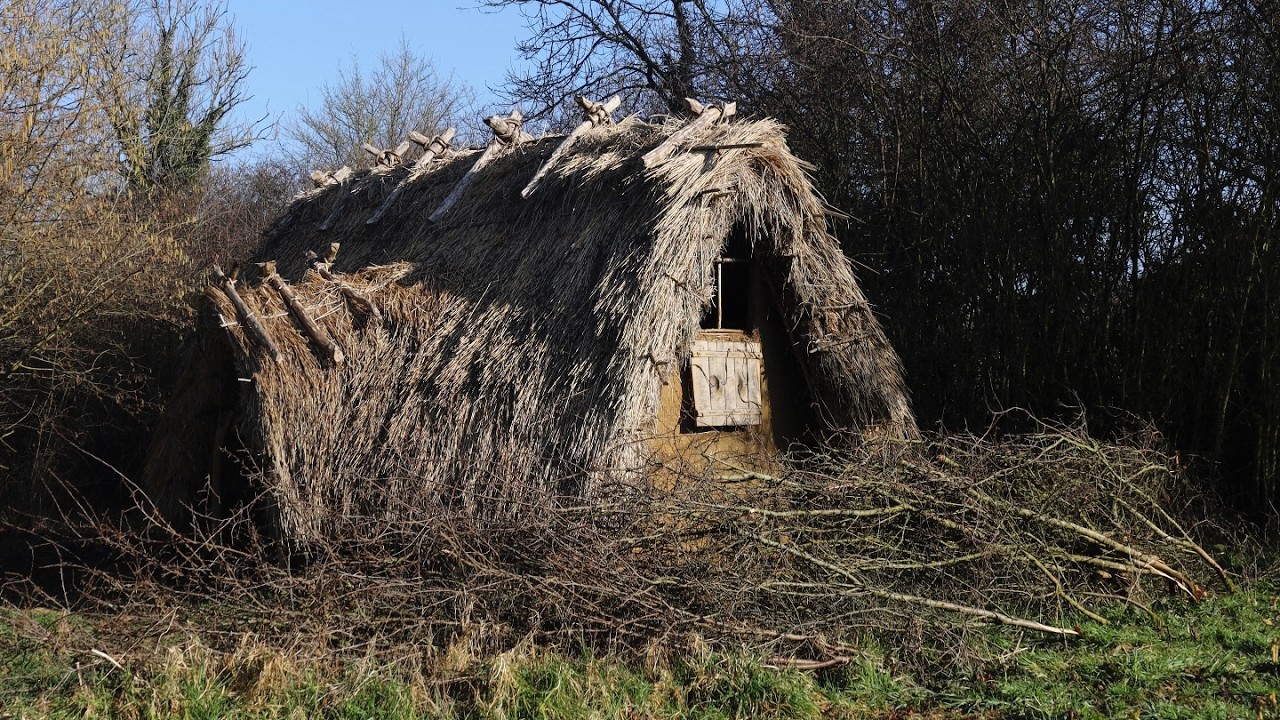
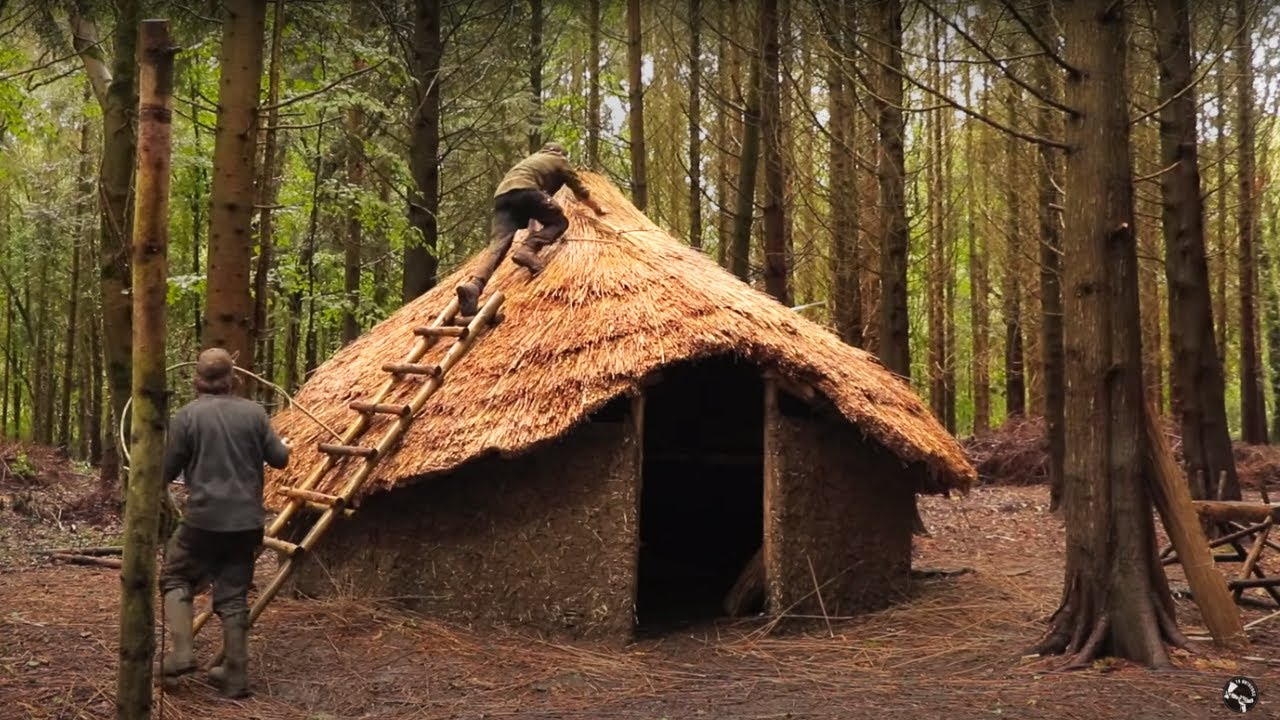
Anglo-Saxon settlers built Early Medieval pit houses with primitive tools, digging foundations, raising earth and wattle walls and thatched or shingle roofs.
After gaining victory over the Britons at the Battle of Peonnum in 658 A.D. the Gewissæ pushed south west towards the River Parrett.
While the tribal elites fought for power and territorial control Anglo-Saxon freemen settled unclaimed land amongst their Romano-British cousins.
The first structures built were pit houses, used first as military outposts and dwellings and then as workshops and storehouses once settlements grew and timber longhouses were erected.
Anglo-Saxon pit houses are often found with the remains of loom weights, pottery or metal-working crafts, and are therefore interpreted as craft-related buildings or store houses subsidiary to larger post-built dwellings.
Today, all that remains archaeologically of these structures is the pit itself and the accompanying post-holes. There is usually little evidence for floors, walls or roof structures.
Reconstructions of Anglo-Saxon pit-houses must therefore incorporate building techniques that are "archaeologically invisible" in order to be accurate or at least plausible.
"Archaeological invisible" building technologies often proposed for Anglo-Saxon pit houses include A-frame rafters resting on the ground, wattle walls staked into the upcast earth but not below ground level, or walls resting on sill beams.
The orientation, pit and post-hole features of this pit house are an accurate reconstruction of Sunken Featured Building 8 excavated at the West Saxon settlement near Lechlade-on-Thames, dated to the 7th century. The archaeological report can be found here: Prehistoric and Anglo-Saxon Settlements to the rear of Sherborne House, Lechlade: excavations in 1997. 2003. C Bateman, D Enright, N Oakey.
https://www.cotswoldarchaeology.co.uk...
Despite constant warfare between tribal elites, the Anglo-Saxons often peacefully settled land left unoccupied after the Roman withdrawal from Britain, amongst neighbouring Romano-British communities.
This led to considerable cultural exchange between the Anglo-Saxons and Romano-British, resulting in what is now known as Insular culture during the late 7th and 8th centuries.
The rafters were interwoven with hazel rods, in the same way as the wattle walls. These interwoven rods give stability to the rafters as well as acting as purlins for the thatching.
No cordage is required with these woven "purlins", which are held in place by friction. Cordage is time consuming to twist by hand, and a great length is needed for the thatching itself, so it was only used where absolutely necessary.
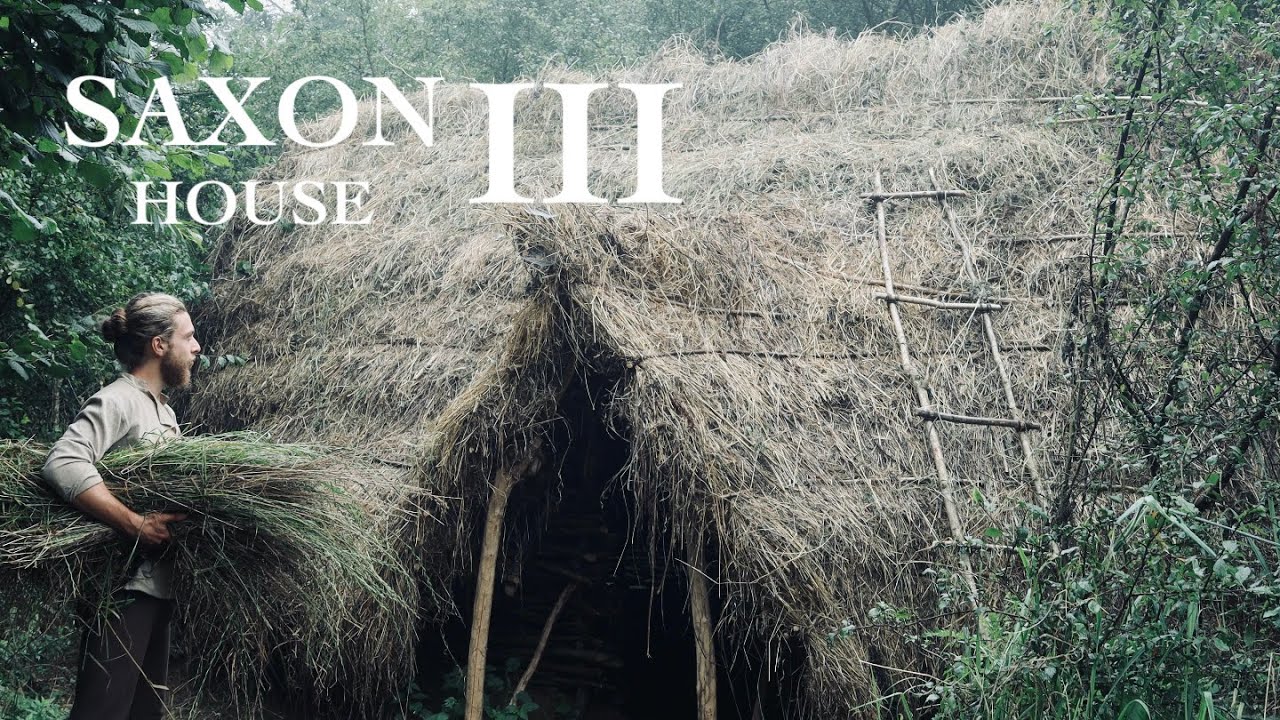
Wild grass was cut with a scythe, gathered into directional bundles, and laid to dry on the meadow, ready to thatch the base coat.
Meanwhile, tie beams were lashed between the rafters with withies, and the porch roof was woven.
While the Saxons would have used more durable thatching materials wherever possible, grass may have been used where the other materials were not readily available.
The practice of using whatever was available for thatching continued for centuries. Modern thatchers have found ancient layers of thatch ranging from heather to marsh grasses and dried potato stems!
About a quarter of an acre of grass was used to cover the roof, although this first layer of grass thatching is not completely waterproof in heavy rain, so I will be using this as a base coat of thatch into which to secure a layer of more durable thatch material, either longstraw or bracken.
The thatch was secured with hazel rods, tied tightly to the woven roof below at intervals of around a forearm's length with tarred flax cordage. The securing rods were fastened at the ends with cordage, or by folding them and weaving them back into the roof.
Tying the hazel rods meant pushing an arm through the thatch, feeling for the corresponding hazel "purlin" below, pulling the cord round it and back out before tying off. This wasn't always easy, the wild grass thatch being full of bramble, thistle, nettle and red ants!
Each row of thatch was secured with two rows of hazel rods, and overlapped the previous row by roughly half. This is known as directional thatching and is a fast, but less durable form of thatching, often used in previous centuries for thatching barns and hay ricks.
With thanks to:
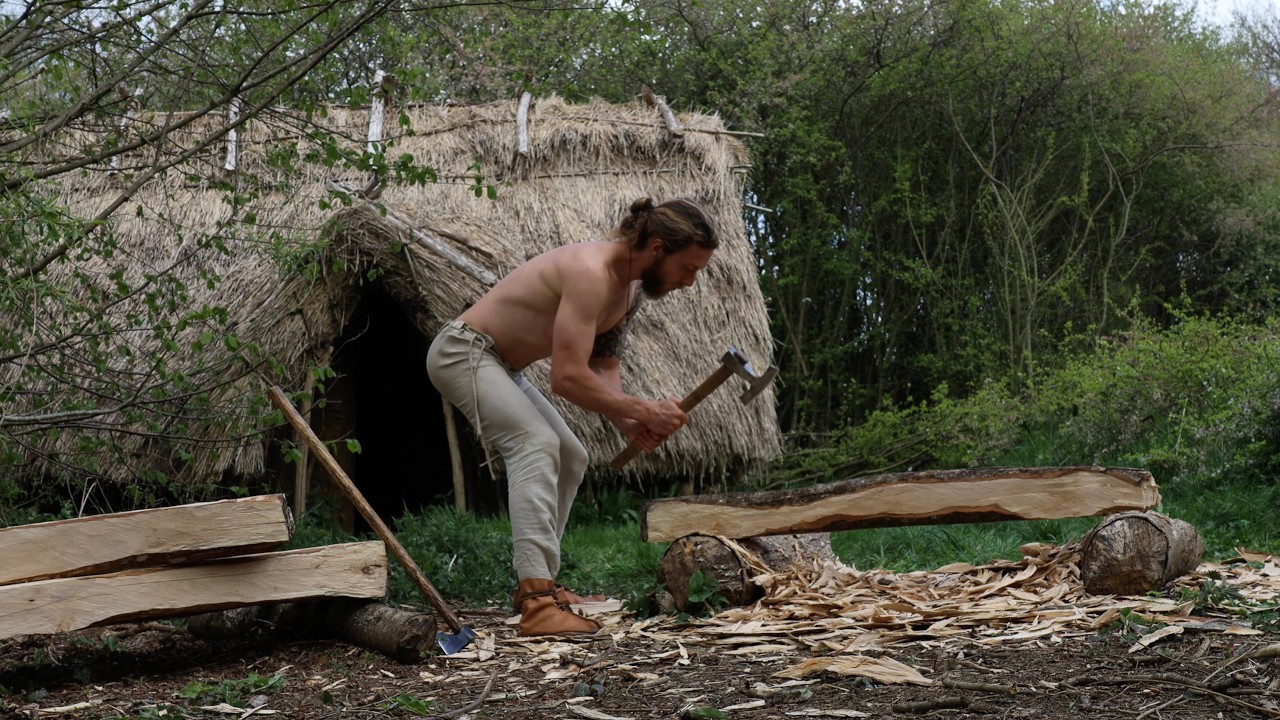
Hector Cole, Blacksmith, for forging the Saxon T-shaped Axe.
Grzegorz Kulig, Silversmith, for making the pattern-welded knife.
If you would like to support me further, you can become a patron here:
/ gesithasgewissa
Join this channel to become a member:
/ @gesithasgewissa
Or make a one-off donation:
https://paypal.me/gesithasgewissa
/ gesithasgewissa
/ gesithasgewissa
Повторяем попытку...
Доступные форматы для скачивания:
Скачать видео
-
Информация по загрузке: