Shedding light on operons: Gene structure enabling the coregulation of structural genes
Автор: The Genetic Basis of Stuff and Things
Загружено: 2023-11-26
Просмотров: 640
Описание:
OTHER VIDEOS YOU MIGHT LIKE:
• The past, present and future of molecular phylogenetics - • The past, present and future of molecular ...
• The structure of RNA polymerase I: A 50 year mystery solved! - • The structure of RNA polymerase I: A 50 ye...
• 5-Bromouracil: villian or hero? Mutagenesis with 5-bromouracil in bacteriophages - • 5-Bromouracil: villian or hero? Mutagenesi...
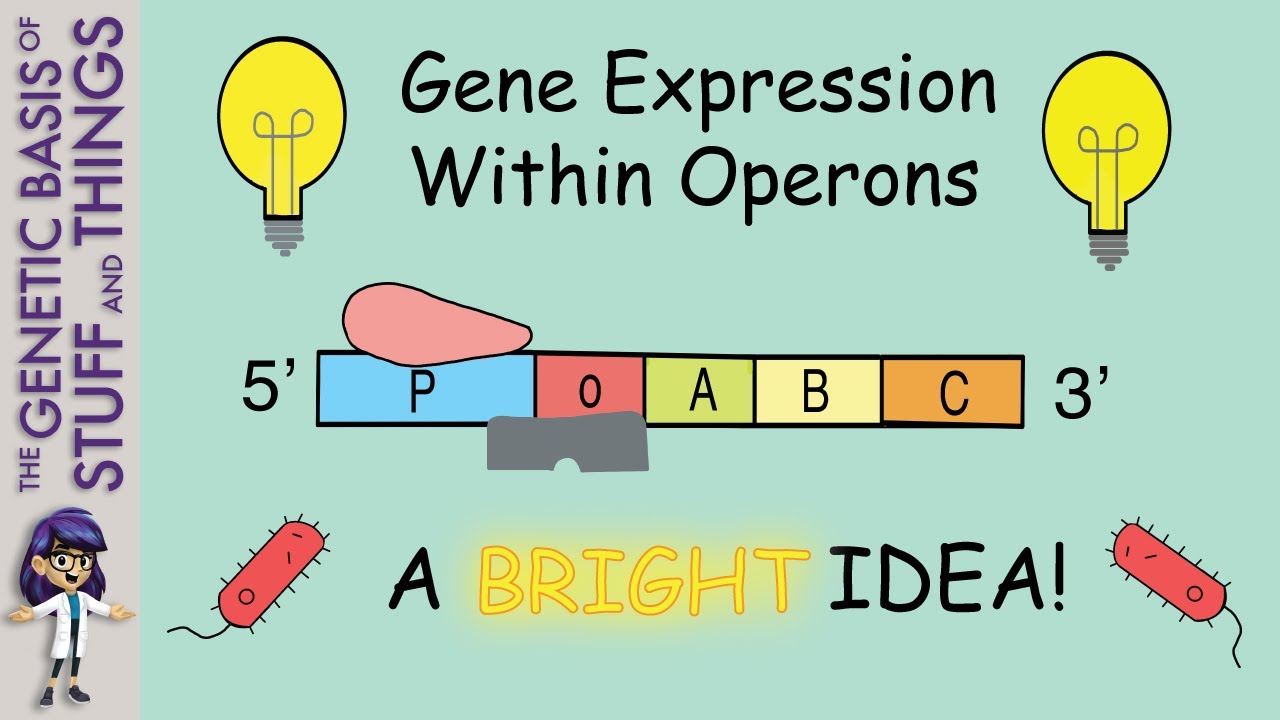
This video sheds light on operons; a gene structural tool in prokaryotes and some eukaryotes, enabling the coordinated expression of several structural genes, which are usually functionally related! We show that the structure of operons is somewhat analogous to one light switch controlling many lightbulbs; operons consist of one common promoter (the light switch) and several structural genes (the lightbulbs), co-ordinately controlled. However, we show that the story is more complex as upstream of the promoter is an operator, a segment of DNA sensitive to a repressor of which is synthesised by another upstream regulatory gene.
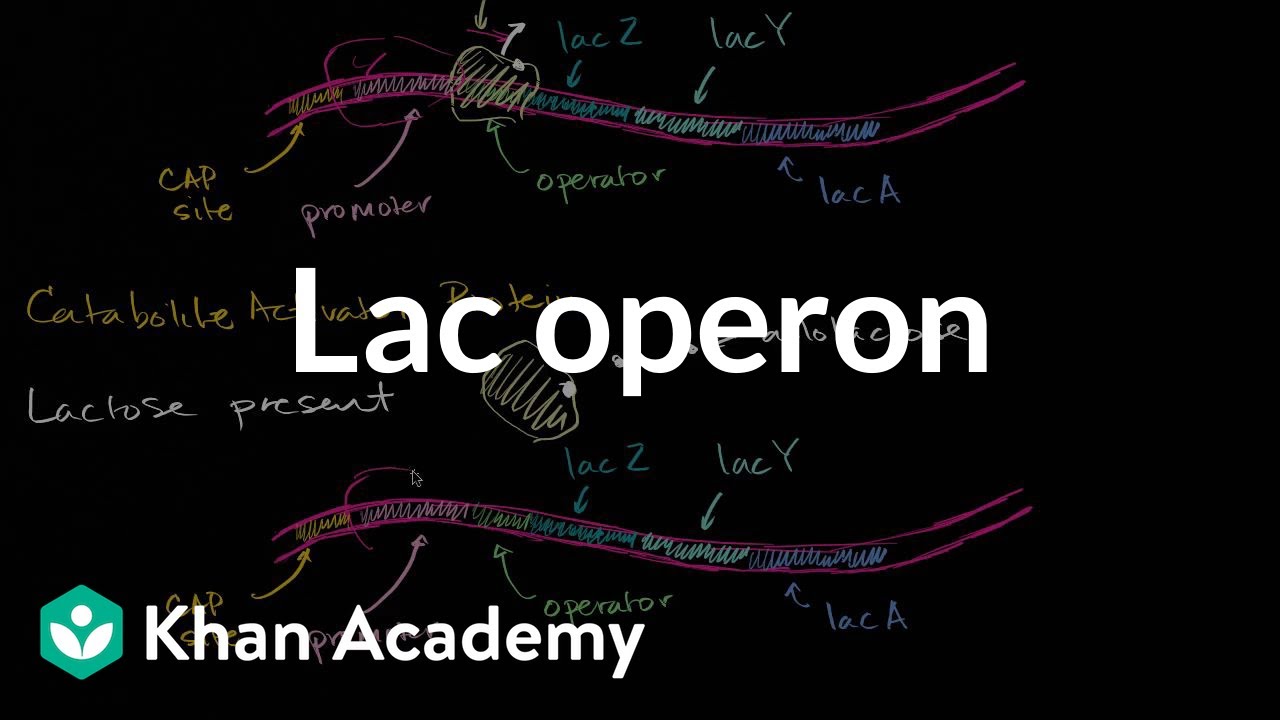
To further bring light to this phenomenon and delve into the discovery of operons, the work of three remarkable scientists, Jacob, Sánchez and Monod, is explored. We highlight their pivotal work on the Lac operon in Escherichia coli K 12 in 1960. The three structural genes within the Lac operon are LacZ, LacY and LacA, giving rise to beta-galactosidase, galactoside permease and transacetylase, respectively. The scientists studied how different operator mutations altered lactose metabolism due to differential expression of certain Lac operon genes, beta-galactosidase and galactoside permease.
We also look at how many other scientists used this work as a springboard and were able to extend upon this knowledge base. From discovering whether the repressor molecule is RNA or protein, to the effect of allolactose on the system and potential activators of operons! This ground-breaking work won Jacob and Monod the Nobel Prize in 1965, however, the impact of their discoveries did not end here! The regulatory mechanisms in the Lac operon have been applied to a mouse model and in the future may be used for regulating reversible models of human disease!
Creator: Darcie Spina
References:
L’opéron : groupe de gènes à expression coordonnée par un opérateur. Jacob F, Perrin D, Sanchez C, Monod J. C R Acad Sci. 1960 Feb 29;250:1727-9. doi: 10.1016/j.crvi.2005.04.005.
The life-cycle of operons. Price MN, Arkin AP, Alm EJ. PLoS Genet. 2006 Jun;2(6):e96. doi: 10.1371/journal.pgen.0020096.
Operons in Escherichia coli: genomic analyses and predictions. Salgado H, Moreno-Hagelsieb G, Smith TF, Collado-Vides J. Proc Natl Acad Sci U S A. 2000 Jun 6;97(12):6652-7. doi: 10.1073/pnas.110147297.
Operons in C. elegans: polycistronic mRNA precursors are processed by trans-splicing of SL2 to downstream coding regions. Spieth J, Brooke G, Kuersten S, Lea K, Blumenthal T. Cell. 1993 May 7;73(3):521-32. doi: 10.1016/0092-8674(93)90139-h.
The Adh-related gene of Drosophila melanogaster is expressed as a functional dicistronic messenger RNA: multigenic transcription in higher organisms. Brogna S, Ashburner M. EMBO J. 1997 Apr 15;16(8):2023-31. doi: 10.1093/emboj/16.8.2023.
Translational initiation in E. coli occurs at the correct sites genome-wide in the absence of mRNA-rRNA base-pairing. Saito K, Green R, Buskirk AR. Elife. 2020 Feb 17;9:e55002. doi: 10.7554/eLife.55002.
Correlations between Shine-Dalgarno sequences and gene features such as predicted expression levels and operon structures. Ma J, Campbell A, Karlin S. J Bacteriol. 2002 Oct;184(20):5733-45. doi: 10.1128/JB.184.20.5733-5745.2002.
The genetic control and cytoplasmic expression of “inducibility” in the synthesis of β-galactosidase by E. coli. Pardee AB , Jacob F , Monod J . J. Mol. Biol. 1959;1:165–178. doi:10.1016/S0022-2836(59)80045-0
Recherches sur la croissance des cultures bactériennes [thesis]. Monod, J. Actualités scientifiques et industrielles 1942; 911(2).
Isolation of the lac repressor. Gilbert W, Müller-Hill B. Proc Natl Acad Sci U S A. 1966 Dec;56(6):1891-8. doi: 10.1073/pnas.56.6.1891.
Lac repressor-operator interaction. 8. Lactose is an anti-inducer of the lac operon. Jobe A, Bourgeois S. J Mol Biol. 1973 Apr 5;75(2):303-13. doi: 10.1016/0022-2836(73)90023-5.
Mechanism of activation of catabolite-sensitive genes: a positive control system. Zubay G, Schwartz D, Beckwith J. Proc Natl Acad Sci U S A. 1970 May;66(1):104-10. doi: 10.1073/pnas.66.1.104.
The lac operator-repressor system is functional in the mouse. Cronin CA, Gluba, W, Scrable, H. Genes Dev. 2001 Jun 15;15(12):1506-17. doi: 10.1101/gad.892001
Повторяем попытку...
Доступные форматы для скачивания:
Скачать видео
-
Информация по загрузке:










![Эффект Джанибекова [Veritasium]](https://imager.clipsaver.ru/N9HlQ-XVnFk/max.jpg)