"It’s Bad That Residential Prices Are Going Up, But What Would Be Worse Is If The Lights Go Out"
Автор: Veriten
Загружено: 2026-02-04
Просмотров: 22
Описание:
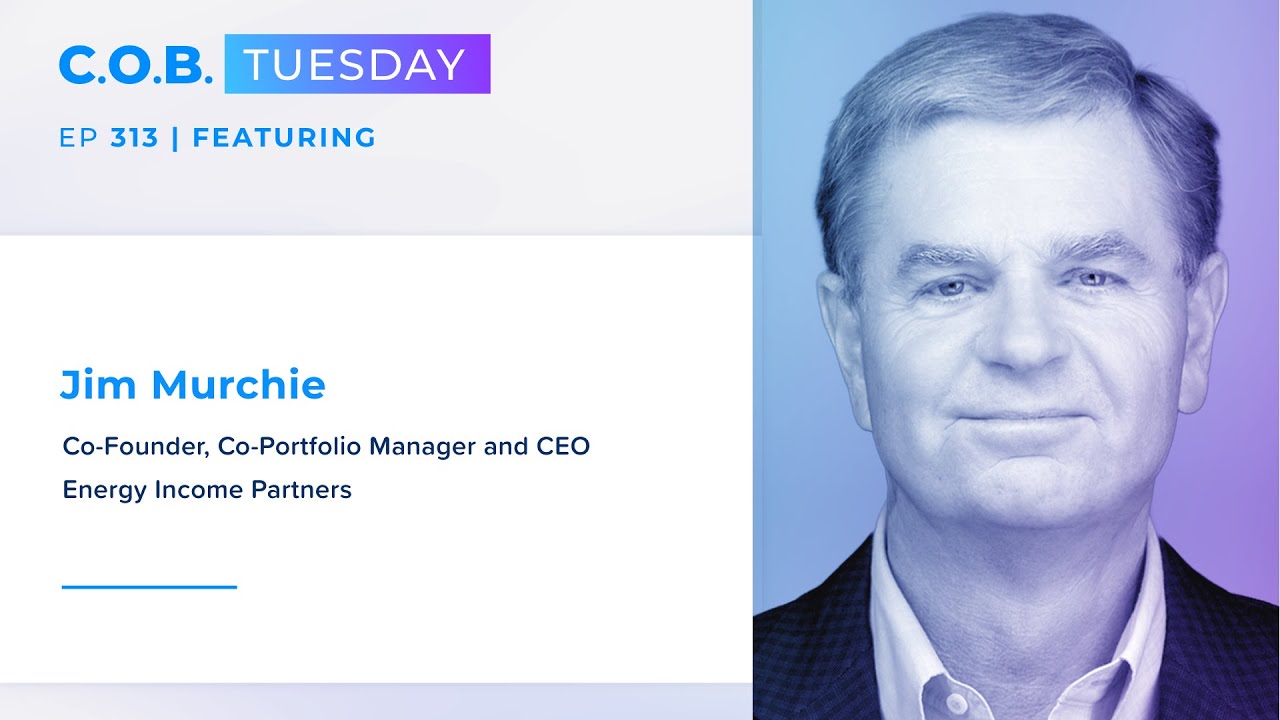
Today we were delighted to welcome Jim Murchie, Co-Founder, Co-Portfolio Manager, and CEO of Energy Income Partners (EIP). Prior to co-founding EIP, Jim’s career in power and electricity included establishing Lawhill Capital, serving as a Managing Director at Tiger Management focused primarily on energy, commodities, and related equities, and working as a Principal at Sanford C. Bernstein, where he was a top-ranked energy analyst. He began his career at British Petroleum and holds an MA in Energy Planning from Harvard University. We were thrilled to connect with Jim for an insightful discussion on the power landscape.
We covered a lot of ground in our conversation, starting with how EIP navigates macro and market volatility by focusing on regulated monopolies and pipelines with stable, cost-plus earnings, Jim’s career path and research philosophy, and how EIP’s focus on utilities and pipelines emerged from investor demand for real assets and dividends. Jim provides a history lesson on power markets and how deregulated wholesale markets evolved, Enron-era manipulation, and the early-2000s gas plant buildout that ultimately led to overcapacity and merchant distress. We dig into the three-bucket framework for customer bills (generation, transmission, and distribution/other) and why the public debate often overemphasizes generation, while the biggest driver of residential bill increases has been distribution/other costs (bucket three). Jim explains that the third bucket on power bills often acts as a catch-all for costs that are neither generation nor transmission, even when they aren’t distribution in the literal last-mile sense, and that greater billing and policy transparency can clarify what’s exogenous versus what’s controllable. He describes how the impact of data centers can differ between vertically integrated cost-plus states and deregulated commodity-market states, and unpacks behind-the-meter realities, including how hyperscalers often prefer a grid connection for reliability but still deploy backup generation. We discuss the administration’s push for hyperscalers to sign long-term contracts to enable new generation build, policymakers’ heightened focus on avoiding blackouts, and why this is often a peaking problem more than a supply problem. Jim emphasizes how incentives, rather than intent, drive investment behavior in regulated versus deregulated markets, challenges the narrative that data centers are inherently driving higher power prices, and highlights the economic value of reliability investments and peak-load management in shaping long-term system costs. It was a wide-ranging discussion, and we look forward to continuing the dialogue with Jim in a future episode.
Mike Bradley opened the discussion by noting that the 10-year U.S. bond yield looks to be the least volatile asset class at this juncture, with the 10-year bond yield trading very rangebound (around 4.25%). The dominant market theme this week, and for much of the year, has been extreme volatility across commodities (Bitcoin, Energy, and Metals). On the crude oil market front, WTI price is trading at ~$63/bbl, with volatility elevated over the past week or so due to Iranian confrontation fears. Oil traders are very short oil contracts which is a key reason for oil price spikes around unforeseen global events. In natural gas, weather forecasts have recently turned warmer which has sunk prompt U.S. gas price to ~$3.30/MMBtu (down ~$1/MMBtu this week). Lower 48 dry gas production and U.S LNG exports have both rebounded back to pre-arctic storm levels. Gas traders are now focused on where U.S. gas storage levels end the withdrawal season (many thinking ~1.6 Tcf). In equities, the S&P 500 was down ~1% on the day with Technology leading the decline (down 2-3% and down ~5% over last 5 trading days). Some Technology subsectors are becoming a bit suspect and cyclical sectors (Energy, Industrials, and Materials) seem to be the main beneficiaries given that they’re significantly outperforming this year. On the Energy equity front, we’re rolling into the thick of Q4 earnings season with companies from every subsector reporting. Veriten Senior Advisor Deborah Byers also joined and emphasized that understanding highly complex power markets requires detailed, nuanced dialogue to move beyond simplistic single-cause narratives and fully account for the many factors driving power costs.
Повторяем попытку...
Доступные форматы для скачивания:
Скачать видео
-
Информация по загрузке: