1798 United Irishmen Battle of Ballynahinch Site Montalto Estate Co Down
Автор: Tom McClean Positive Belfast
Загружено: 2023-04-17
Просмотров: 429
Описание:
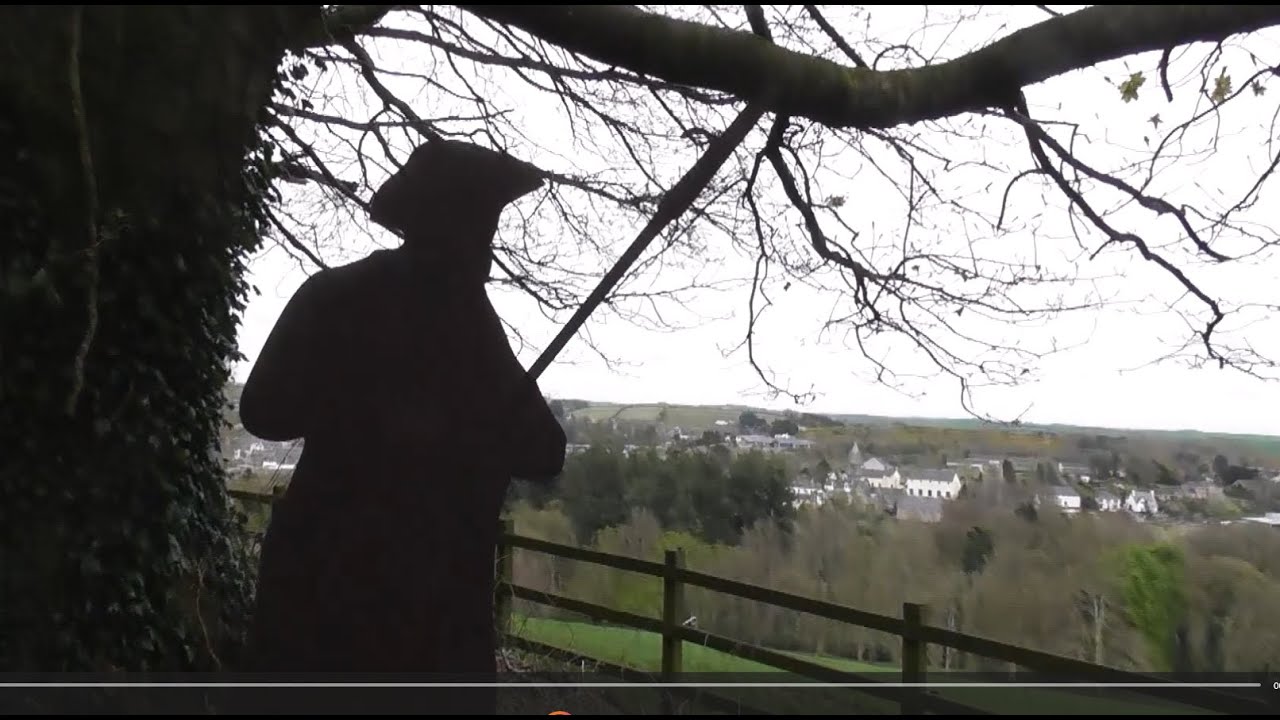
We're out for a long dander round the woodland and history trails at the fabulous Montalto Estate Co Down. We have come across the battle site of the locally famous battle of Ballynahinch that was fought in the fields surrounding Edenavaddy hill.
The battle of Ballynahinch was a military engagement of the Irish Rebellion of 1798 between a force of roughly 4,000 United Irishmen rebels led by Henry Munro and approximately 2,000 government troops under the command of George Nugent. After rebel forces had occupied Newtownards on 9 June, they gathered the next day in the surrounding countryside and elected Munro as their leader, who occupied Ballyhinch on 11 June. Nugent led a column of government troops in 12 June which recaptured the town and bombarded rebel positions. On the next day, the rebels attacked Ballyhinch, but were driven back and defeated.
Approximately 4,000 rebels from Newtownards, Saintfield and Ballynahinch, equipped with artillery looted from Bangor harbour, gathered on 10 June and listened to a sermon given by Thomas Ledlie Birch. The next day, they elected a linen draper from Lisburn, Henry Munro, as the their commander. Munro ordered his forces to occupy Ballynahinch on 11 June before establishing a camp at Montalto, the County Down estate of the Earl of Moira.
Battle
On the morning of 12 June, Nugent, with a column of roughly 2,000 government soldiers (drawn from the Monaghan Militia, Fifeshire Fencibles and the 22nd Dragoons) and six 6-pounder guns and two howitzers manned by the Royal Artillery, marched onto Saintfield, where it was discovered to have no rebel presence. Nugent's column, which was reinforced by detachments of the Argyll Fencibles and Downpatrick Yeomanry, moved onto Ballynahinch, where his men captured a rebel outpost before occupying the town. As the night began to set in, Nugent's artillery forces began to bombard Montalto and the nearby Ednavady Hill. Numerous rebels, many of them demoralised by the bombardment, slipped away under the cover of darkness.
Battle
Some of his subordinates pressed Munro to attack Ballynahinch at night, noting that the "tired and hungry" Monaghan Militia (which formed a major part of Nugent's column) had looted the town and many of them were drunk. However, Munro overruled them, insisting that any rebel attack on Ballynahinch occur at dawn. When dawn came, Munro's rebels attacked the town, driving back the Monaghan Militia in house-to-house combat along with killing the militia's adjutant and capturing several artillery pieces. However, the attacking rebels mistook bugle calls to retreat from government troops as a signal for arriving reinforcements and began to waver. In response, a counter-attack was ordered by Nugent's officers, which led many of the rebels to retreat from Ballynahinch in all directions. Nugent's dragoons and yeomanry pursued the rebels, many of whom were killed or captured; one of the rebels killed was camp follower Betsy Gray. Despite Nugent ordering his cavalry to "be merciful", infuriated dragoons and yeomanry killed several noncombatants in the post-battle reprisals.
Bloody Merciless Aftermath
Nugent reported that his troops had killed 500 rebels, but local estimates claimed that only 100 rebels had died. On the government side, it was reported that 3 were killed and roughly 30 wounded. The battle was followed by "harsh retribution". Monro was executed by hanging on 16 June after being captured, a fate he shared with many fellow rebel prisoners. Sixty-three houses in Ballynahinch were burnt by Nugent's forces during the battle, most of them on the night of 12 June as his men became drunk and started to loot the town, causing 20,000 pounds of damage.
Повторяем попытку...
Доступные форматы для скачивания:
Скачать видео
-
Информация по загрузке: