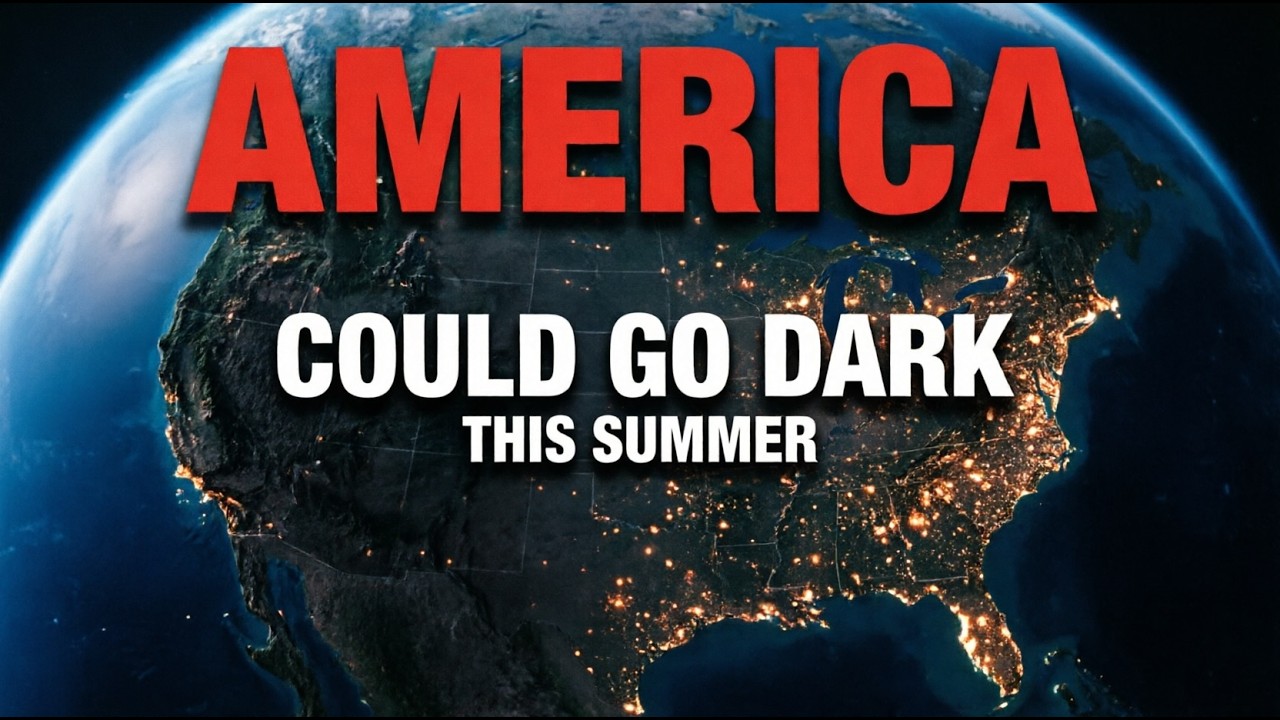
America Could Face the WORST Blackout in History This Summer 2026
Автор: Finance Economist
Загружено: 2026-04-21
Просмотров: 6029
Описание:
People won't believe how bad this summer will get. The 12-month period ending March 2026 was the hottest on record in the continental United States according to NOAA. March 2026 was the hottest March in at least 132 years of measurement. The World Weather Attribution team called the western heat wave "virtually impossible" without human-caused climate change. Over 56 percent of the contiguous United States is currently in at least moderate drought, the largest coverage in more than three years. Western mountain snowpack is at 25 to 50 percent of normal. NOAA has 36 states leaning toward above-normal summer temperatures.
NERC's 10-year summer peak demand forecast grew by more than 50 percent within a single year. Their director said he has been doing this for close to 30 years and this is probably one of the grimmest pictures they have painted. He said our infrastructure is not being built fast enough to keep up with rising demand. ERCOT in Texas reported peak demand could reach 367,790 megawatts by 2032 while the current record is 85,500 megawatts. Dr. Mark McNees at Florida State University told The Daily Upside that the grid cannot support both data center growth and summer peak demand at current capacity and that the math does not work without massive new buildout. MISO, covering Illinois to Minnesota, faces a high risk of energy shortfalls during normal peak conditions this year. PJM Interconnection faces elevated risks beginning in 2026. Every major grid region has a warning flag. Newsweek reported a water shortage warning for the 40 million people who rely on the Colorado River. Snowpack across the basin is at roughly 50 percent of normal. Lake Powell expects just 52 percent of its usual inflow and is edging toward minimum power pool where hydropower production ceases. Denver Water reported snowpack between 55 and 71 percent of normal. Between January and March 2026 the percentage of the US landscape facing the worst drought conditions increased from 2 percent to 15 percent. The Drought Severity Index hit its most severe first-quarter level since at least 2000. Wildfires burned more than 1.6 million acres in Q1 2026, more than double the decade average, before fire season has even started.
Research in Environmental Research Letters found that years with earlier snowmelt produce more wildfire acres. The Iran war drove gasoline up 21.2 percent in March and fuel oil up more than 30 percent. Approximately 40 percent of the US grid runs on natural gas. The Strait of Hormuz closure disrupted Qatar LNG exports and the US is now competing with European and Asian buyers for the same natural gas. Average residential electricity bills rose from $121 in 2020 to over $156 by late 2025 before the war premium on natural gas has fully arrived. Heat exposure contributes to approximately 12,000 deaths per year in the United States, more than hurricanes, tornadoes, floods, and lightning combined. A 2023 study found that a multi-day blackout during a Phoenix heat wave would kill an estimated 12,800 people in that single city. Major grid failure events increased more than 60 percent over the most recent five-year reporting period. When the grid fails during a heat wave, hospitals run on limited backup generators, 911 call centers require power, water treatment plants need electricity, cell towers have 8 to 12 hours of battery backup, and traffic signals go dark. Summer food prices reflect three simultaneous pressures: war-driven energy costs cascading through the supply chain on a 60 to 120-day lag, drought conditions threatening western agriculture with the most challenging scenario in the current NOAA outlook, and global shipping disruption from the Hormuz closure repricing agricultural imports. America will go dark.
Повторяем попытку...
Доступные форматы для скачивания:
Скачать видео
-
Информация по загрузке: