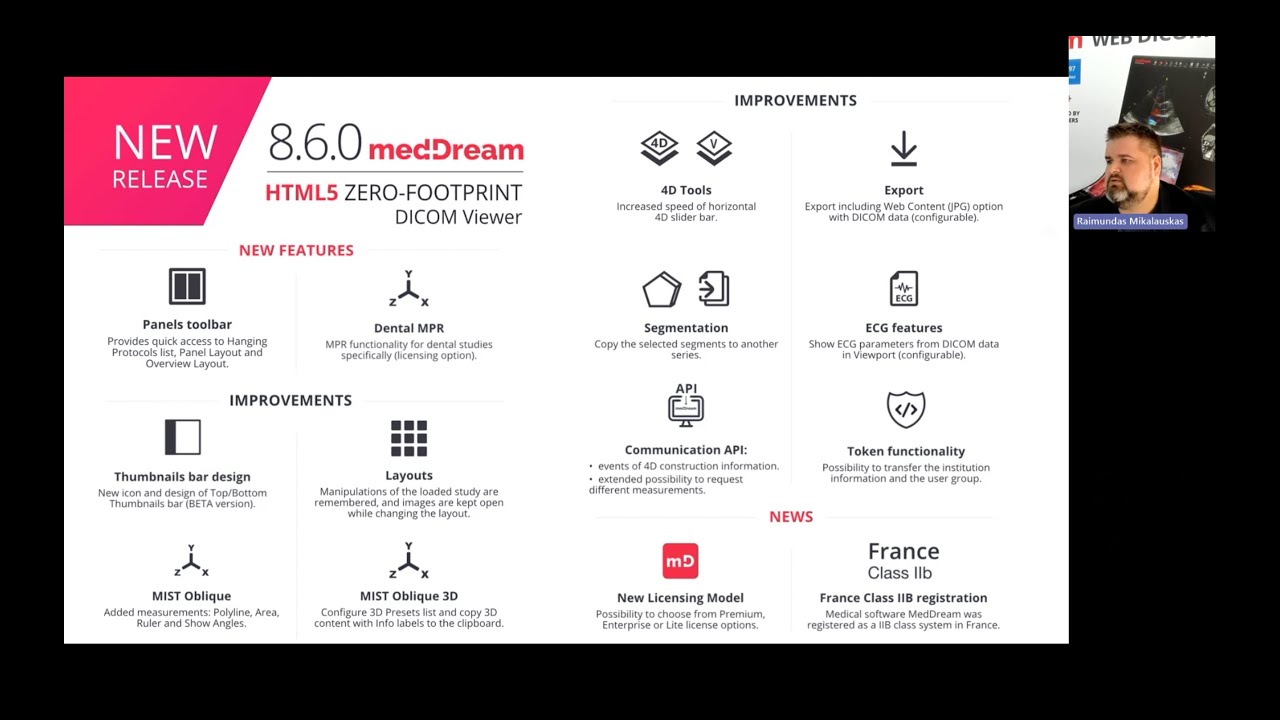
MedDream WEBINAR: HTJ2K in Practice: What Transfer Syntax Means for Web Viewer Performance
Автор: MedDream
Загружено: 2026-02-24
Просмотров: 7
Описание:
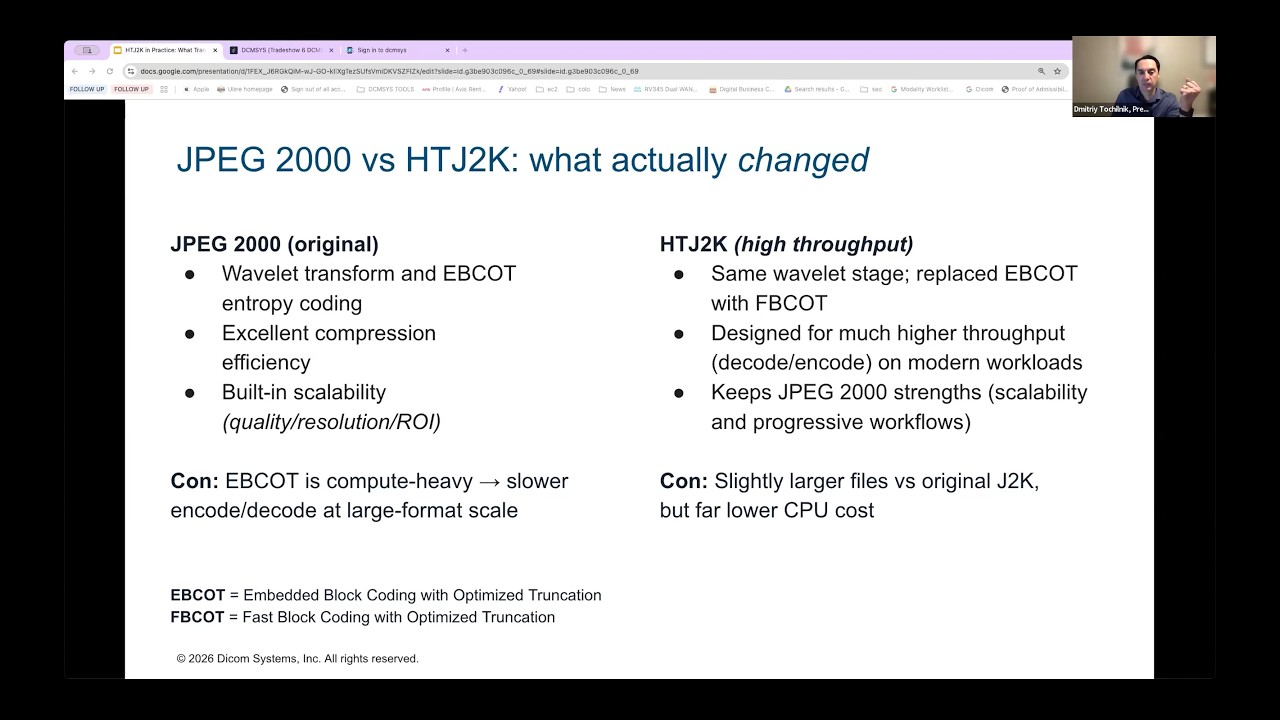
This technical webinar examined the architectural and operational implications of JPEG 2000 and High Throughput JPEG 2000 (HTJ2K) within modern enterprise imaging workflows. The session explained how codec selection impacts ingest pipelines, storage efficiency, and real-time web viewing, and why traditional assumptions about compression no longer hold for large, tiled, multi-resolution datasets such as whole slide images.
Dicom Systems presented ingestion-time normalization strategies using Unifier®, including how to standardize encoding to support both long-term storage optimization and low-latency web viewing. The discussion covered system design considerations, including decode bottlenecks, transfer syntax normalization, viewer access patterns, and infrastructure scalability.
MedDream will provide a technical perspective on how transfer syntax affects web viewer rendering behavior, including decode workflows, tile access patterns, and user interaction performance in browser-based diagnostic viewers.
Attendees gained practical guidance on evaluating HTJ2K for production use, designing ingestion pipelines that avoid downstream performance constraints, and deploying compression strategies that scale across enterprise imaging environments.
Webinar Agenda:
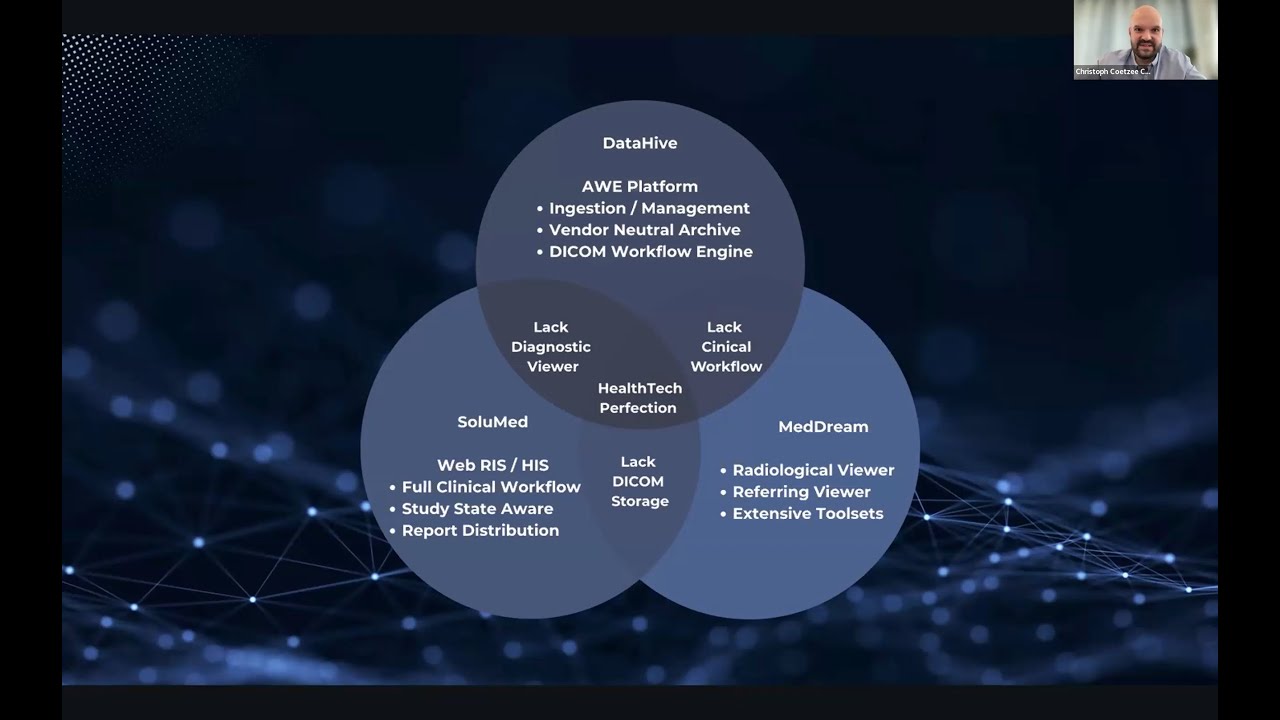
Introduction: MedDream’s collaboration with Dicom Systems
Presentation of the Dicom Systems: HTJ2K in Practice
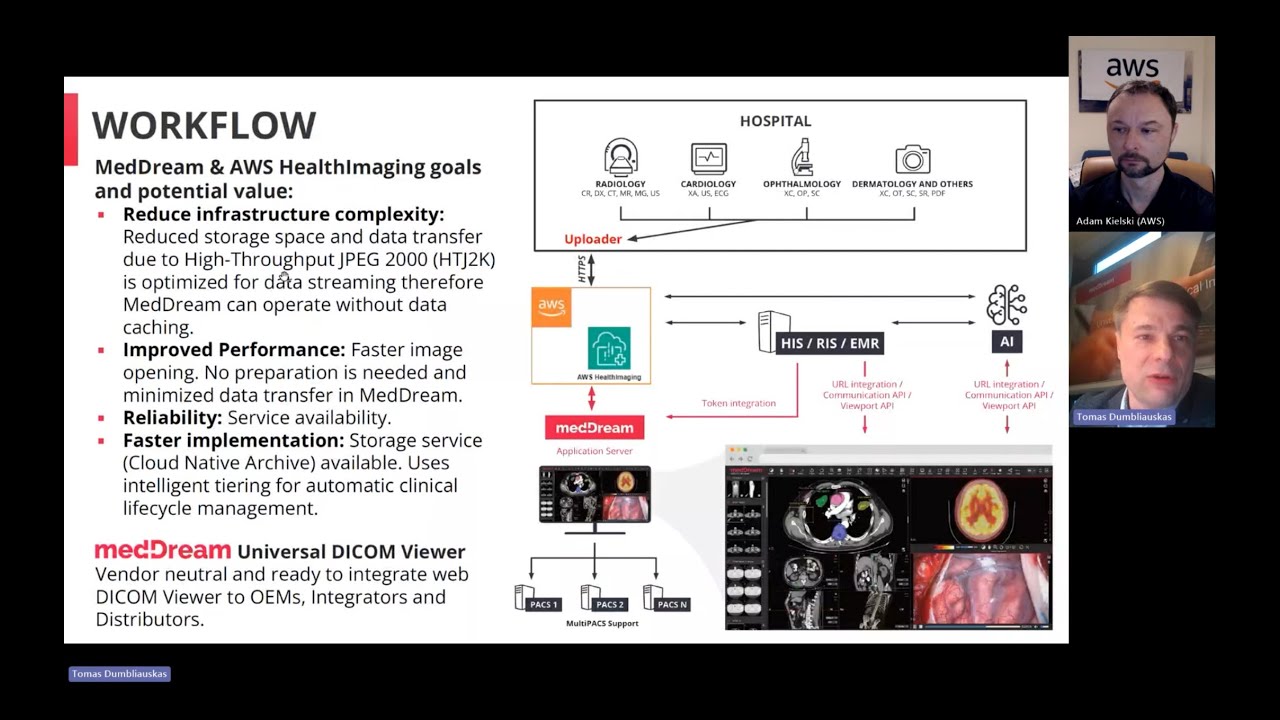
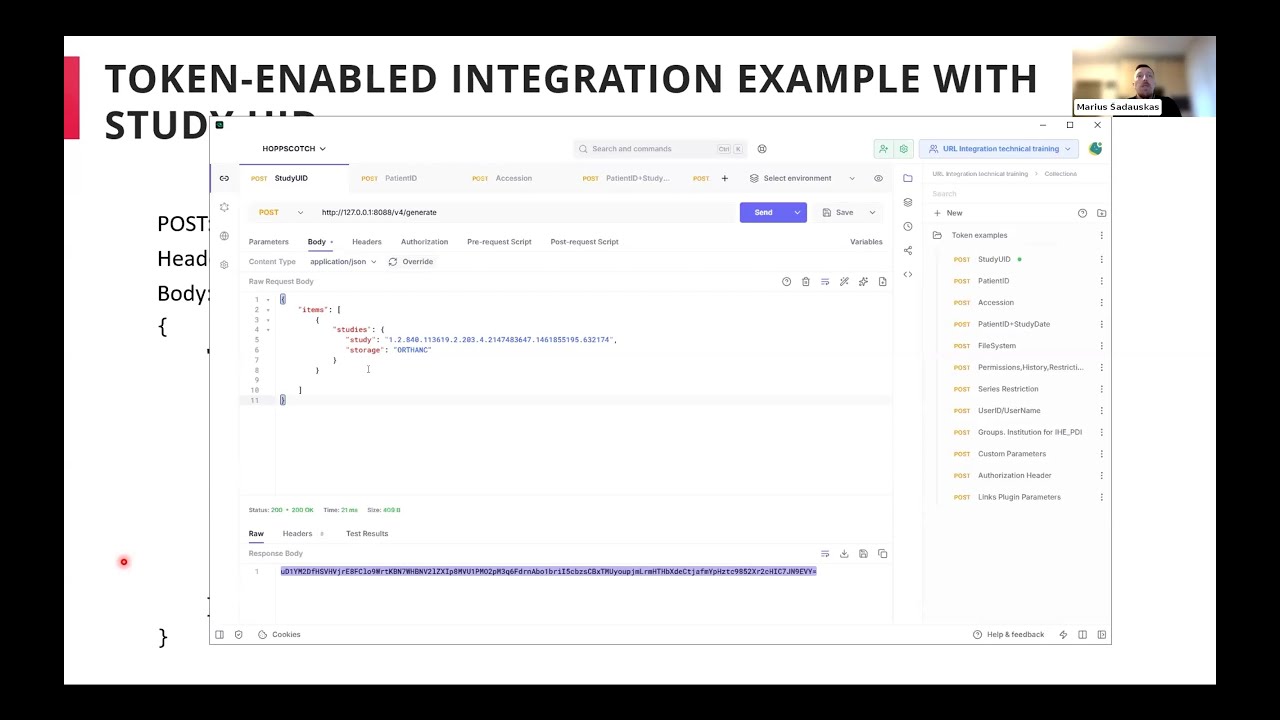
Demonstration of Dicom Systems Unifier® platform with MedDream
Universal DICOM Viewer
Q&A session with attendees
Guest speaker: Dmitriy Tochilnik, President / CTO at Dicom Systems.
Guest speaker: Florent Saint-Clair, Chief Operating Officer at Dicom Systems.
Speaker: Marius Šadauskas, System Integrator at MedDream.
Moderator: Renata Kalniūnienė, Marketing Project Manager at MedDream.
During webinar these questions from the attendees were answered:
Why is HTJ2K not widely adopted yet?
When MedDream is planning to implement pathology support?
How can I deploy MedDream on the cloud?
How is the adoption of HTJ2K in the DICOM community?
How is the MedDream JPEG lossless setting compared with this?
How hard is it to convert from HTJ2K from DICOM 2000? The idea is to store the study first in HTJ2K, and at 2+year mark convert to JPEG 2000.
So, the advantage is faster visualization, but more storage capacity needed. But isn’t the enormous demand for additional storage exactly what’s slowing down the adoption of digital pathology? Is there a way to convert to JPEG2000 for long term storage to save on storage?
This compression is lossy, no? It is approved for primary diagnosis?
I see DICOM committee on PS3.5 just released, said that the HTJ2K is supported as "encapsulated" format. Is there a native compressed format?
It is possible to postprocess those images? What about 3D reconstruction?
With the new HTJ2K option in MedDream is the decoding done on the client and the performance related to the client resources?
#MedDream #DicomSystems #HTJ2K #HighThroughputJPEG2000 #HTJ2Ktransfersyntax #TransferSyntax #DICOM #Unifierplatform #DICOMviewer #universalviewer #enterpriseviewer #html5dicomviewer #medicalViewer
Повторяем попытку...
Доступные форматы для скачивания:
Скачать видео
-
Информация по загрузке:



![Почему реактивный двигатель не плавится? [Veritasium]](https://imager.clipsaver.ru/F6UB0V2Fct4/max.jpg)





![Почему взрываются батарейки и аккумуляторы? [Veritasium]](https://imager.clipsaver.ru/a3-3R9zwyGY/max.jpg)