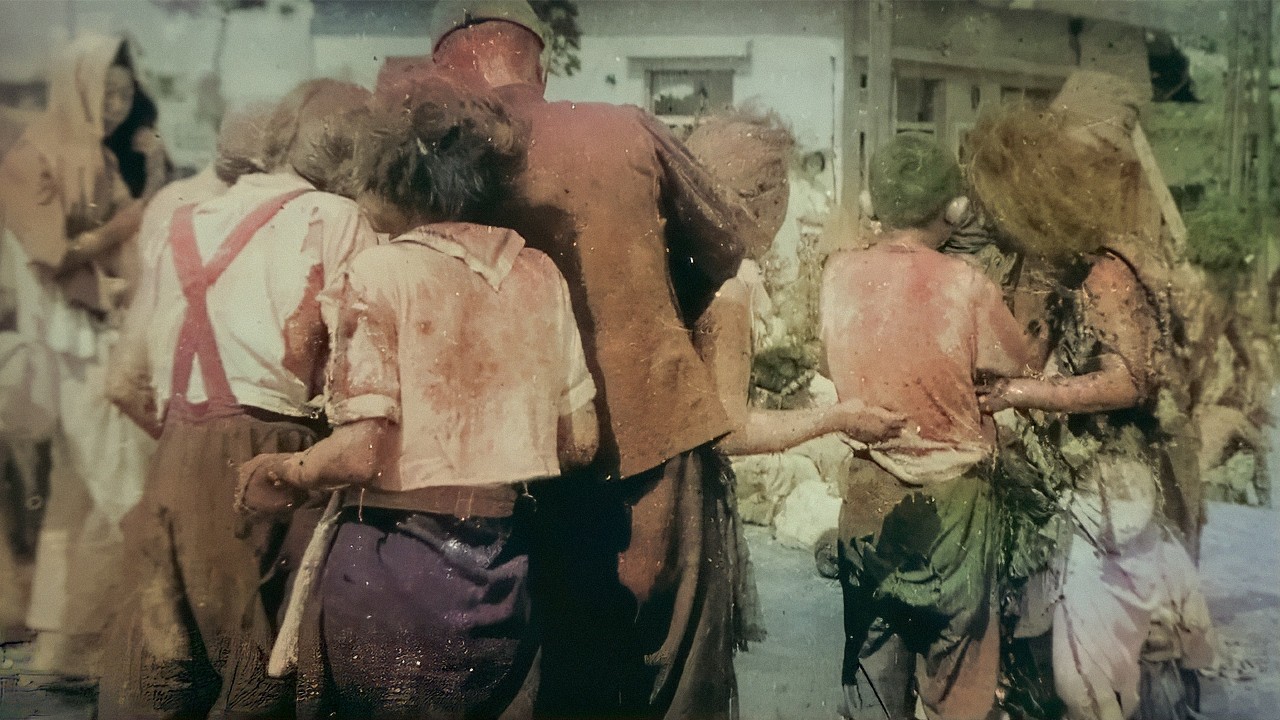
Duty of Memory- The proclamation of Haiti's independence on January 1, 1804, a historic moment when
Автор: KongoLisolo Inc
Загружено: 2025-12-29
Просмотров: 7
Описание:
Black identity rose up for the first time: The first war lost by a European army against non-European insurgents in decades, the first victorious slave revolt in modern history, the first free Black republic in the world; (this is what the Haitian revolutionaries accomplished between the Bois-Caïman ceremony of August 14, 1791, and the day of the proclamation of independence); « The colony of Saint-Domingue, established in the western part of the island of Hispaniola (the eastern part being a Spanish colony), was founded in 1627; Initially populated by Arawak Amerindians, the island's demographics would soon change »
From the very beginning of the European presence, due to disease and massacres perpetrated by the Spanish, the population plummeted from 1.6 million to 60,000 inhabitants between 1492 and 1507. Very quickly and faced with the impossibility of attracting a large number of Europeans to the island, economic development turned to the importation of enslaved Africans, a common practice among both the Spanish and the French. « Saint-Domingue became the most prosperous French colony thanks to its sugar and coffee production, supplying half of the world's output in the 18th century. But the demographic and political situation there is very complex ».
While slaves, imported en masse throughout the 18th century, eventually constituted the majority of the population (approximately 400,000 slaves out of 450,000 inhabitants on the eve of the French Revolution), white society itself was rife with tensions between the « Great Whites » (nobles and bourgeois who had become large landowners) and the « Little Whites » (employees, laborers, small shopkeepers, Etc). Added to this was the presence of « Free People of Color » (free mulattoes and freed Blacks), whose legal equality was, in practice, not recognized by the White/Western colonists.
Napoleon Bonaparte, who had ruled France since 1799, did not accept the situation presented to him by Toussaint Louverture. Supported by colonial circles, as well as by the mulatto chiefs defeated by Louverture during the « War of the Knives », he decided to reconquer the island. An expedition of 30,000 men set sail for Saint-Domingue. This reconquest operation, known as the (Saint-Domingue Expedition), was led by General Charles Leclerc. Faced with the power of the French army, the Haitian insurgents were defeated after a few months. « Toussaint Louverture was forced to surrender to the French authorities in May 1802, who exiled him to France despite the promises he had made upon his surrender. Imprisoned at Fort de Joux (Jura), he died on April 7, 1803, without having seen the end of the Haitian Revolution, whose victorious outcome he was certain of ».
The conflict between the colonial forces and the Haitian insurgents took many forms: guerrilla warfare, complex alliances between freedmen, mulattoes, and still-captive slaves, as well as British, French, and Spanish forces. The revolutionaries had to confront not only the metropolitan army, but also the immense economic machine that thrived on slavery. The simple fact that the colony of Saint-Domingue supplied a considerable share of the world's coffee and sugar exports testifies to this wealth built on injustice.
On January 1, 1804, military leader Jean-Jacques Dessalines proclaimed independence. This day marked the end of a cycle of revolts that began in 1791 and the birth of a new nation: Black, free, and sovereign. « The name Haiti was chosen in reference to the Arawak-Taíno language and means (Land of the High Mountains) ». This proclamation also had a considerable symbolic impact on Africa, the African diaspora, the fight against slavery, and anti-colonial movements worldwide. The simple fact that men and women descended from slaves were able to overthrow a European colonial power remains a source of inspiration even today.
However, this victory did not mean the absence of challenges. The young Haitian state found itself with a territory ravaged by more than a decade of war, destroyed plantations, an economy to rebuild, and diplomatic isolation. Although independence had been achieved, the road ahead remained fraught with obstacles. In 1825, France imposed an exorbitant indemnity on Haiti to recognize its independence, a burden that would weigh heavily on the country for decades.
Moreover, this independence would dramatically alter the geopolitical landscape of the Caribbean and beyond: the very idea that a slave colony could achieve freedom forced European powers to reconsider their policies and also to fear revolutionary contagion.« For it marked a turning point: it demonstrated that slavery was not inevitable, that freedom could be won by those deprived of their most fundamental rights, and that human dignity could be affirmed even in the most extreme circumstances.
Повторяем попытку...

Доступные форматы для скачивания:
Скачать видео
-
Информация по загрузке: