The Agentic Web
Автор: Ashish Singh
Загружено: 2026-04-27
Просмотров: 17
Описание:
The Agentic Web: From Isolated Bots to Interconnected Ecosystems
Introduction: The Next Evolution of Computing
The era of the "all-knowing" chatbot is ending. For the past few years, the industry focused on "sandboxed, single-turn" consumer chat applications. You typed a prompt, and a single foundation model—whether that was Gemini 1.5, Claude 3.5, GPT-4o, or Muse Spark—tried to do everything. But as we move into the enterprise space, this monolithic approach breaks down. Complex, real-world work requires a "headless, multi-step" architecture. We are rapidly evolving toward the Agentic Web: an interconnected network where specialized, autonomous AI agents collaborate to execute complex objectives. Ultimately, this architecture is about one core mission: empowering humans for efficiency.
Core Concept 1: The Rise of the Domain Expert Agent
Think of a traditional company. You don't hire one person to be your Lead Software Engineer, Chief Financial Officer, Data Analyst, and HR Director. You hire specialists. The future of AI mirrors human organizational structures. Instead of relying on one massive, generalized AI, we are deploying Domain Expert Agents:
The RAG Agent: Specializes in rapidly retrieving and synthesizing internal company documents.
The Code Agent: Specializes in writing, debugging, and deploying software.
The Web Search Agent: Specializes in navigating the live internet to extract real-time data.
These agents are highly focused. Because their scope is narrow, their accuracy, speed, and reliability in their specific domain are exponentially higher than a generalist model.
Core Concept 2: The Agentic Architecture (Multi-Agent Topologies)
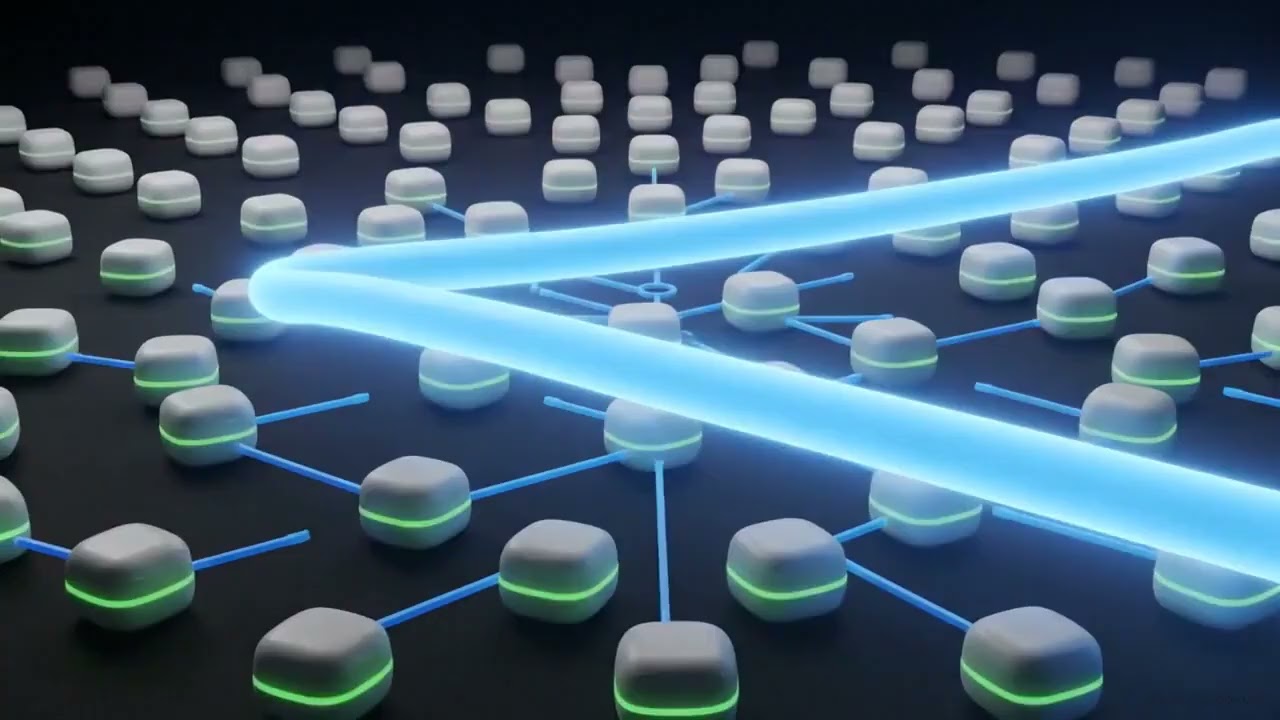
Having a team of brilliant experts is useless if they cannot communicate. This is where Multi-Agent Topologies come into play. Agentic architecture introduces an "Orchestrator". When a human user inputs a complex, multi-step goal, the Orchestrator doesn't try to solve the problem itself. Instead, it acts as a manager:
Task Decomposition: It breaks the massive goal down into bite-sized, actionable tasks.
Contextual Routing: It analyzes the network of available specialized agents, understands the unique expertise of each one, and routes the tasks to the best-suited agents.
Synthesis: It gathers the output from the "Worker Agents" and compiles it into a final, cohesive execution.
Visualizing the Workflow: Imagine a user requests, "Analyze our competitor's Q3 earnings and write a script to scrape their new pricing page." The Orchestrator delegates the financial analysis to a Data Agent, assigns the scraping task to a Code Agent, and then combines the results.
Core Concept 3: The Interoperability Standard (MCP)
For an interconnected ecosystem to thrive, the agents must speak a universal language. If a specialized agent built on Meta's infrastructure needs to pass data to an agent built on Microsoft's ecosystem, they need a standardized connection protocol. This is solved by the Model Context Protocol (MCP).
The "USB-C" of AI: MCP acts like a universal "USB-C port," standardizing how AI systems connect to external tools and data sources.
Solving the N×M Problem: Before MCP, every new AI model had to build custom integrations for every single tool, creating an unmanageable "N×M integration problem". MCP unifies this, allowing seamless collaboration across the entire digital landscape.
Industry Explorations: Tier 1 AI Players Building the Agentic Web
The shift from single-turn chat interfaces to full multi-agent orchestration is not just theoretical; it is actively being engineered by the world's leading technology companies. The race to own the "Agentic Ecosystem" is heavily defining the current strategy of the "Big Three" cloud providers and pure-play AI challengers.
Company
Strategic Focus & Agentic Initiatives
Meta
Driving open-source dominance in the infrastructure layer. With the evolution of Llama models and the shift towards the Muse Spark foundation model, Meta is heavily invested in open-source agentic workflows. They aim to control the foundational infrastructure that developers use to build decentralized agent networks.
Microsoft
Leveraging frameworks like AutoGen alongside their massive Copilot ecosystem. Microsoft has a track record of acquiring foundational developer infrastructure (like GitHub) to lock in developer mindshare, positioning them as the central orchestrator for enterprise multi-agent deployment.
Google (DeepMind)
Aggressively expanding via DeepMind and Vertex AI. Google is heavily invested in standardizing agent communication and maintaining defensive control over the "Agent" identity, underscored by strategic moves like their massive $2.7B Character.AI deal to strengthen their underlying intelligence and conversational capabilities.
Повторяем попытку...
Доступные форматы для скачивания:
Скачать видео
-
Информация по загрузке: