The Coinage Act of 1853: The Hidden Reason Your Silver Coins Disappeared
Автор: Secret Files of the Economy
Загружено: 2025-12-30
Просмотров: 44
Описание:
DISCLAIMER: This content is strictly educational and historical, examining documented legislative acts and their monetary consequences. The information presented is intended exclusively to promote understanding of numismatic history and currency systems. This video does not constitute financial, investment, or collecting advice under any circumstances. Always consult certified professionals before making investment or collecting decisions. The analyses represent educational interpretation of historical records, not recommendations for action.
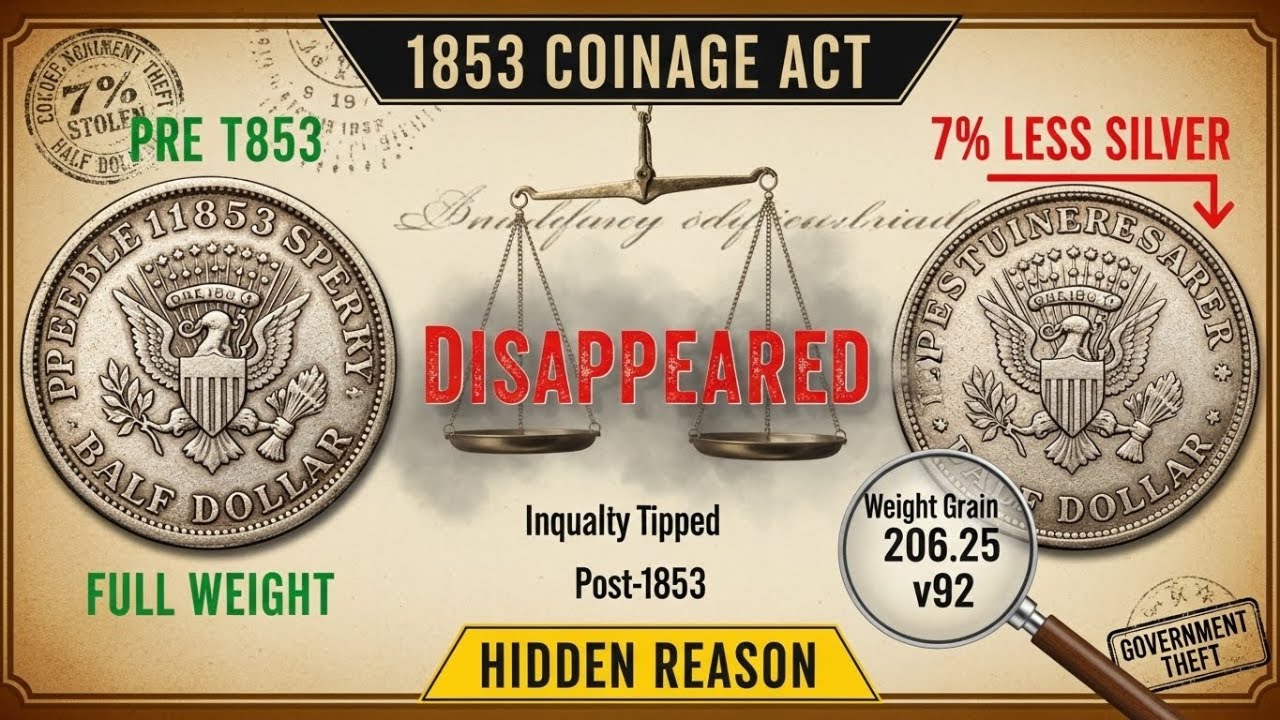
On February 21, 1853, Congress passed the Coinage Act of 1853 which reduced the silver content of half dollars, quarters, and dimes by approximately 7% while maintaining the same face value. This represented the first significant debasement of United States coinage and resulted in the immediate withdrawal and melting of nearly all pre-1853 silver coins, making them among the rarest dates in American numismatics today.
This documentary examines the Coinage Act of 1853, the California Gold Rush of 1849 which flooded markets with gold and disrupted the official 15.5:1 gold-to-silver ratio, how arbitrage opportunities created by ratio differences caused all silver coins to disappear from circulation between 1849-1853, the specific weight reductions implemented (half dollar 206.25 to 192 grains, quarter 103.125 to 96 grains, dime 41.25 to 38.4 grains), and why the 7% reduction in silver content represented a direct wealth transfer from citizens to government through seigniorage.
Analysis includes explanation of Gresham's Law demonstrating why overvalued coins circulate while undervalued coins are melted, documentation of how pre-1853 coins were systematically withdrawn and melted within twelve months of the Act's passage, examination of the arrows-on-date variety markers used in 1853-1854 to distinguish new reduced-weight coins from old full-weight coins, current numismatic values showing pre-1853 coins commanding significant premiums over post-Act dates due to higher silver content, and connection to subsequent debasements including Crime of 1873 demonetization, 1933 gold confiscation, and 1965 removal of silver from circulating coinage.
SOURCES FOR RESEARCH AND VERIFICATION: Coinage Act of 1853 legislative text and Congressional debate records, United States Mint annual reports 1849-1856 documenting production and weight standards, California gold production statistics from United States Geological Survey, Historical gold-to-silver market ratio data from precious metals markets, Academic research on Gresham's Law and bimetallism including works by Milton Friedman and Anna Schwartz, Numismatic references including Red Book Guide Book of United States Coins for weight specifications and survival rates, Auction records from Heritage, Stack's Bowers, and PCGS showing pre versus post-1853 price differentials, Federal Reserve historical data on money supply and coinage, Contemporary newspaper accounts documenting small change shortage 1850-1853, Connection to subsequent Coinage Acts of 1873 and 1965.
Understand why silver coins disappeared from circulation in 1853 and why pre-Act coins are rare and valuable today. Examine how 7% reduction in silver content represented government wealth confiscation through monetary debasement. Consider implications for collectors identifying full-weight versus reduced-weight coins and investors understanding historical patterns of currency debasement.
Повторяем попытку...
Доступные форматы для скачивания:
Скачать видео
-
Информация по загрузке: