Module 8.2 - Bupropion Toxicity - Podcast
Автор: Craig Cocchio
Загружено: 2026-01-06
Просмотров: 16
Описание:
Welcome to the Creative Commons Rx Podcast!
Before diving into this episode, I want to ensure we're all on the same page.
This is for general informational purposes only and does not constitute the practice of medicine, nursing, or other professional healthcare services, including the giving of medical advice. No doctor-patient or pharmacist-patient relationship is formed. Using this information and the materials linked to this podcast is at the user's risk. The content on this podcast is not intended to substitute for professional medical advice, diagnosis, or treatment. Users should not disregard or delay in obtaining medical advice from any medical condition they have, and they should seek the assistance of their health care professionals for any such conditions.
Clinical experts created the references, content, and clinical insight. NotebookLM, a Google AI tool, created the audio content, which I extensively reviewed before release.
Finally, the host states that he takes all conflicts of interest seriously. Currently, there are no conflicts to disclose. For all of his disclosures and the companies he invests in or advises, he directs users to reach out independently, where he keeps an up-to-date and active list of all disclosures.
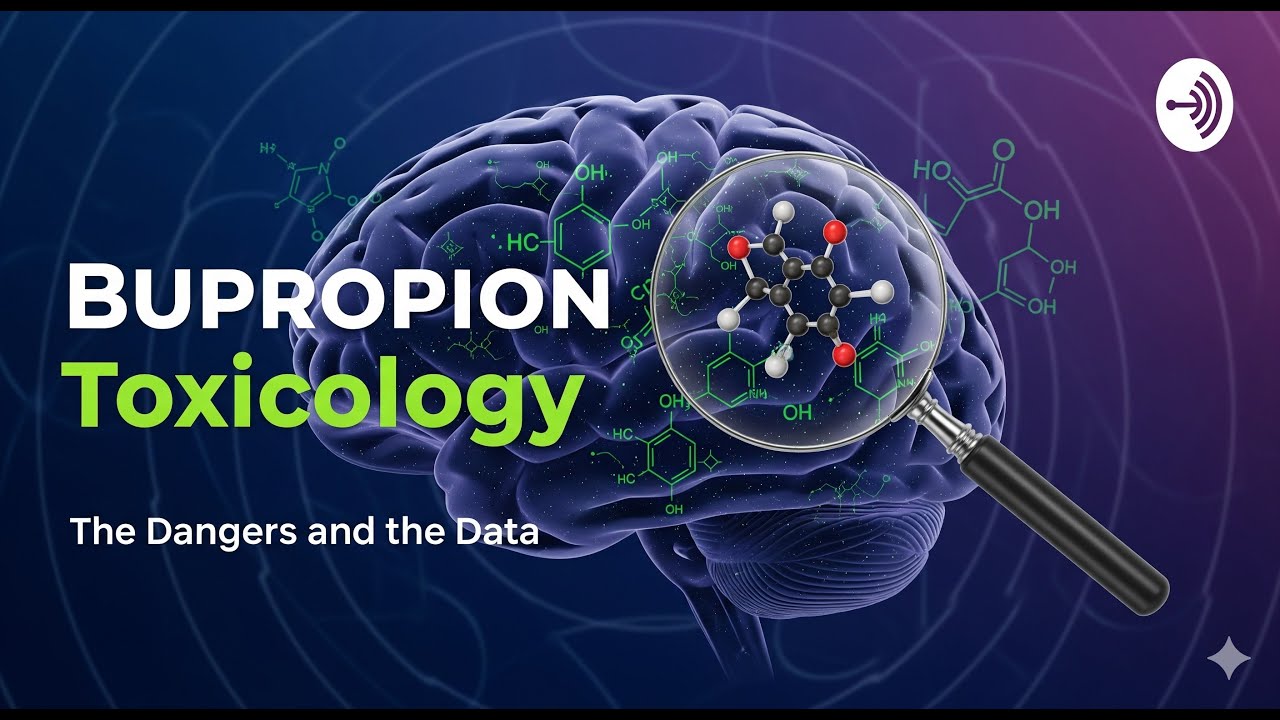
Welcome to our deep dive into Bupropion toxicity, a crucial topic for every healthcare professional! This atypical antidepressant, widely prescribed for depression, smoking cessation, and even ADHD, has a unique and uniquely dangerous toxicity profile that demands our attention.
Structurally similar to amphetamines, bupropion works by inhibiting norepinephrine and dopamine reuptake, but in overdose, it presents significant clinical challenges. Why the concern? Its widespread use and growing potential for recreational abuse have made bupropion overdose an increasingly recognized clinical issue, often proving more dangerous than other common antidepressants.
Key takeaways on its toxicity:
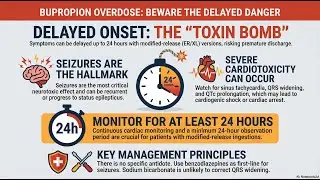
Seizures are the hallmark neurotoxic manifestation, often delayed (up to 24 hours with modified-release formulations) and potentially recurrent, leading to status epilepticus.
Cardiovascular complications are severe, including sinus tachycardia, QRS widening (due to gap junction inhibition), and QTc prolongation (due to IKr blockade), which can progress to cardiogenic shock and cardiac arrest.
Delayed symptom onset is a major challenge, especially with modified-release formulations, making extended observation (minimum 24 hours) with continuous cardiac monitoring absolutely essential to avoid premature discharge.
There's no specific antidote. Management is supportive, focusing on:
Benzodiazepines as first-line for agitation and seizures, with barbiturates or propofol for refractory cases (phenytoin is not recommended).
Activated charcoal may be considered within 2 hours of ingestion or for massive overdoses, but emesis/gastric lavage are contraindicated.
Intravenous lipid emulsion (ILE) is a conditional recommendation for life-threatening toxicity as a last resort, but its role in cardiac arrest is neutral due to concerns about interference with other treatments. Its "lipid sink" mechanism is the most compelling theory, but ILE has significant adverse effects.
Extracorporeal Membrane Oxygenation (ECMO) is an advanced intervention for refractory cardiogenic shock and seizures.
Understanding bupropion's pharmacology, kinetics (including active metabolites with prolonged half-lives), and the complexities of its overdose management is critical for patient safety. Join us as we explore the nuances of this challenging toxicology!
Повторяем попытку...
Доступные форматы для скачивания:
Скачать видео
-
Информация по загрузке: