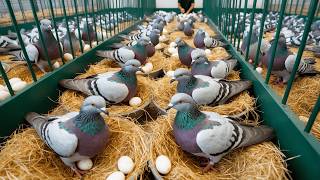
Scientific feed formulation is the key to successful meat pigeon farming.
Автор: ALLK
Загружено: 2025-12-25
Просмотров: 516313
Описание:
Scientific feed formulation is key to successful meat pigeon production. Feed rations must be adjusted according to the pigeons’ growth stage and physiological condition to meet their nutritional requirements. Below are reference feed formulations for different stages:
1. Squab Stage (Hatch to 1 month old)
During this period, squabs are primarily fed crop milk from parent pigeons; however, the nutritional quality of the parents’ diet directly affects the quality of their crop milk.
Formula: Peas 40%, Corn 30%, Wheat 20%, Brown Rice 9.7%
Characteristics: High in protein and energy to support rapid growth and development of squabs.
2. Juvenile Stage (1 month old to sexual maturity)
Pigeons grow rapidly during this phase, with critical development of bones and muscles.
Formula: Corn 50–55%, Wheat 10–15%, Peas 20–25%, Sorghum 10%
Characteristics: Energy-rich grains (especially corn) form the bulk of the diet to supply sufficient calories for growth, while protein sources (peas) are included at a moderate level to support muscle development.
Breeding Pigeon Stage (Adult Breeding Pairs)
Feed formulations for breeding pigeons vary depending on their physiological status—whether they are idle (no eggs or squabs), incubating eggs, or rearing squabs.
1. Idle/Incubation Period Formula
Composition: Corn 55%, Wheat 10%, Peas 25%, Sorghum 10%
Characteristics: Balanced nutrition to maintain the health and physical condition of breeding pigeons.
2. Squab-Rearing Period Formula
Composition: Corn 40%, Peas 40%, Wheat 10%, Sorghum 10%
Characteristics: Significantly increased proportion of protein-rich feed (peas) to meet the high nutritional demands of parent pigeons producing crop milk for their squabs.
Seasonal Adjustments
Feed formulations can also be fine-tuned according to seasonal changes:
Summer: High temperatures reduce pigeons’ appetite. It’s advisable to slightly decrease energy-dense ingredients like corn and increase cooling, heat-relieving grains such as wheat and mung beans.
Winter: Low temperatures increase pigeons’ energy needs for thermoregulation. The proportion of corn (a high-energy grain) can be moderately increased to help them stay warm.
Повторяем попытку...

Доступные форматы для скачивания:
Скачать видео
-
Информация по загрузке: