Why Did 12,500 Men Advance Into Certain Death at Gettysburg? (The Artillery Changed Everything)
Автор: Past Bites
Загружено: 2026-02-13
Просмотров: 1260
Описание:
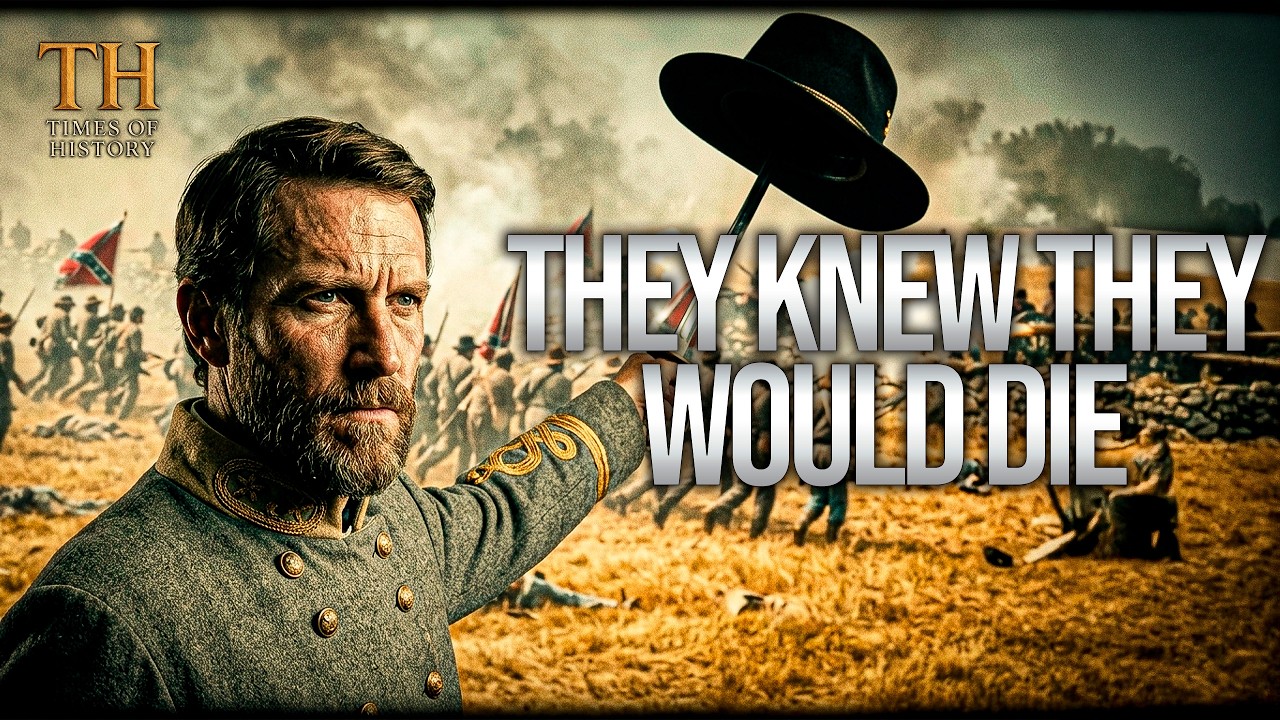
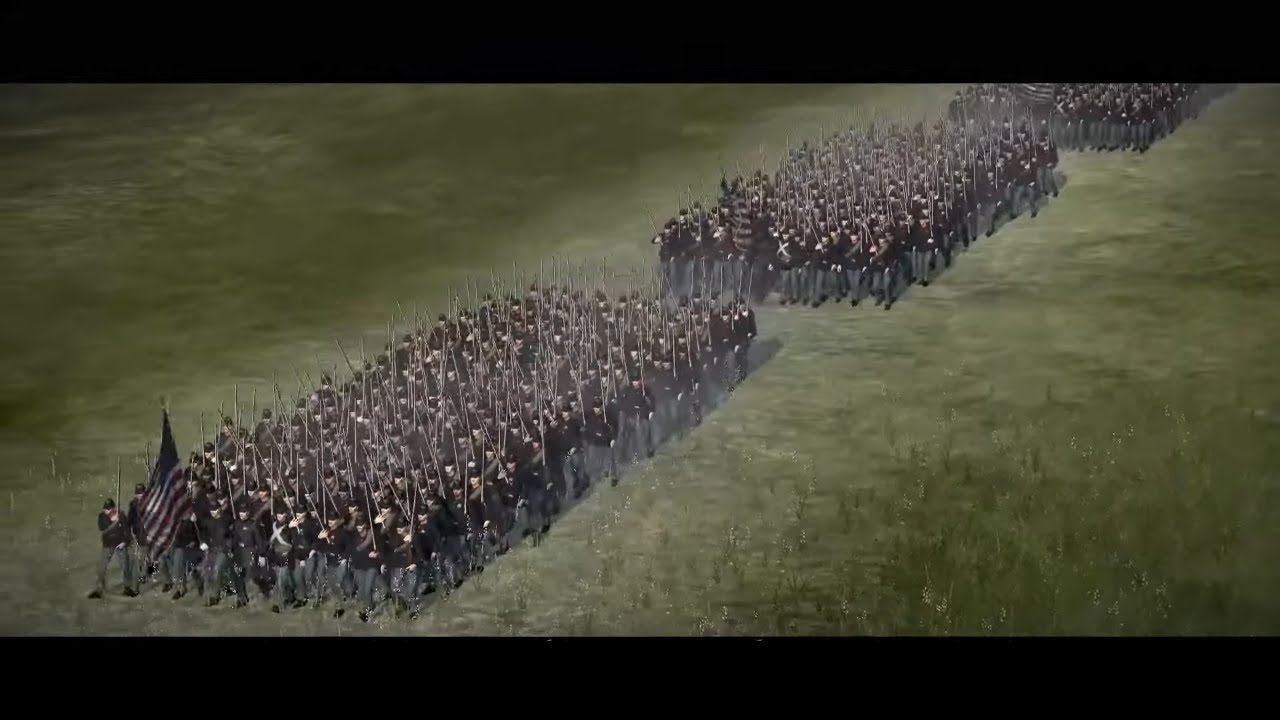
On July 3rd, 1863, nearly 13,000 Confederate soldiers stepped out of the woods on Seminary Ridge and began walking across three quarters of a mile of open Pennsylvania farmland. By the time the smoke cleared, more than half of them would be casualties. This wasn't just a failed military assault. It was the turning point that ended the Confederacy's last real chance to win independence.
But here's what most accounts miss: this disaster wasn't the result of poor planning or bad luck. It was the inevitable conclusion of strategic decisions made days earlier, cultural assumptions about warfare that no longer matched reality, and a fundamental misunderstanding of what modern artillery could do to infantry in the open field.
Today, we're examining why Pickett's Charge happened, why it failed so catastrophically, and how this single hour on July 3rd fundamentally altered the trajectory of the American Civil War. But before we continue, please be sure to like and subscribe to the channel.
To understand why Lee ordered this assault, we need to back up three days. By July 1863, the Confederacy was facing a crisis. The Union blockade was strangling Southern ports. Federal forces controlled the Mississippi River, splitting the Confederacy in two. And perhaps most critically, European powers who might have recognized Confederate independence were waiting to see if the South could actually win battles on Northern soil.
Robert E. Lee's invasion of Pennsylvania wasn't just about tactics. It was a political theater with military means. A decisive victory near a major Northern city might convince Britain or France to intervene. It would certainly demoralize Northern civilians and strengthen Peace Democrats arguing for negotiated settlement. But time was running out. Lee's army was far from its supply base, operating in hostile territory, and couldn't sustain a prolonged campaign.
When the Battle of Gettysburg erupted on July 1st, it was initially an accidental encounter. Confederate forces stumbled into Union cavalry while searching for supplies. But the battle quickly escalated, and by July 2nd, both armies had converged on this small Pennsylvania town. Lee had won significant tactical victories on the first two days, pushing Union forces back onto Cemetery Ridge and Cemetery Hill.
Here's where Lee faced his critical decision. He could withdraw back to Virginia with his army intact, or he could attempt one more decisive assault to break the Union army and achieve that war-winning victory he needed. Lee chose to attack. And not just anywhere—he chose to assault the center of the Union line, the strongest point, with a frontal assault across open ground.
Why would an experienced commander make this choice? The answer reveals something crucial about military culture in 1863.
There's a persistent myth that needs addressing: the idea that Civil War generals were incompetent butchers who didn't understand that rifles had made frontal assaults obsolete. This oversimplifies both the technology and the tactical thinking of the era.
The reality is more nuanced. Rifled muskets had indeed increased infantry range from about 100 yards to 300-400 yards. But artillery was still smoothbore in many cases, and defenders behind fortifications were still vulnerable to a massed charge if—and this is critical—if the attacking force could close the distance quickly and reach hand-to-hand combat.
Lee had seen this work before. At Chancellorsville just two months earlier, aggressive Confederate assaults had shattered larger Union forces. The tactical doctrine of the era still held that determined infantry could overcome defensive positions through shock action and momentum. British forces had used such tactics successfully in the Crimean War. French armies had built their reputation on the offensive spirit.
What Lee may not have fully appreciated was how much the defensive situation at Gettysburg differed from previous battles. The Union center wasn't just defended by infantry with rifles. It was supported by massed artillery with clear fields of fire, positioned on elevated ground, with infantry protected by a stone wall that provided perfect cover while allowing them to fire freely.
This brings us to July 3rd and the crucial preliminary bombardment.
At 1:07 PM on July 3rd, Confederate artillery opened fire with what witnesses described as the largest bombardment ever seen in the Western Hemisphere. Over 140 Confederate guns fired continuously for nearly two hours, attempting to destroy Union artillery and demoralize Union infantry before the infantry assault began.
The plan was sound in theory. Suppress the defenders, destroy their artillery, and then send in the infantry to finish the job. But the execution revealed a critical limitation of 1860s artillery technology: accuracy at long range was extremely poor.
#Gettysburg #CivilWar #PickettsCharge
Повторяем попытку...

Доступные форматы для скачивания:
Скачать видео
-
Информация по загрузке: