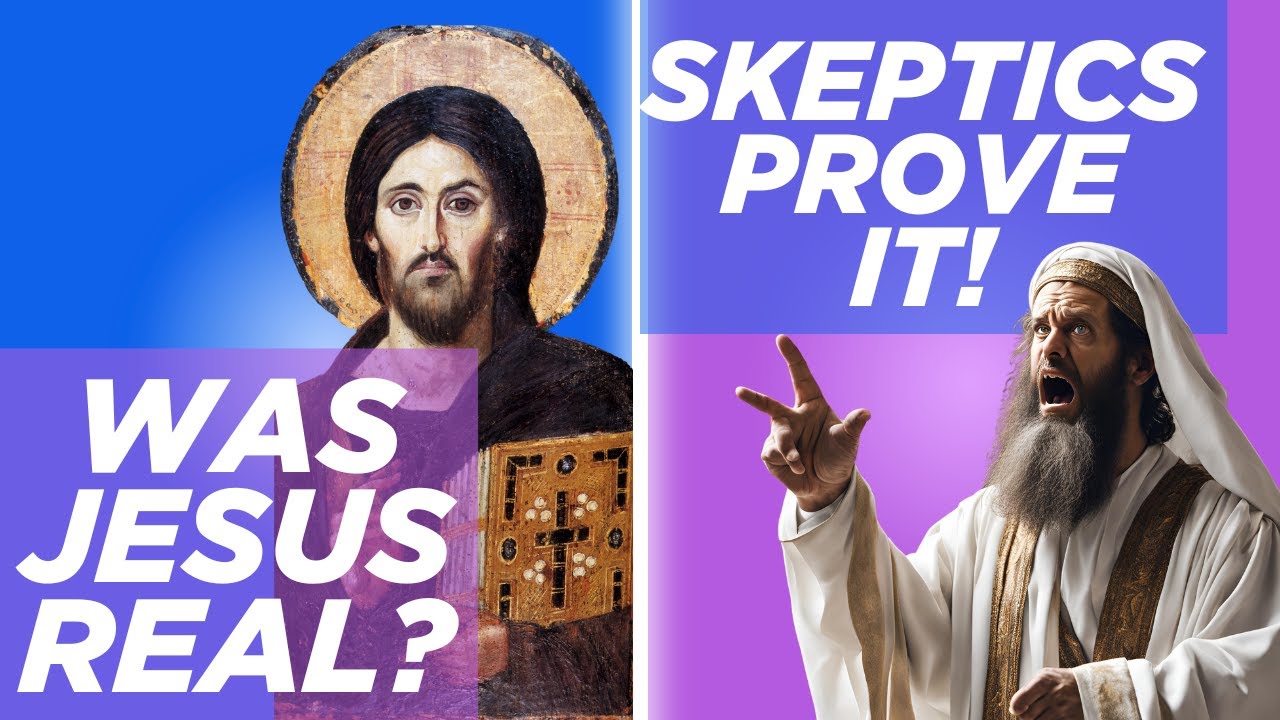
Resurrection Hoax? Why the Evidence Says Otherwise
Автор: THEO LIFE
Загружено: 2025-02-13
Просмотров: 281
Описание:
Objections:
Myth Hypothesis: Critics claim Jesus was a mythical figure or that the Gospel accounts are exaggerated legends. But myths do not work like that. Myths develop over centuries and are intentionally vague on specifics. Whereas the story of Christ is based on early sources (e.g., Paul’s letters, written within 20–30 years of Jesus’ death) and non-Christian references affirm Jesus’ historicity. Also, myths use mythological Language to avoid being compared with external evidence. Yet the gospel writers use historical language and place themselves firmly within an objective geographical and historical location.
Swoon Theory: Some have argued that Jesus did not actually die upon the cross but rather became unconscious from medical distress, exhaustion, or pain. This would be unlikely as surviving from the scourging that Jesus received was already incredibly rare. Surviving crucifixion is remarkably unlikely. The only people to have survived crucifixion were those who were removed after a very short time. According to John 19:34, when Jesus was speared “blood and water came out.” This is a condition known as pericardial effusion, which is a normal response to crucifixion. Pericardial effusion is invariably fatal. Even if Jesus survived execution he would have been in such miserable physical condition that he would have been in no condition to inspire anyone to do anything.
The Mass Hallucination Theory: Proponents argue that Christ’s followers, overwhelmed by grief and strong expectations of His return, may have experienced hallucinations, either individually or collectively, that they interpreted as encounters with the risen Jesus. First, critics of this theory note that group hallucinations are rare. Hallucinations are typically individual experiences. It is difficult to explain how large groups of people, such as the disciples or the 500 mentioned by Paul (1 Corinthians 15:6), could share identical experiences. Or how several people can hallucinate identical conversations, appearances, and events. Secondly, the resurrection accounts describe Jesus appearing in different locations, times, and ways, making it unlikely to be the result of a shared psychological phenomenon.
Conspiracy: Some have argued that the disciples stole the body to make it appear that Christ had Resurrected to add Credence to the fledgling religion. When investigating a crime such as this investigators consider means, motive, and opportunity.
Means: Matthew 27:65-66 tells us that Jesus’ tomb was guarded (likely by Roman soldiers as they requested them from Pilate). It is inexplicable how Jewish peasants could have subdued or convinced Roman guards to abandon their posts as such failure was likely met with severe punishments. Thus the disciples did not have the means to remove Christ's body.
Motive: Why would the disciples steal the body of Christ? If they were hoping to start a new ethical religion then why begin it with a lie? Also, by preaching the resurrected Christ, the disciples endured far more hardship if they had returned to their old lives. Thus, there is no obvious motive for stealing the body of Jesus.
Opportunity: It would have been extremely difficult for the disciples to have the opportunity to move the body of Christ. As Jesus died during the Feast of Passover, the city of Jerusalem would have been extremely crowded with people sleeping in the streets. Associates of a recently executed Enemy of the State carrying a body through a densely crowded Street would have certainly been noticed and questioned.
“I know the resurrection is a fact, and Watergate proved it to me. How? Because 12 men testified they had seen Jesus raised from the dead, then they proclaimed that truth for 40 years, never once denying it. Every one was beaten, tortured, stoned and put in prison. They would not have endured that if it weren't true. Watergate embroiled 12 of the most powerful men in the world-and they couldn't keep a lie for three weeks. You're telling me 12 apostles could keep a lie for 40 years? Absolutely impossible.”
Chuck Colson
The Empty Tomb: The resurrection of Christ could have been easily refuted simply by inspecting His tomb and revealing the body. If a dead body was produced, Christianity would have ceased.
There are no historical accounts of anyone claiming to have the body of Christ.
In the first century, bones and body parts of religious figures were collected as blessed relics. If the disciples hoped to continue the Christian faith, Christ’s body would have been a valuable commodity.
Extraordinary claims require extra extraordinary evidence
You have to determine the difference between what is the likelihood we would have this evidence if the events did not occur? Is it more likely that the evidence suggests the event occurred or is it more likely that the events occurred?
Повторяем попытку...

Доступные форматы для скачивания:
Скачать видео
-
Информация по загрузке: