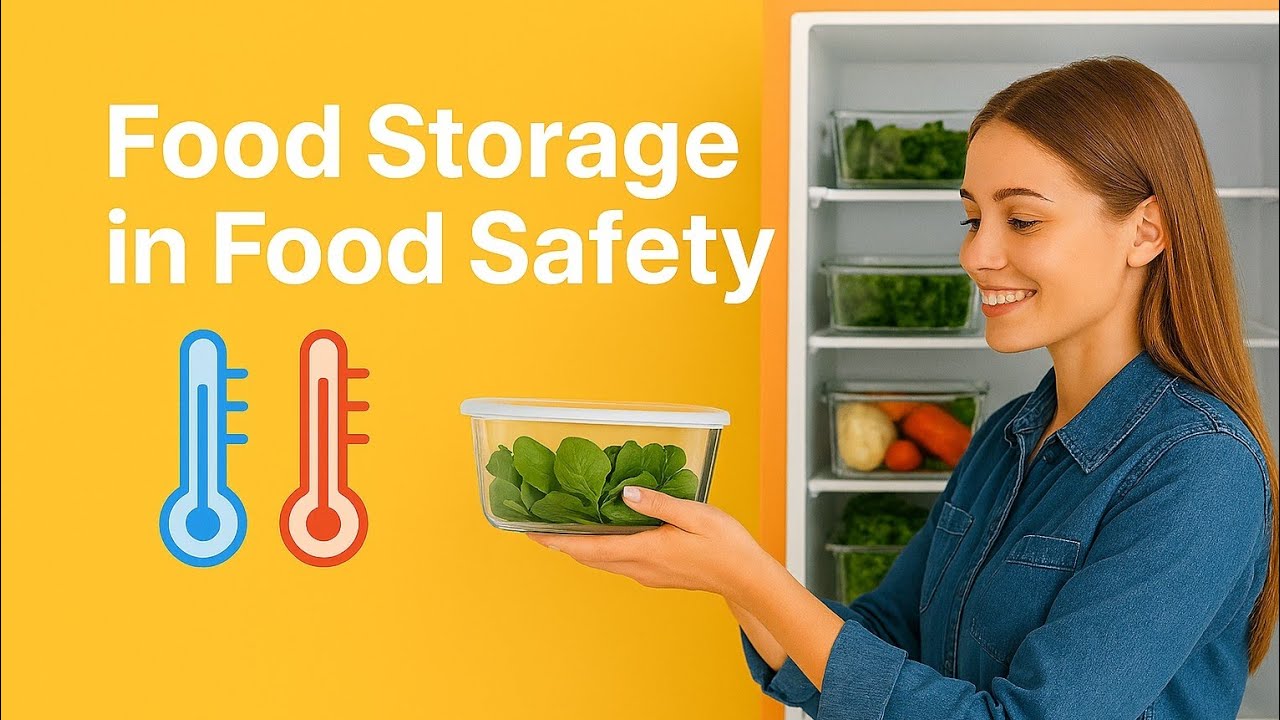
Food Storage and Temperature Control in Food Safety
Автор: Analysis Skill Studio
Загружено: 2026-02-11
Просмотров: 1
Описание:
Food Storage in Food Safety – Description
Food storage is a key part of food safety because it helps prevent contamination, slows the growth of harmful bacteria, and keeps food fresh and safe to eat for longer. Proper storage practices protect food from physical, chemical, and biological hazards.
*1. Temperature Control*
Keeping food at safe temperatures is critical:
*Cold foods:* Store at *5°C (41°F) or below* to slow bacterial growth.
*Frozen foods:* Store at **–18°C (0°F) or below**.
*Hot foods:* Keep at *60°C (140°F) or above* to prevent bacterial growth.
Avoid the *Temperature Danger Zone (5°C–60°C / 41°F–140°F)* where bacteria multiply rapidly.
*2. Storage Areas*
Keep storage areas **clean, dry, and well-ventilated**.
Store food off the floor and away from walls to prevent contamination.
Use *pest-proof* containers and regularly inspect for insects or rodents.
*3. Food Organization*
Use safe storage methods:
*FIFO (First In, First Out):* Use older stock before newer stock.
Separate foods:
*Raw foods* away from **ready-to-eat foods**.
Store *raw meat* at the *bottom shelf* to prevent drips.
Keep *allergen-containing foods* separated to prevent cross-contact.
*4. Packaging and Containers*
Store food in **clean, food-grade containers**.
Keep foods *covered or sealed* to prevent contamination.
Label food with:
Name of the food
Preparation date
Expiry or use-by date
*5. Dry Food Storage*
Keep dry foods like rice, flour, and canned goods in:
Cool, dry areas (10–21°C or 50–70°F)
Airtight containers
Avoid moisture to prevent mold and bacteria.
*6. Monitoring and Rotation*
Regularly check temperatures using accurate thermometers.
Inspect food for spoilage such as odor, color change, slime, or mold.
Throw away expired or questionable food immediately.
Повторяем попытку...
Доступные форматы для скачивания:
Скачать видео
-
Информация по загрузке: