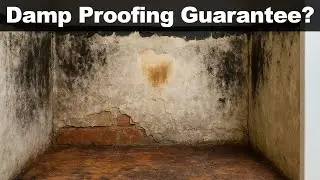
🚫💧 No Rising Damp – Just This Simple Fix! | Why Most London Damp Proofing Is Wrong 😱🏠
Автор: Damp Surveys
Загружено: 2025-06-30
Просмотров: 479
Описание:
0:00 🎵 Introduction – Why I create these damp survey videos
0:40 🧾 Kenwood report and damp-proofing claims
1:50 🚫 Problems with damp-proofing logic
2:50 🏚️ External inspection – render, paint, drain issues
3:50 🏠 Internal signs – plaster ridge, brown staining
5:00 📷 Thermal imaging and ventilation issues
6:00 💨 Vapour, mould, and extractor fan failures
7:00 🌿 Rear wall, missing gutter, and cold pipework
10:20 📊 Data logger analysis – dew point and humidity
13:20 📉 Groundwater myth and flood risk explained
16:40 🧱 Wrap-up – true root causes and damp-proofing warning
17:58 🙏 Final thanks and resources
🧾 CONCLUSION
The primary causes of damp at this property are penetrating damp and condensation.
1. Penetrating Damp stems mainly from:
• A disconnected downpipe at the front, allowing rainwater to spill onto exposed soil rather than into the drain.
• Cracked and blistered external paintwork, exacerbated by impermeable coatings that trap moisture.
• Damaged render, particularly where past damp-proofing has been applied.
• A missing gutter link at the rear, leading to runoff cascading down the rear wall and causing visible green growth and paint damage.
2. Condensation is a secondary but significant contributor, worsened by:
• Inadequate extraction: the kitchen fan vents internally and the bathroom fan runs at only ~9 L/s (well below the recommended 15–60 L/s).
• The solid floor retains coolth, increasing surface RH risk at wall bases.
• Cold spots behind cupboards and on external walls (especially with cold pipework).
• Mould growth on walls and behind storage points confirms seasonal excess vapour. Dew point measurements suggest that, in winter, internal vapour would exceed external temperatures—creating condensation risk.
3. The historic damp-proofing (c.2006) does not address these root causes. In fact, it likely exacerbates condensation and redirects water to untreated zones, such as chimney breasts.
4. Bubbling paint and brown staining suggest trapped moisture, salt crystallisation (gypsum/calcium sulphate), and potentially rusting metal beads—not rising damp.
⸻
🔧 ACTION LIST - most of these costs are property wide and should fall within the work being undertaken by the RTM
1. Connect the downpipe to the drain
• Add ~15 cm of pipe to the front to ensure all rainwater reaches the gully.
• Cost: Low (£10–30 DIY or £50 handyman).
2. Clean, repair and repaint external render and walls
• Wire brush to remove flaky/blistered paint.
• Repair render cracks:
• 3 mm: use cement-based mortar.
• Less than 3 mm: use acrylic caulk or flexible mastic.
• Repaint with:
• Breathable mineral paint if existing coatings are removed, or
• Impermeable masonry paint (e.g. Zinsser or Dulux Weathershield) if significant past coatings remain.
3. Add missing rear gutter connection (hopper → downpipe)
• Essential to prevent overflow down the wall.
• May require ladder access or scaffold during external works. (£100 handyman).
4. Upgrade extractor fans
• Replace bathroom fan with a continuous flow fan with humidity sensor and overrun (e.g. Vent-Axia or EnviroVent).
• Ensure kitchen extractor is ducted outside and not recirculating.
• Add spring hinge to kitchen/bathroom doors to encourage closed-door use.
Equipment, electrics, ducting cost circ. £1,000.
5. Monitor internal humidity
• Use a data logger (e.g. Govee or Inkbird) to track dew point vs outdoor temperature.
• Keep dew point below outdoor temperature, particularly in winter.
6. Apply HG Mould Spray to visible mould
• Particularly on back walls of cupboards and base of walls.
• Consider lining cold backs of cupboards with thin thermal board or breathable insulation.
7. Dehumidifier use (esp. in winter or post-work drying)
• A 10–20 L/day unit set to ~60–65% RH with drain to sink if left unattended.
8. Seal external joinery
• Sand back and treat any rotten timber (use 2-part epoxy filler or Ronseal Wood Hardener).
• Repaint window frames as part of the full exterior refresh.
9. Check and repair all external cracks and gaps
• Include perimeter of stairs, base of walls, and join lines with neighbours’ finishes.
• Use cement or acrylic-based fillers, depending on movement expectations.
10. Avoid further damp-proofing treatments
• Existing issues stem from external water and internal vapour—not rising damp.
• Removing tanking and installing breathable insulation, like SpaceTherm, is the long-term solution, but probably overkill, if ever needed.
Повторяем попытку...

Доступные форматы для скачивания:
Скачать видео
-
Информация по загрузке: