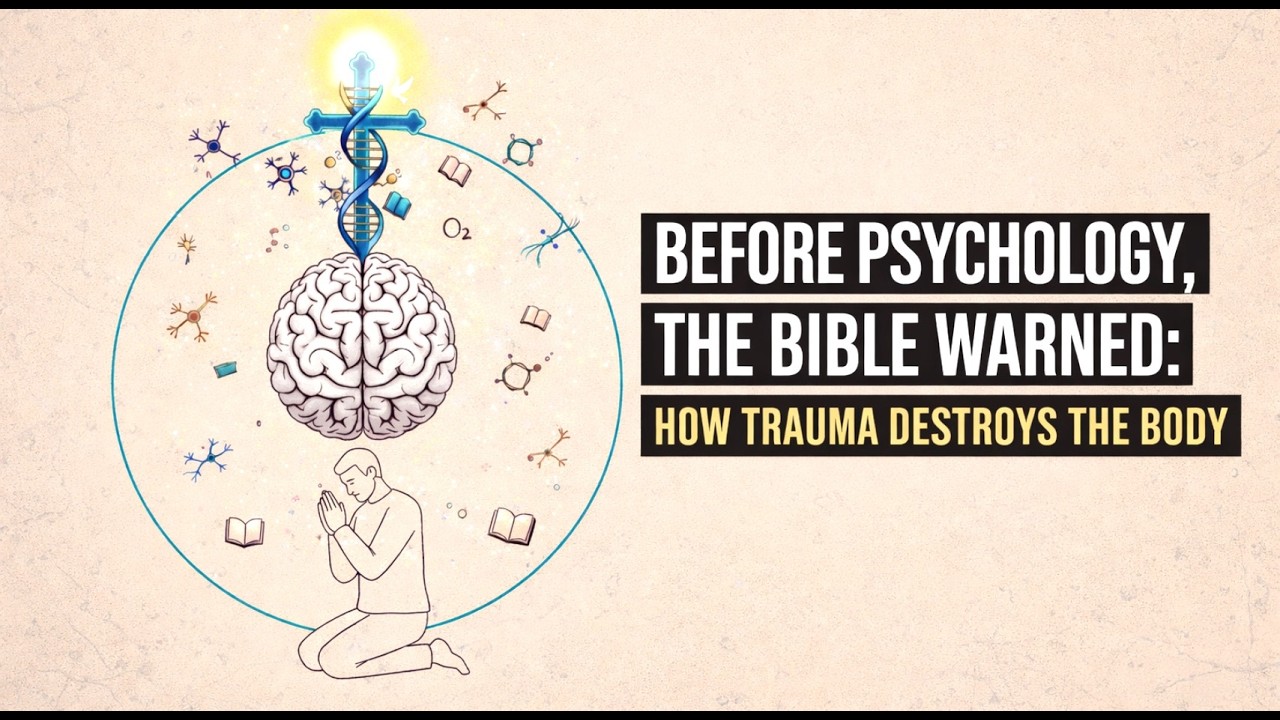
A Neurologist Reviews "Be Still And Know" (It's Literal)
Автор: The Productive Christian
Загружено: 2026-02-25
Просмотров: 35418
Описание:
"Be still, and know that I am God." You've heard it a thousand times. But what if this verse isn't just poetry—it's neurology?
In this video, a neurologist (and Christian) reviews Psalm 46:10 through the lens of modern brain science. Discover what happens in your brain when you practice stillness: the thalamus deactivates (shutting out sensory noise), the default mode network quiets (stopping rumination), alpha waves emerge (calming the anxious brain), and heart-brain synchronization occurs (activating the vagus nerve).
Based on peer-reviewed research from BMC Neuroscience, Imaging Neuroscience, Frontiers in Psychology, and studies from Baylor College of Medicine and the National Institutes of Health, this video bridges 3,000-year-old Scripture with 21st-century fMRI technology.
🧠 GET YOUR FREE "STILLNESS PROTOCOL" GUIDE!
7 days of neuroscientific prayer practices based on Psalm 46:10.
👉 https://drive.google.com/file/d/1i7fI...
☕ SUPPORT OUR WORK
If these videos are helping you find peace and grow in faith, consider buying me a coffee! Your support fuels more research, more scripts, and more free resources.
👉 https://ko-fi.com/theproductivechristian
CHAPTERS:
The Most Quoted Verse in History
The Hebrew Word That Changes Everything ("Raphah")
What Happens in Your Brain When You "Be Still"
1. The Thalamus Deactivates (Shutting Out the World)
2. The Default Mode Network Quiets (Stopping Inner Chatter)
3. Alpha Waves Emerge (The Brain's "Reset" State)
4. The Amygdala Calms (Fear Center Down-Regulation)
The Synchronization Effect: Heart, Brain, and Gut
"And Know That I Am God" (The Neuroscience of Relationship)
The Practice: How to "Be Still" Like a Neurologist
The Promise: What Stillness Produces
Your Free Stillness Guide
KEY RESEARCH SOURCES:
Ehmann et al. (2025). Mindfulness, cognition, and long-term meditators. Imaging Neuroscience
Perez-Diaz et al. (2023). Monitoring neural activity during prayer. BMC Neuroscience
Gao et al. (2020). Repetitive Religious Chanting and emotion regulation. Multi-modal MRI Study
Baylor College of Medicine (2016). EEG + HRV study on Centering Prayer
Hölzel et al. (2011). Mechanisms of mindfulness meditation. Perspectives on Psychological Science
KEY SCRIPTURES:
Psalm 46:10 (Be still and know)
Exodus 14:14 (The Lord will fight for you; you need only to be still)
1 Kings 19:11-13 (The still, small voice)
Mark 4:39 (Peace, be still)
WATCH NEXT:
What Happens In Your Brain When You Pray: • What Happens In Your Brain When You Pray (...
The "Anxiety Verse" Recommendation From A Neurologist: • The "Anxiety Verse" Recommendation From A ...
Why Your Brain Hates Uncertainty (And The Bible's Solution): • Why Your Brain Hates Uncertainty (And The ...
ABOUT THE PRODUCTIVE CHRISTIAN:
We help you build a purpose-driven life through biblical systems, not just hustle. We integrate neuroscience, psychology, and Scripture for whole-person transformation.
Subscribe for practical faith here: / @theproductivechristian
TAGS:
be still and know, psalm 46 10, neuroscience of prayer, christian meditation, brain and stillness, default mode network, thalamus deactivation, alpha waves, vagus nerve, contemplative prayer, centering prayer, productive christian, faith and science, neurotheology, biblical meditation, rest in god, silence and solitude
Повторяем попытку...

Доступные форматы для скачивания:
Скачать видео
-
Информация по загрузке: