Samsun (TURKEY)
Автор: ExploreWorld
Загружено: 2013-12-31
Просмотров: 12709
Описание:
TURKEY Playlist: http://goo.gl/tCpBWC
Google+: http://goo.gl/FSs6Ia
Facebook: http://goo.gl/gwnLPg
Twitter: http://goo.gl/KGoufJ
Paleolithic artifacts found in the Tekkeköy Caves can be seen in Samsun Archaeology Museum.
The earliest layer excavated of the höyük of Dündartepe revealed a Chalcolithic settlement. Early Bronze Age and Hittite settlements were also found there[2] and at Tekkeköy.
Tumuli, containing tombs dated between 300BC and 30BC, can be seen at Amisos Hill.
Samsun (then known as Amisos, alternative spelling Amisus) was settled between the years of 760 - 750 BC by people from Miletus,[3] who established a flourishing trade relationship with the ancient peoples of Anatolia. The city's ideal combination of fertile ground and shallow waters attracted numerous traders.
In the 3rd century BC the city came under the expanded rule of the Kingdom of Pontus. The Amisos treasure may have belonged to one of the kings. The Kingdom of Pontus had been part of the empire of Alexander the Great. However, the empire was fractured soon after Alexander's death in the 4th century BC. At its height, the kingdom controlled the north of central Anatolia and mercantile towns on the northern Black Sea shores.
The Romans took over in 47 BC and Amisos became part of Bithynia et Pontus province (and later Dioecesis Pontica) of the eastern Roman Empire.
For the period after the fall of Rome the Eastern Roman Empire is now called the Byzantine Empire. The city was part of the theme of Armeniakon.[4]
Samsun Castle was built.
When Constantinople was conquered in 1204 by the Fourth Crusade, Amisos was governed by a prudent official named Sabbas, who was accordingly popular. When the army of the Trebizond Empire under Emperor Alexios I appeared before its walls and demanded allegiance to Trebizond, Sabbas refused; the town was subjected to a siege until help arrived from the Sultan of Iconium. Knowing full well he lacked the resources to keep this city independent, Sabbas eventually acknowledged the nominal rule of Theodore Laskaris.[5][unreliable source?]
Samsun was one of the Genoese colonies.
The city is both an Eastern Orthodox and a Roman Catholic titular see.
Under the Ottomans the city became part of the Sanjak of Canik (Turkish: Canik Sancağı), which was at first part of Rûm Eyalet.
In the later Ottoman period the land around the town mainly produced tobacco. The town was connected to the railway system in the second half of the 19th century, and tobacco trade boomed.
Replica of the cargo ship SS Bandırma, which carried Atatürk from Istanbul and arrived in Samsun on May 19, 1919, the date which traditionally marks the beginning of the Turkish War of Independence.
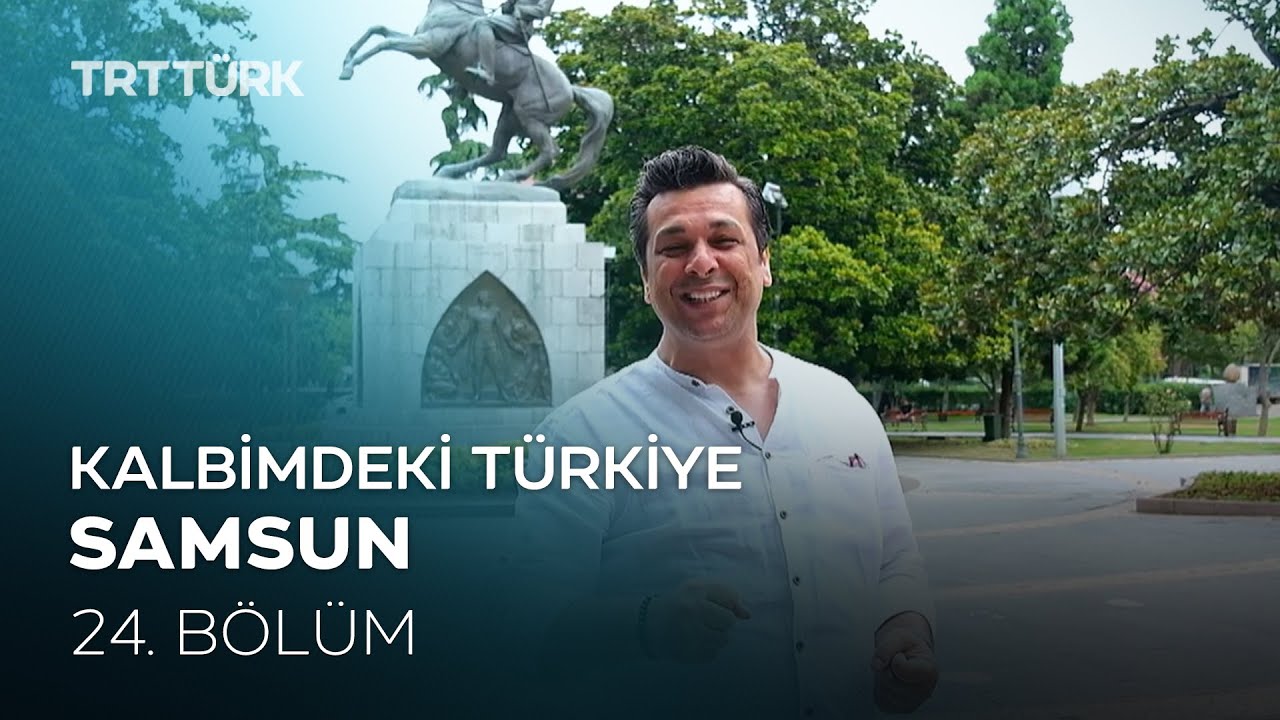
Mustafa Kemal Atatürk established the Turkish liberation movement in Samsun on May 19, 1919, the date which traditionally marks the beginning of the Turkish War of Independence. Later in the war the city was bombarded. As of 1920, Samsun's population totaled about 36,000.[6]
A US aırforce radio group was based in Samsun from 1956 until closure in the early 70s
#travel #turkey #holiday #tourism
Повторяем попытку...
Доступные форматы для скачивания:
Скачать видео
-
Информация по загрузке:



![VAN LIFE in SAMSUN. Largest city on Turkey’s Black Sea coast [S6-E56]](https://imager.clipsaver.ru/gJi5xjhmemw/max.jpg)