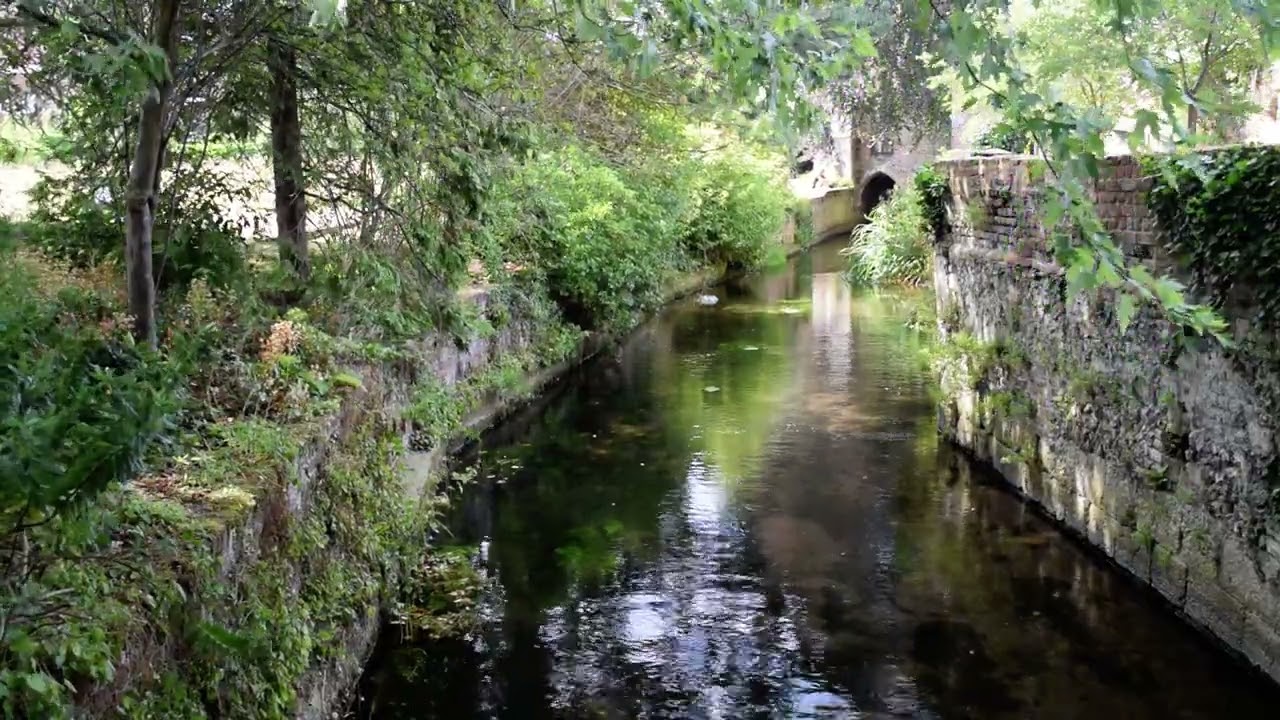
Looking down the Stour towards the Greyfriars Chapel
Автор: TheCanterburyTours
Загружено: 2025-09-17
Просмотров: 0
Описание:
The arrival of the Grey Friars in Canterbury in 1174 marked one of the earliest foundations of the Franciscan order in England, and it reflected the city’s importance as both a spiritual centre and a place of pilgrimage.
Who were the Grey Friars?
The Grey Friars were members of the Franciscan order, founded by St Francis of Assisi in Italy in the early 13th century. They were called “Grey Friars” because of their humble grey habits — a deliberate contrast to the richly coloured vestments of other orders.
Their mission was to live lives of poverty, humility, and service, working directly among ordinary people. They begged for alms, preached in the open air, and gave comfort to the poor and sick. Unlike monks, who often lived in cloistered monasteries, friars embedded themselves within towns and cities.
The Coming to Canterbury, 1174
The Franciscans first arrived in England around 1224, when a group of friars landed at Dover. From there, they travelled on foot to Canterbury, the seat of the English church and still reeling from the dramatic events of the late 12th century — particularly the murder of Archbishop Thomas Becket in 1170 and the devastating great fire of Canterbury in 1174, which destroyed much of the cathedral.
It was in this turbulent context that the Grey Friars established themselves in Canterbury. Their presence offered both spiritual renewal and practical help at a time when the city was recovering from fire, trauma, and a flood of pilgrims coming to venerate Becket’s growing cult.
Their Settlement
The friars were granted land on the banks of the River Stour, just outside the bustling heart of the city.
Here they built their first modest houses and, eventually, their friary.
By 1267, they had constructed the Greyfriars Chapel, which still survives today and is famous for straddling the river — the oldest surviving Franciscan building in Britain.
Their Role in the City
The Grey Friars soon became deeply woven into Canterbury’s life:
They preached in the streets and marketplaces, reaching ordinary people.
They ministered to the poor, offering food, clothing, and spiritual support.
Their friary gave shelter to pilgrims on their way to and from London, especially those visiting the shrine of Thomas Becket in the Cathedral.
Legacy
Though the order thrived for centuries, it met its end in Canterbury during the Dissolution of the Monasteries under Henry VIII in the 1530s. The friary was dissolved, its lands seized, and its community scattered. Yet the chapel survived and still stands today in Greyfriars Gardens, a rare and beautiful reminder of the first Franciscans who walked barefoot into Canterbury in 1174.
Their arrival symbolised the new spirit of religious devotion and poverty that St Francis had inspired, and their survival in memory and architecture remains one of the city’s enduring medieval legacies.
Повторяем попытку...
Доступные форматы для скачивания:
Скачать видео
-
Информация по загрузке: