Is ICC Losing Its Neutrality? Double Standards in Global Cricket Exposed
Автор: Pak Sports 93
Загружено: 2026-02-03
Просмотров: 23
Описание:
The International Cricket Council (ICC) is meant to be the guardian of global cricket—an independent and neutral body that ensures fairness, equality, and justice for all its member nations. However, recent decisions have raised serious questions about whether the ICC still operates independently or has fallen under the influence of powerful cricket boards, particularly the Board of Control for Cricket in India (BCCI).
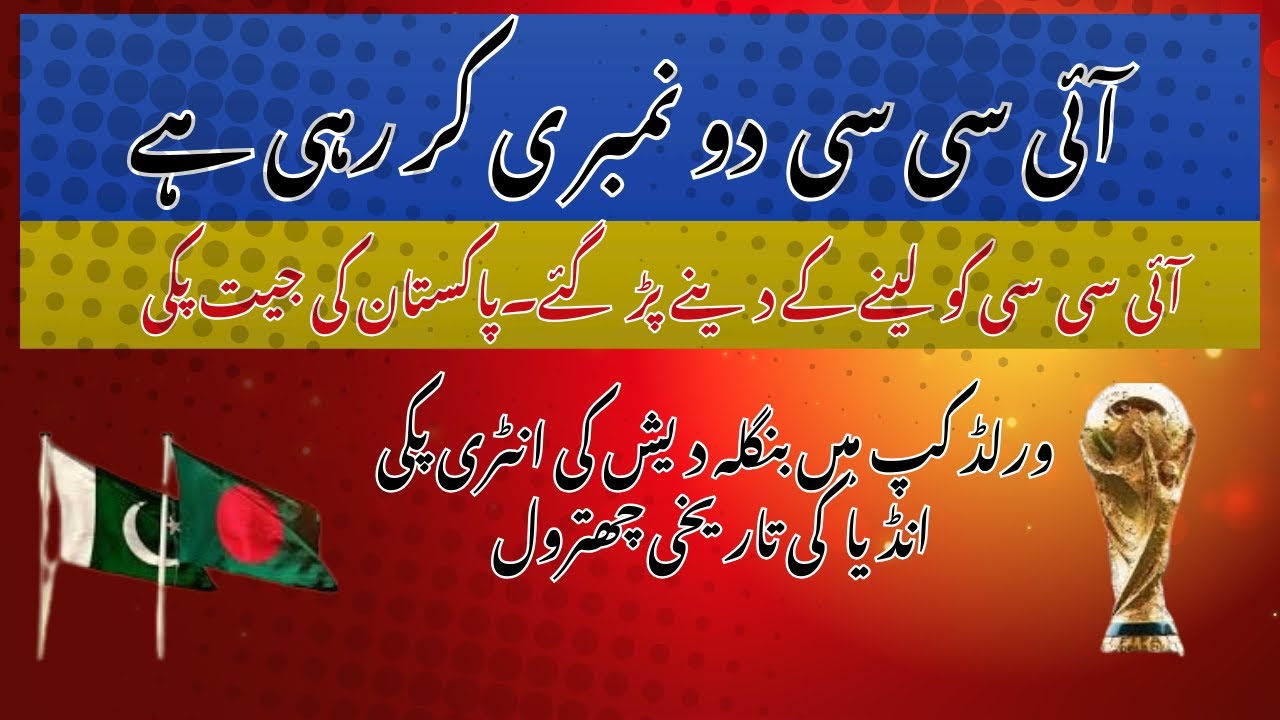
One of the most controversial examples is the treatment of Bangladesh, which was removed from the World Cup after raising legitimate security concerns about playing matches in India. Bangladesh did not refuse to play cricket; instead, they simply requested that their matches be shifted to a neutral venue like Sri Lanka due to safety issues. This is not an unprecedented demand—neutral venues have been used many times in the past, including for Pakistan, when security concerns were acknowledged by the same cricketing world.
The real issue lies in inconsistency. When India or England have refused to play ICC events or bilateral series in the past, citing political or governmental pressure, the ICC chose silence. No strict action was taken. No teams were expelled. No major penalties were imposed. Yet when a country like Bangladesh raises a concern—purely related to player safety—it faces the harshest possible consequence: exclusion from a World Cup.
This raises an unavoidable question: if Pakistan had made the same request and stated that its government was not allowing matches against India, would the ICC have responded the same way? Past experience suggests otherwise. Historically, Pakistan and other smaller or less financially powerful boards have faced stricter scrutiny, stronger pressure, and quicker punishment.
There is no denying that the BCCI is the richest cricket board in the world and contributes a major share of ICC’s revenue through broadcasting rights and sponsorships. But financial power should never dictate justice. Cricket cannot survive on money alone—it survives on trust, fairness, and equal opportunity. When decisions appear to be driven by profit and political influence rather than principles, the credibility of the entire system is damaged.
The Bangladesh episode has sent a dangerous message to the cricketing world: that the rules are flexible for the powerful and rigid for the weak. This double standard undermines the spirit of cricket and creates deep divisions among member nations. Fans across the world are now questioning whether ICC tournaments are decided on merit and fairness—or in boardrooms under pressure.
If the ICC truly wants to protect the future of global cricket, it must return to its core values. Security concerns must be treated equally for all teams. Governmental pressure must be acknowledged consistently. And most importantly, rules must apply to everyone—India, England, Pakistan, Bangladesh, or any other nation—without fear or favor.
Until that happens, accusations of bias, double standards, and selective justice will continue to haunt the ICC, weakening not just the institution but the very game it claims to protect.
Повторяем попытку...
Доступные форматы для скачивания:
Скачать видео
-
Информация по загрузке: