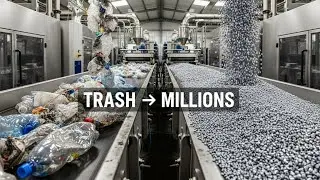
EPS compactor Foam recycling machinery Polystyrene compressor densifier from QInfeng machinery
Автор: Chen mannchen
Загружено: 2024-08-02
Просмотров: 23
Описание:
If you have any problems that can't be solved, you can leave your contact information, so that we can communicate with you in time.
+86-512 58200823
Support Hotline
+86-13584429220
Cellphone/Whatsapp
[email protected]
Email
Qinfeng’s EPS compactor device can recycle flame retardant foam well.For the sake of building safety, many foam construction materials are often infused with a certain amount of flame retardants. Flame retardants are crucial for ensuring that these materials are less likely to ignite and spread fire, thus providing a critical layer of protection in buildings. However, the inclusion of flame retardants also introduces complexities when it comes to recycling these materials.
Excess Flame Retardants and Recycling Limitations
When too much flame retardant is added, or when the foam surfaces accumulate excessive sediment, the resulting waste foam becomes unsuitable for reuse. And we’d better instead be compressed using a foam concentrator before being buried in landfills. This process helps save valuable land resources but does not address the recycling potential of the material.
Recycling Feasibility with Controlled Flame Retardant Levels
On the contrary, if the content of flame retardant is not too high and meets the necessary safety standards, the compressed foam blocks produced by EPS foam compactors can be recycled. By compressing the foam to reduce its volume, these blocks can be reused. This helps save land resources and reduce white pollution. Achieve better waste management and recycling.
Waste Compression: QINFENG's CF-CP250 EPS Foam Cold Compression Machine
Legislative Support for Recycling Research and Infrastructure
To further enhance recycling efforts, maintenance regulations are important,legislators have emphasized the need for comprehensive research into effective recycling solutions. This includes seeking funding for specialized recycling projects, exploring existing and emerging technologies that promote recycling, and determining whether new infrastructure is necessary to support these initiatives.
Senators have advocated for studies that identify grant programs specifically aimed at addressing recycling challenges. They also recommend investigating both current and innovative technologies to facilitate recycling and evaluating the need for new infrastructure to support these projects. This holistic approach aims to maximize the recycling potential of foam materials, thereby reducing environmental impact and enhancing sustainability.
Economic and Environmental Benefits
By forming a sustainable recycling chain, the industry can create a positive economic cycle. Whether the goal is simply to reduce the volume of foam waste to save landfill space. Or to repurpose the foam into new products, EPS compactors can provide a viable solution.
By integrating EPS compactor into waste management practices, the volume of foam can be significantly reduced, making it easier and more cost-effective to transport and store. Additionally, when the compressed foam meets recycling standards. It can be processed and reused, forming a closed-loop system that saves resources and generates economic value. For example, the QINFENG EPS Compactor, CF-CP250 EPS Cold Compactor, can reduce the size of the EPS foam material, and the compression ratio can reach 1:30-1:50. The compressed finished product is an EPS foam block with a density of up to 250kg/m3.
CF-CP250-EPS-Cold-Compactor-Machinery-1-1
Повторяем попытку...

Доступные форматы для скачивания:
Скачать видео
-
Информация по загрузке: