ycliper

Популярное

Музыка Кино и Анимация Автомобили Животные Спорт Путешествия Игры Юмор

Интересные видео

2025 Сериалы Трейлеры Новости Как сделать Видеоуроки Diy своими руками

Топ запросов

смотреть а4 schoolboy runaway турецкий сериал смотреть мультфильмы эдисон
Скачать

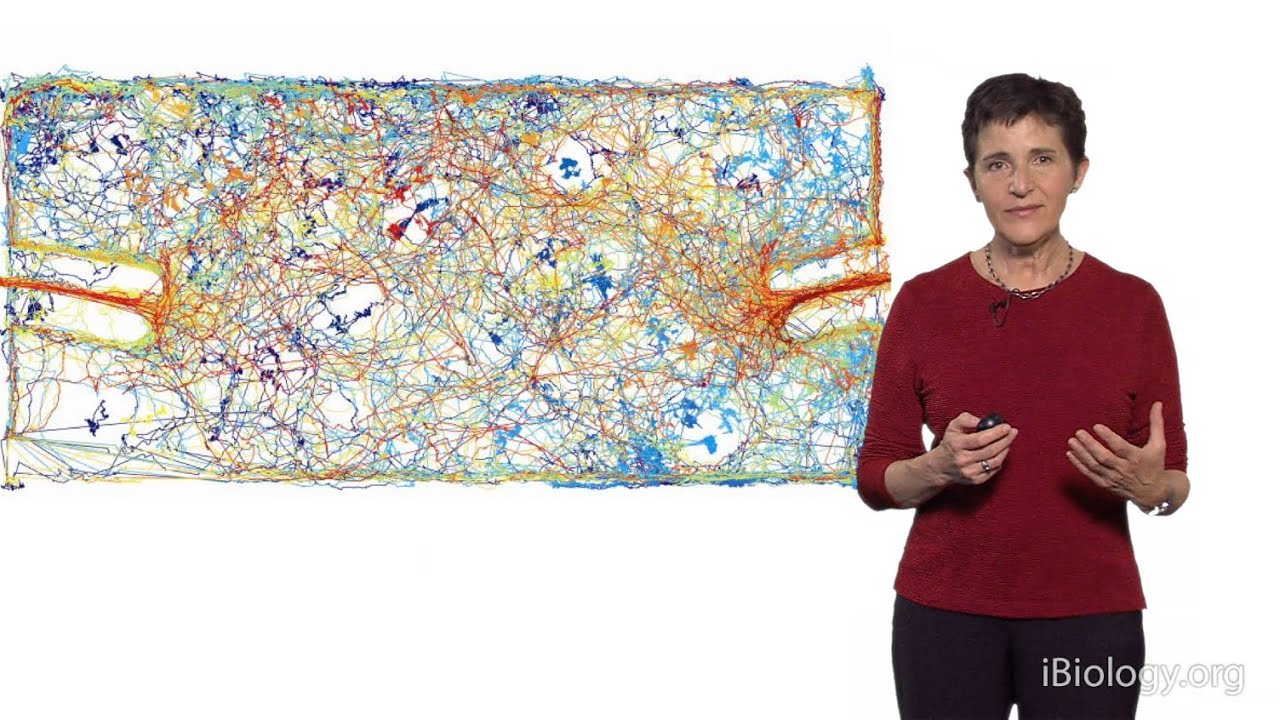
Deborah Gordon (Stanford) 2: The Evolution of Collective Behavior

Автор: Science Communication Lab

Загружено: 2014-09-19

Просмотров: 5198

Описание: https://www.ibiology.org/ecology/coll...

Lecture Overview:
Examples of collective behaviors are all around us: in the movement of flocks of birds, the neural networks the produce perception and memory, and in engineered computer networks. Collective behavior operates without any central control; instead, behavior is regulated via networks of local interactions. In Part 1, Dr. Gordon explains that an ant colony is an excellent example of collective behavior since local interactions between individual ants determine the behavior of the whole colony. Studying harvester ants, Gordon investigates how, without any direction or instructions, colonies adjust the number of ants engaged in each colony task, in response to a changing environment and the needs of the colony. This “task allocation” is regulated by interactions, such as brief antennal contacts, among individual ants.
Harvester ants live in the desert so they face an ongoing challenge of conserving water. Colonies must spend water to get water: foragers lose water searching for seeds in the hot sun, but obtain water by metabolizing water from the fats in the seeds. In Part 2 of her talk, Gordon explains how colonies use interactions between returning and outgoing foragers to regulate the current level of foraging activity. A long-term study of a population of colonies made it possible to learn how a colony’s reproductive success, in generating offspring colonies, depends on how it regulates foraging activity to conserve water.

Speaker Bio:
Deborah M. Gordon received a B.A. in French from Oberlin College, a M.S. in Biology from Stanford University and a Ph.D. in Zoology from Duke University. Following receipt of her Ph.D., Gordon was a Junior Fellow of the Harvard Society of Fellows and a Research Fellow at the University of Oxford and Imperial College before joining the faculty at Stanford University in 1991.
Currently, Gordon is a Professor of Biology at Stanford University. Her lab studies the evolution of collective behavior using ant colonies as a model. She studies how ant colonies regulate their behavior in response to environmental changes, and how collective behavior is related to ecology, in the desert, in ant-plant interactions in tropical forests, and in the spread of the invasive Argentine ant in northern California. She is also a partner in the “Ants in Space” project designed to learn more about how ants search, information that may be useful in designing search algorithms for groups of robots. Gordon was awarded a Guggenheim Fellowship, and has received several awards for her teaching.
Learn more on Dr. Gordon’s labpage at http://web.stanford.edu/~dmgordon/ind...

Не удается загрузить Youtube-плеер. Проверьте блокировку Youtube в вашей сети.
Повторяем попытку...
Deborah Gordon (Stanford) 2: The Evolution of Collective Behavior

Поделиться в:

Доступные форматы для скачивания:

Скачать видео

  • Информация по загрузке:

Скачать аудио

Похожие видео

Deborah Gordon (Stanford) 1: Local Interactions Determine Collective Behavior

Deborah Gordon (Stanford) 1: Local Interactions Determine Collective Behavior

Безумная биология: колонии муравьев

Безумная биология: колонии муравьев

Melina Hale (U. Chicago) 2: The Evolution of Neural Circuits & Behaviors: A Startling Example!

Melina Hale (U. Chicago) 2: The Evolution of Neural Circuits & Behaviors: A Startling Example!

Marc Kirschner (Harvard): Evolvability

Marc Kirschner (Harvard): Evolvability

Дебора Гордон: Что мы можем узнать у муравьёв о мозге, раке и Интернете

Дебора Гордон: Что мы можем узнать у муравьёв о мозге, раке и Интернете

Stanford Neurologist: Parkinson's Disease Physical Exam

Stanford Neurologist: Parkinson's Disease Physical Exam

Elizabeth Hadly (Stanford) 1: Loss of biodiversity in a human-dominated world

Elizabeth Hadly (Stanford) 1: Loss of biodiversity in a human-dominated world

Муравьиная колония. Взгляд изнутри | Дебора М. Гордон

Муравьиная колония. Взгляд изнутри | Дебора М. Гордон

Robert Sapolsky: The Biology of Humans at Our Best and Worst

Robert Sapolsky: The Biology of Humans at Our Best and Worst

Winter is Coming For These Argentine Ant Invaders | Deep Look

Winter is Coming For These Argentine Ant Invaders | Deep Look

Ants: Foraging for Survival - Hidden Empires S1E05

Ants: Foraging for Survival - Hidden Empires S1E05

Synthetic Biology: Programming Living Bacteria - Christopher Voigt

Synthetic Biology: Programming Living Bacteria - Christopher Voigt

Грибы: всё о них! Историческая микология, биология, рост гиф и полный жизненный цикл гриба

Грибы: всё о них! Историческая микология, биология, рост гиф и полный жизненный цикл гриба

Дебора Гордон откапывает муравьёв

Дебора Гордон откапывает муравьёв

Deborah Gordon: Ants, Myrmecology, and Collective Behavior | Robinson's Podcast #212

Deborah Gordon: Ants, Myrmecology, and Collective Behavior | Robinson's Podcast #212

The Insane Biology of: The Great White Shark

The Insane Biology of: The Great White Shark

Paul E. Turner (Yale) 1: Introduction to Virus Ecology and Evolution

Paul E. Turner (Yale) 1: Introduction to Virus Ecology and Evolution

Джек Шостак (Гарвард/HHMI) Часть 1: Происхождение клеточной жизни на Земле

Джек Шостак (Гарвард/HHMI) Часть 1: Происхождение клеточной жизни на Земле

Deborah Gordon on Ant Colonies as Distributed Computers

Deborah Gordon on Ant Colonies as Distributed Computers

Nicole King (UC Berkeley, HHMI) 1: The origin of animal multicellularity

Nicole King (UC Berkeley, HHMI) 1: The origin of animal multicellularity

© 2025 ycliper. Все права защищены.


  • Контакты
  • О нас
  • Политика конфиденциальности


Контакты для правообладателей: [email protected]