Starlink’s $17 Billion Spectrum Bet: Will It Truly Disrupt Telecommunications?
Автор: FiberGuide - Fiber Optics | Optical Networking
Загружено: 2025-11-01
Просмотров: 132
Описание:
Starlink’s $17 Billion Spectrum Bet: Will It Truly Disrupt Telecommunications?
SpaceX made a big move that has people talking about a possible revolution in the way we use our phones and the internet.
The company, owned by Elon Musk, bought $17 billion worth of radio “spectrum” from EchoStar, a company that used to run its own satellites.
So, what does that mean?
Spectrum is like invisible real estate in the sky — the specific radio frequencies that wireless signals use to carry phone calls, texts, and internet data.
By buying this spectrum, SpaceX is giving its Starlink satellite network the ability to talk directly to regular smartphones.
In simple terms, your phone could one day connect straight to a Starlink satellite orbiting the Earth — no cell towers or fiber cables in between.
If this works as planned, it could be huge. Imagine hiking in the mountains, sailing on the ocean, or living in a rural town — and still having full cell service and internet access.
That’s the dream Starlink is chasing: worldwide coverage, anywhere you can see the sky.
No wonder people are saying this could disrupt the telecommunications industry — the same way streaming changed TV or smartphones changed photography.
If everyone could connect directly to satellites, we might not need traditional cell towers or internet cables in so many places.
But while it sounds exciting, there are some big challenges that could slow things down.
First, there’s the capacity problem. Satellites can handle only a certain amount of data at once. While great for sending texts, GPS, or even basic internet to remote places, it’s much harder for them to serve millions of people watching videos or gaming in busy cities.
Ground networks like fiber and 5G are still faster and more reliable for heavy data use.
Second, rules and regulations get complicated.
Governments tightly control how spectrum is used so that companies don’t interfere with each other’s signals.
SpaceX will need to coordinate with many countries and existing mobile providers to make sure everything works smoothly and legally.
Third, most phones today aren’t fully ready for direct satellite connections.
Some newer models are beginning to support emergency texting by satellite, but regular voice calls and high-speed internet will require more advanced phone chips — and that takes time for manufacturers and carriers to roll out.
Then there’s the cost and upkeep. Launching thousands of satellites, maintaining them in orbit, and supporting millions of customers isn’t cheap.
One growing concern about Starlink’s massive satellite network is that many of its satellites have relatively short lifespans and occasionally fall back to Earth after a few years in orbit.
This means SpaceX must constantly launch replacements, adding to costs and raising concerns about space debris and sustainability.
SpaceX may find it more practical to partner with local carriers than to replace them entirely.
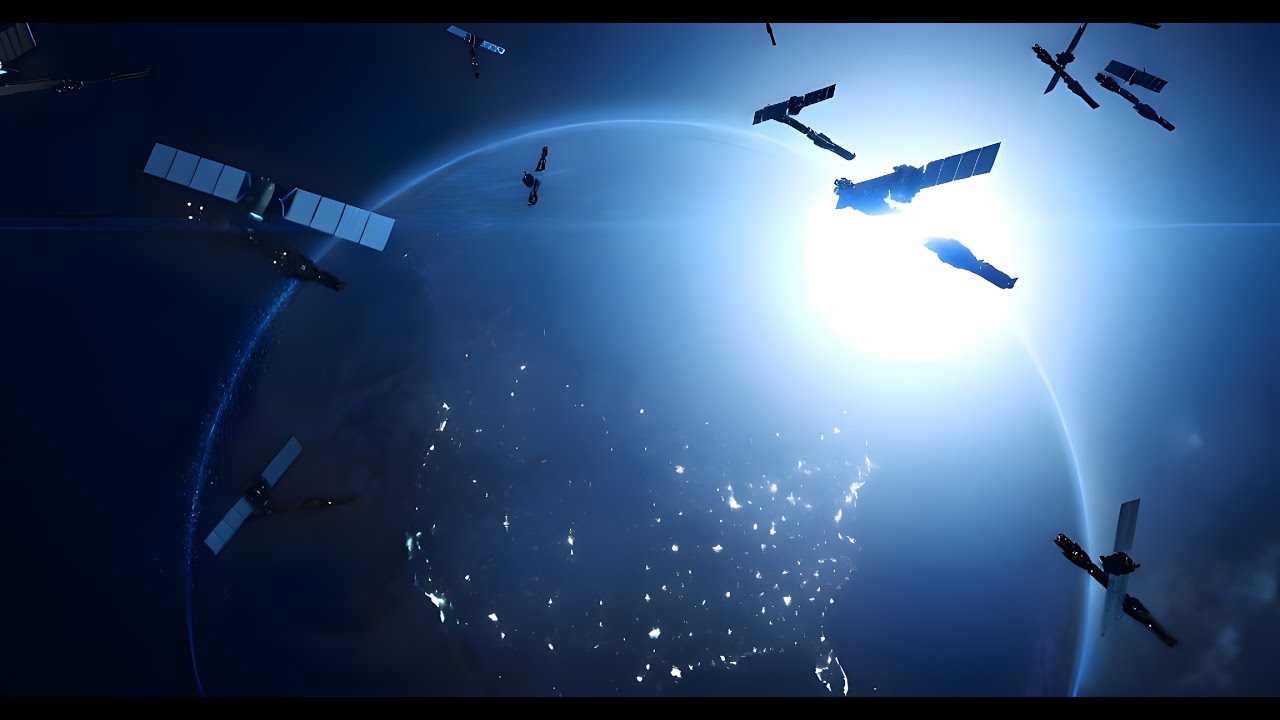
Finally, with so many satellites already in orbit, scientists worry about space crowding — the growing risk of collisions and debris.
In short, SpaceX’s $17 billion spectrum purchase shows how serious the company is about bringing Starlink directly to your phone.
It’s an exciting step toward a world where everyone — from city dwellers to remote villagers — can stay connected.
Still, for now, Starlink is more likely to complement existing networks rather than completely replace them.
The future of communication may not be satellites versus cell towers, but a smart mix of both — working together to keep the entire planet online.
#Starlink #SpaceX #Satellites #SpaceDebris #SatelliteInternet #LEOSatellites #SpaceTech
Повторяем попытку...
Доступные форматы для скачивания:
Скачать видео
-
Информация по загрузке: