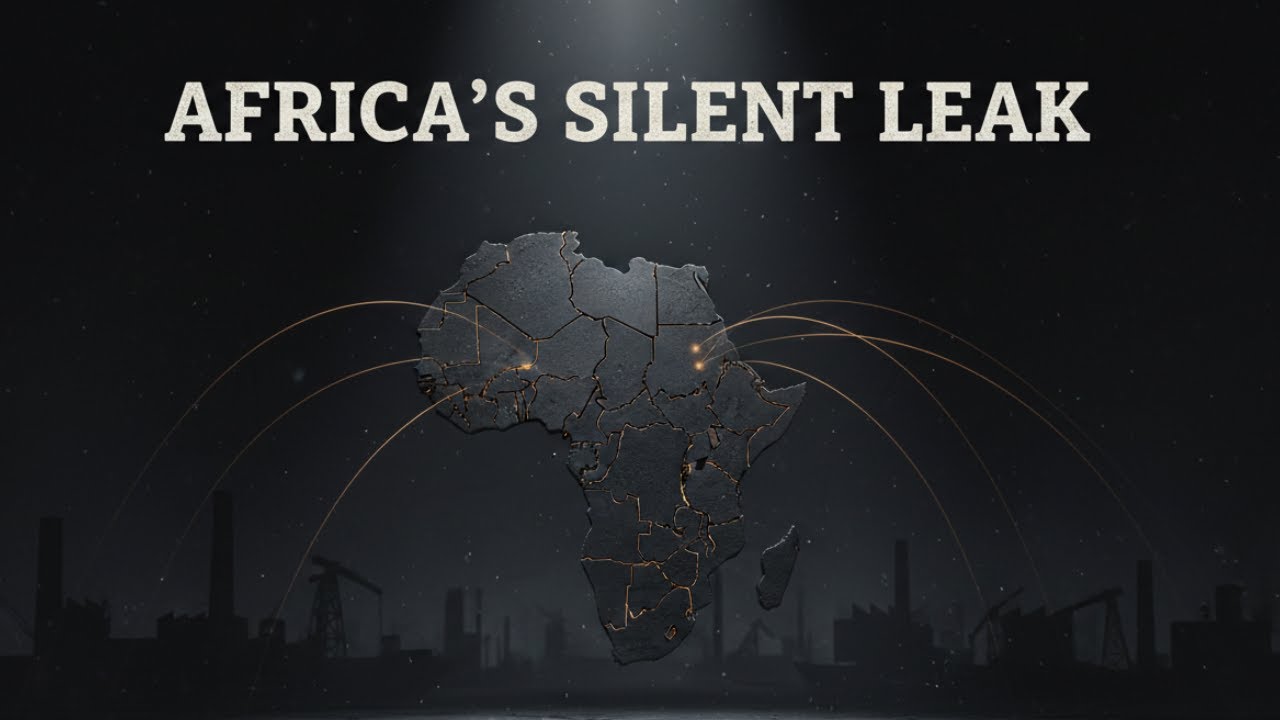
Why Africa Stays Poor Despite Being Rich: The $80 Billion Capital Leak Crisis Explained
Автор: Jk Historian
Загружено: 2026-02-12
Просмотров: 14
Описание:
Why Africa Stays Poor Despite Being Rich: The $80 Billion Capital Leak Crisis Explained
Africa is one of the richest continents on Earth — holding 30% of the world’s mineral reserves, 60% of uncultivated arable land, and the youngest population globally. Its economies are among the fastest-growing in modern history. Every decade, experts predict that this will be “Africa’s century.”
So why does Africa remain the poorest continent?
The real answer isn’t just corruption. It’s not just poor governance. And it’s not only colonial legacy.
The real issue is something far more systematic and devastating: capital leak.
Every single year, more money flows out of Africa than flows in. The continent isn’t poor because it lacks resources — it’s poor because its wealth is constantly drained away.
In this video, we break down the five major forces behind Africa’s capital leak crisis:
🔎 1. Illicit Financial Flows (IFFs)
Africa loses between $50–$80 billion annually through trade mispricing, tax evasion, and money laundering. That’s nearly equal to all foreign aid it receives. Export undervaluation, offshore accounts, and corporate secrecy are silently siphoning away billions meant for schools, hospitals, and infrastructure.
💳 2. The Debt Service Trap
With over $700 billion in external debt, many African countries now spend more on debt repayment than on healthcare and education. Loans meant for development often flow back to foreign contractors, while interest payments drain national budgets for decades.
🏢 3. Corporate Profit Repatriation
Multinational corporations legally shift billions in profits out of Africa using transfer pricing, tax havens, and complex corporate structures. While African resources generate wealth, much of the profit ends up in London, New York, or Singapore instead of being reinvested locally.
🧠 4. The Brain Drain Crisis
Africa loses over 70,000 skilled professionals annually — doctors, engineers, software developers — whose education was funded locally but whose productivity benefits foreign economies. Human capital is walking out the door.
📈 5. The Investment Paradox
Foreign direct investment flows in — but profits flow out. Much of the investment is structured to prioritize repatriation, leaving African economies with limited long-term wealth creation.
When you add it all together, Africa faces a shocking reality:
👉 Net capital outflow.
More wealth leaves the continent than enters it.
This video explains why Africa’s growth story keeps failing — and what must change to fix the system. Because until the leak is stopped, no amount of aid or investment will solve the problem.
Africa doesn’t lack wealth.
It lacks retention of wealth.
If you care about global economics, development, geopolitics, and the future of emerging markets, this is a conversation you need to understand.
#africa
#africaneconomy
#WhyAfricaIsPoor
#globaleconomy
#capitalflight
#IllicitFinancialFlows
#africandevelopment
#debttrap
#braindrain
#wealthinequality
#geopolitics
#EconomicExplained
#transferpricing
#foreigninvestment
#developmenteconomics
why africa is poor, why africa is still poor, africa capital flight, africa illicit financial flows, why africa remains poor despite resources, africa debt crisis explained, africa external debt problem, brain drain in africa, africa economic problems, africa growth paradox, transfer pricing africa, multinational corporations in africa, profit repatriation africa, africa resource curse, africa foreign investment problem, africa net capital outflow, africa development explained, africa economy documentary, africa poverty explanation, global financial system africa
Повторяем попытку...
Доступные форматы для скачивания:
Скачать видео
-
Информация по загрузке: