Elephant Toothpaste Science Experiment! | Easy DIY At Home Science for Kids
Автор: Three Beans Playtime
Загружено: 2020-02-11
Просмотров: 2294
Описание:
-#funscience #scienceforkids #easyathomescience #elephanttoothpaste
Hi Guys!
Today, the Three Beans are doing some fun and easy DIY at home science!
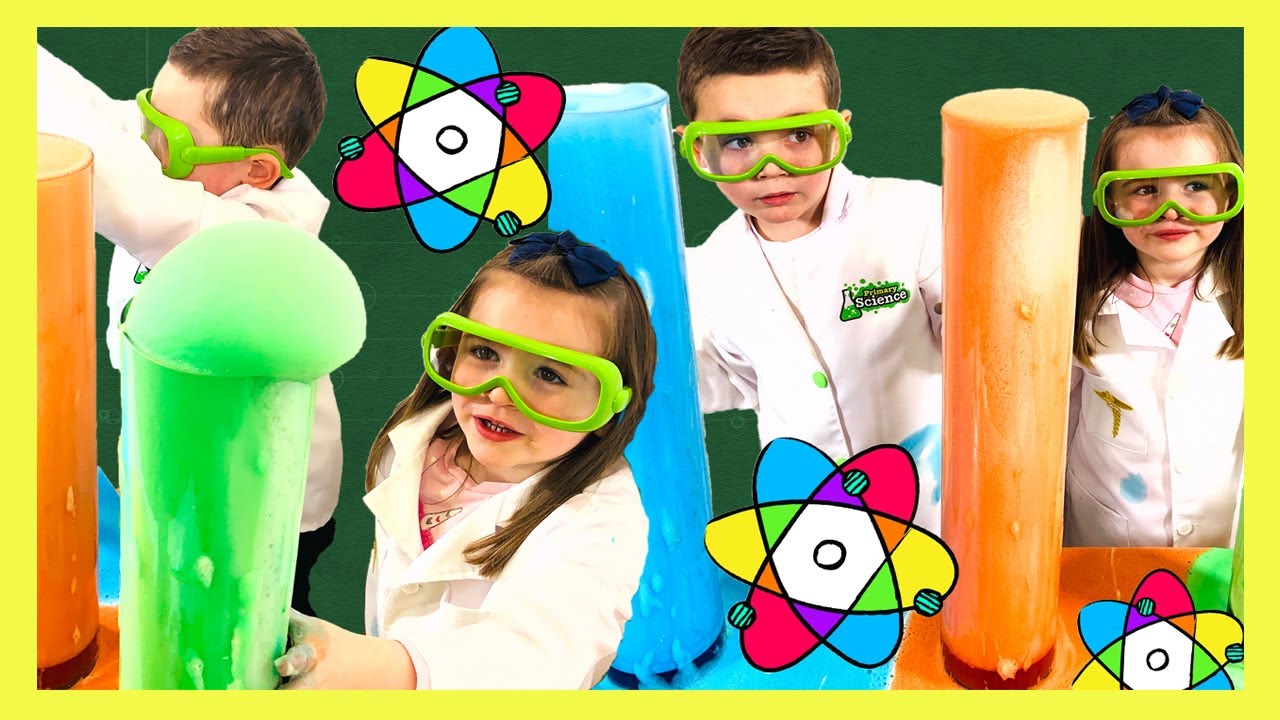
They're doing a really simple Elephant Toothpaste Demonstration. They wanted to show you all how easy and how much fun this simple experiment for kids is!
We up-scaled some of the ingredients to fill larger containers for this video, but, if you want to give it a try yourselves at home, you will need the following:
A clean 16 ounce (473 ml) plastic soda bottle or a water bottle.
EITHER 6% or 3% Hydrogen Peroxide Solution. 6% solution is stronger than what you find in most pharmacies. It is typically used for lightening hair and is found at many beauty supply stores and will give the best reaction. However, we opted to use the 3% Hydrogen Peroxide found in pharmacies, the result was that our reaction was smaller and the foam wasn't so thick so it didn't look as 'toothpaste'-like as with a stronger solution, however, it was still impressive (as i'm sure you'll agree!) and it is safe for little hands to touch (unlike the 6% solution, which may burn!) If you are doing this experiment with younger children, we advise using the 3% solution. If you opt for 6%, regardless of age, you should always wear gloves.
1 Tablespoon (15ml – one packet) of dry yeast
3+ Tablespoons (15 ml) of warm water
Liquid dish washing soap
Food coloring
Small cup
Funnel
Safety goggles
Adult help
NOTE: The foam could overflow from the bottle, so be sure to do this experiment on a washable surface, or place the bottle on a tray.
CAUTION: The unreacted hydrogen peroxide can irritate skin and eyes. Read the safety information on the hydrogen peroxide bottle and be sure to wear safety goggles.
What to do:
Use a funnel to carefully pour 1/2 cup (118 ml) of the hydrogen peroxide liquid into the bottle
Add about 10 drops of your favorite food coloring into the bottle.
Add about 1 tablespoon (15ml) of liquid dish soap into the bottle and swish the bottle around a bit to mix it.
In a separate small cup, combine the warm water and the yeast together and mix for about 30 seconds. It should be about the consistency of melted ice cream – add a bit more warm water if needed.
Now the adventure starts! Use the funnel to pour the yeast-water mixture into the bottle and watch the foaminess begin!
Can I touch the foam?
The reaction typically breaks down the hydrogen peroxide so you are left with mostly just soapy water and yeast. There can, however be un-reacted peroxide which could irritate skin and eyes. For that reason, it is recommended you do not touch the foam.
(If you use the 3% hydrogen peroxide found in most pharmacies, then the foam can be touched safely.)
How does it work?
Foam is awesome! The foam you made in this classic Elephant’s Toothpaste reaction is extra-special because each tiny foam bubble is filled with oxygen. The yeast acted as a catalyst; a catalyst is used to speed up a reaction. It quickly broke apart the oxygen from the hydrogen peroxide. Because it did this very fast, it created lots and lots of bubbles. Did you notice the bottle got warm? Your experiment created a reaction called an Exothermic Reaction – that means it not only created foam, it created heat! The foam produced is just water, soap, and oxygen so you can clean it up with a sponge and pour any extra liquid left in the bottle down the drain.
This experiment is sometimes called “Elephant’s Toothpaste” because it looks like toothpaste coming out of a tube, but don’t get the foam in your mouth!
We used a wide-necked cylinder for our experiment, so, it didn't have quite the same 'toothpaste' tube-squeeze effect - a narrow necked bottle will produce a more toothpaste-like effect as the foam is forced through a small space.
Make it an experiment:
The project above is actually a DEMONSTRATION. To make it a true experiment, you can try to answer these questions:
Does the amount of yeast change the amount of foam produced?
Will the experiment work as well if you add the dry yeast without mixing it with water?
Does the size of the bottle affect the amount of foam produced?
Does using a different strength Hydrogen Peroxide Solution affect the amount or consistency of the foam produced?
We hope you enjoy watching and trying this cool, fun and easy DIY at home science experiment for kids!
Please don't forget to give us a big THUMBS UP and please SUBSCRIBE to our channel, Three Beans Playtime:
/ threebeansplaytime for more fun videos featuring toy unboxing, crafts and days out with new videos every week, plus, more fun science coming soon!!
Thanks for watching!
Повторяем попытку...
Доступные форматы для скачивания:
Скачать видео
-
Информация по загрузке: