Microplastics in Tap Water: Are Your Home Filters Safe? | Mosul City Study & PVC Risks Explained
Автор: BP International
Загружено: 2025-04-22
Просмотров: 43
Описание:
Microplastics in Tap Water: Are Your Home Filters Safe? | Mosul City Study & PVC Risks Explained
🧪 Microplastics (MPs) in drinking water are an emerging global concern. This video explores a study conducted in Mosul City to detect and analyze microplastics in tap water and examine how effective household water filter systems (HWFS) are at removing them.
🔍 What you’ll learn:
The presence and types of microplastics found in drinking water
How HWFS performed in removing MPs (Efficiency ranged from 30% to 93%)
Dominant microplastic morphotypes: fibers and fragments (94%)
Why transparent microplastics are the most common
The real danger of polyvinyl chloride (PVC)—making up 58% of detected MPs and having the highest risk index
Tools used for analysis: SEM, FTIR, and stereomicroscopy
🚰 Is your drinking water safe? This study provides essential insights into how water filtration systems stack up against the invisible threat of microplastics.
****************************
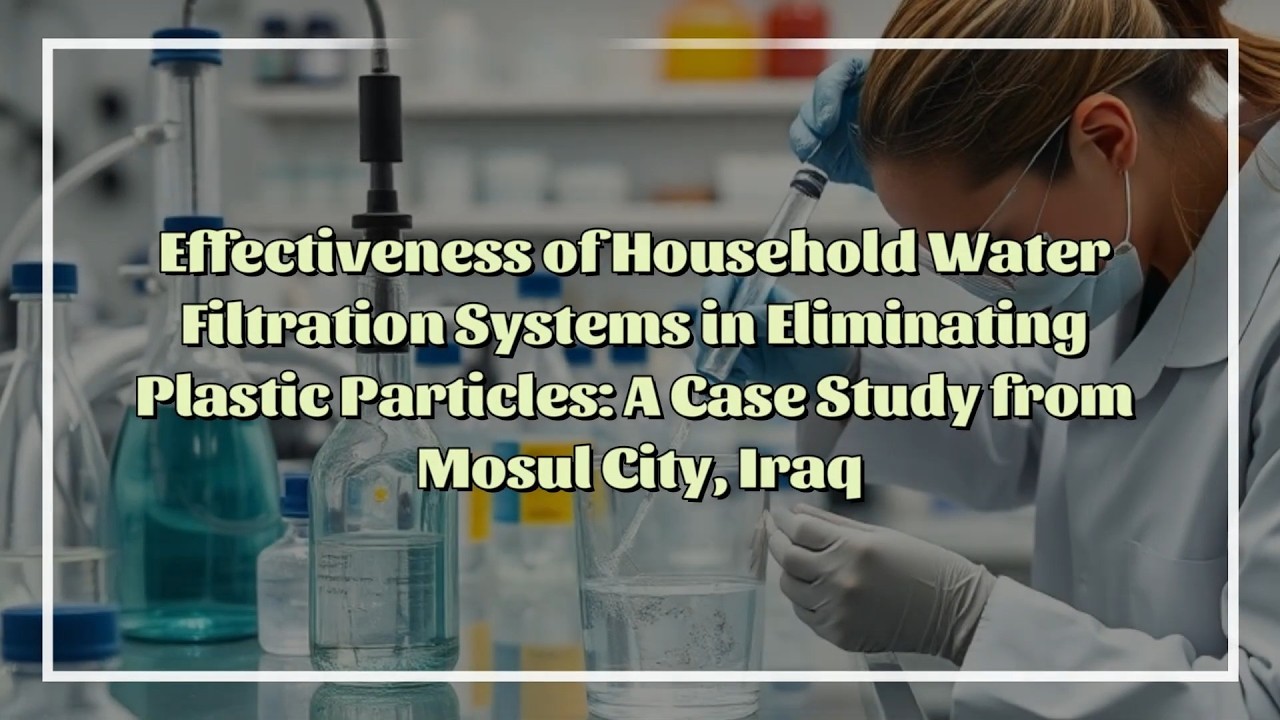
Effectiveness of Household Water Filtration Systems in Eliminating Plastic Particles: A Case Study from Mosul City, Iraq
Layman Abstract : Microplastics—tiny plastic particles—are becoming a global concern because they’re being found in our drinking water and may harm human health. This study looked at how common microplastics are in tap water in Mosul City and how well home water filters can remove them. Researchers tested water from 12 different places and used special tools to study the size, shape, color, and type of plastic particles.
They found that home water filters varied in how well they worked—some removed up to 93% of the microplastics, while others removed only 30%. The effectiveness depended on things like how old the filter was and how many filtering stages it had.
Most of the microplastics found were tiny fibers and fragments, with over half being clear in color and about a third smaller than 10 micrometers (much smaller than a grain of sand). The most common type of plastic was PVC (polyvinyl chloride), which also posed the highest potential health risk.This study highlights the need to improve home filtration systems and monitor plastic pollution in drinking water.
View Book: https://bookstore.bookpi.org
#Microplastics #TapWaterContamination #WaterPollution #PlasticPollution #SafeDrinkingWater #WaterFilterStudy #MicroplasticsInWater #EnvironmentalHealth #WaterPurification #EmergingPollutants #MosulStudy #WaterFilterEfficiency #PVCPlastic #MicroplasticThreat #PublicHealth #CleanWaterCrisis #PlasticInWater #WaterSafety #MicroplasticResearch #HouseholdWaterFilters #MosulCity
Related keyword:
Microplastics in drinking water Mosul study
Household water filter microplastics removal
Microplastics tap water health risks
PVC microplastics in drinking water
FTIR analysis microplastics water filters
Microplastics water contamination SEM study
Water filter effectiveness against microplastics
Microplastic pollution emerging contaminants
Microplastics size and shape in tap water
PVC microplastics risk index in water
Повторяем попытку...
Доступные форматы для скачивания:
Скачать видео
-
Информация по загрузке: