Curative Petition Explained: The Last Resort for Justice in India | CLATapult CLAT Coaching
Автор: CLATapult for CLAT
Загружено: 2026-01-20
Просмотров: 52
Описание:
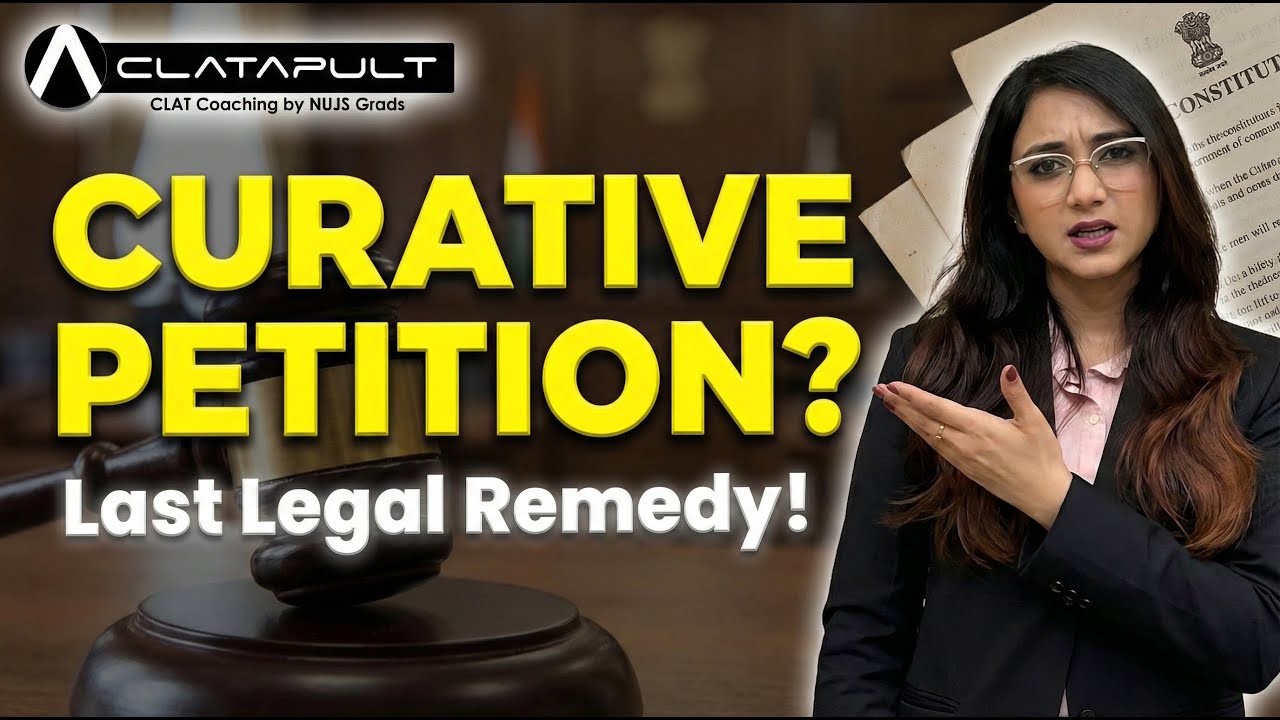
What happens when the Supreme Court has given its final judgment and even your review petition is dismissed? Is there any hope left? In this video, Ayantika from CLATapult CLAT Coaching explains the Curative Petition, an extraordinary and rare remedy in Indian Constitutional law.
In this video, you will learn:
What is a Curative Petition? Known as the "remedy of last resort," it comes into play only when justice seems to be in danger after all other options have failed.
The Origin Story: How the landmark case of Rupa Ashok Hurra vs. Ashok Hurra (2002) established this judicially evolved remedy to cure gross miscarriages of justice.
The Process: A curative petition is filed only after two stages: the final judgment and the dismissal of a review petition.
Strict Conditions: It is only considered in exceptional circumstances, such as violations of natural justice or a judge's failure to disclose a conflict of interest.
Procedural Hurdles: The petition must be certified by a senior advocate and is usually decided in chambers by the three most senior judges.
Legal Basis: Tracing the power back to Article 137 (Review) and Article 142 (Complete Justice) of the Indian Constitution.
Real-World Examples: Why curative petitions were filed in high-profile cases like the Nirbhaya case and the Ayodhya dispute.
Law Entrance Aspirants (CLAT 2027 & 2028): New batches at CLATapult CLAT Coaching have already started! If you are looking for structured guidance, conceptual training, and consistent mentorship, visit our website or contact us at the number shown on the screen.
Повторяем попытку...
Доступные форматы для скачивания:
Скачать видео
-
Информация по загрузке: