Mozart Piano Concerto K. 488 second movement: a dialogue between Mozart, Reinecke and Ployer
Автор: Neal PdC
Загружено: 2023-01-05
Просмотров: 5670
Описание:
In this performance of Mozart's K. 488 second movement I have sought to bring into dialogue significant Mozart performance practice evidence preserved in two sources: i) Carl Reinecke's (1824—1910) performance of his own arrangement for solo piano of the work (published 1896) preserved on a Hupfeld piano roll (c. 1904: • Reinecke plays Mozart Piano Concertos 23 &... ); and, ii) a set of extant ornaments ascribed to Mozart's student Barbara Ployer (1765-1811: see W. A. Mozart, Kritische Berichte, Serie 5: Konzerte, Band 7, Hermann Beck). Ployer's ornaments leave little doubt as to how Mozart (and trained musicians of his era) expected the skeleton-like melodies of such movements to be realised. But, of course, the written down ornaments themselves will not reveal how the music was communicated in terms of flexibility of rhythm, tempo and use of other expressive and rhetorical devices (for example piano arpeggiation and manual asynchrony). For this, we can turn to Carl Reinecke who was hailed in his lifetime as a preserver of an old tradition of Mozart performance. In his performance, we hear a rhetorical style of delivery (akin to jazz improvisation), which underlines the different characters and moods of the music. While his interpretation is of his own time, it is more than likely that many aspects of Reinecke's performance style are reflective of practices that were part of a long-established continuum of practice, that was interrupted in the first decade of the 20th-century. Born less than 30 years after Mozart's death, Reinecke's style of playing this work is, I believe, closer to Mozart's than any attempts more recently to realise the work based on a close (accurate) reading of Mozart's score. Indeed, Heinrich Schenker writing in 1896 explained that:
“Prof. Dr. C. Reinecke, helped the Viennese in a very essential way to celebrate their Mozart artistically. It seems that he is currently [1896] the only pianist who, equipped with historical knowledge, can reproduce Mozart's works as they might have sounded 110 or 120 years ago”
(Heinrich Schenker, “Zur Mozartfeier”, Die Zeit 1896, p. 60).
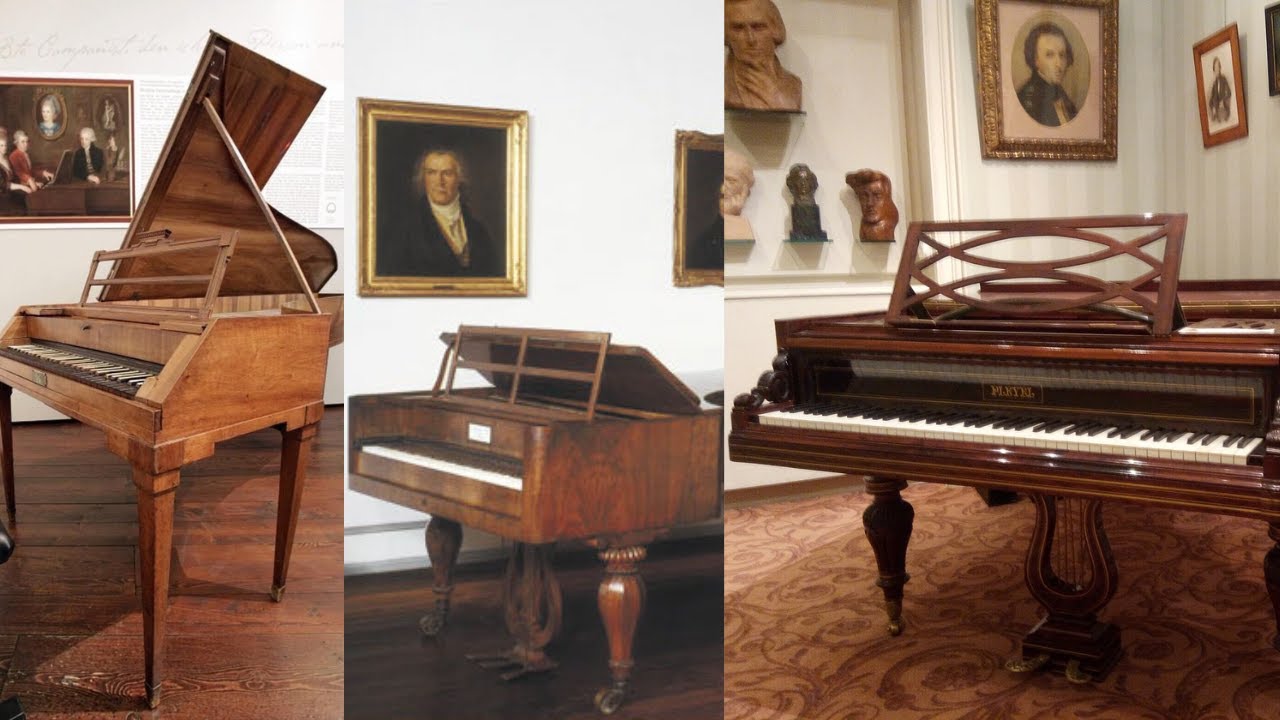
In this recording with the Australian Romantic & Classical Orchestra (on period instruments and directed from the violin by Rachael Beesley), I am playing on a Viennese fortepiano after Walter Sohn c. 1805 made by Paul McNulty. I occasionally add my own ornaments and also bring to the performance notions of musical expressivity based on evidence in mid-late eighteenth-century pedagogical texts. In the next stage of my creative process I would like to improvise my own version of the movement. For now, I hope this version will encourage more experimentation in Classical-era music to revive improvised practices that were intrinsic to musical communication before the rise of 20th-century modernist aesthetics and 'urtext' performance.
Heartfelt thanks to Rachael Beesley and Nicole van Bruggen Harris (Co-Artistic Directors of the Australian Romantic & Classical Orchestra) for giving me this amazing opportunity, I am forever grateful to you both.
For more information visit https://www.arco.org.au/the-k488-project
Music Score: Neue Mozart-Ausgabe, Serie V, Werkgruppe 15 [NMA V/15/7] (pp.35-44)
Kassel: Bärenreiter-Verlag, 1959. Plate BA 4519.
Edited by Hermann Beck
Australian Romantic & Classical Orchestra: https://www.arco.org.au
Rachael Beesley | Director
Neal Peres Da Costa | Fortepiano - Associate Dean Research and Professor of Historical Performance, Sydney Conservatorium of Music, University of Sydney; ARCO Artistic Advisor
Recording Producer and Editor: Thomas Grubb Mano Musica Pty Ltd
Recording Assistance: Patrick Mullins AudioFile Pty Ltd
Fortepiano Tuning and Maintenance: Nathan Cox
Pitch: A 430
Temperament: Vallotti
Recorded in All Saints Church, Hunter's Hill, Sydney, NSW, Australia, 2022
Supported by Australian Research Council Discovery Project DP170101976 "Deciphering nineteenth-century pianism: invigorating global practices"
With special thanks to Sydney Conservatorium of Music for the generous access to the Walter Sohn fortepiano.
Повторяем попытку...

Доступные форматы для скачивания:
Скачать видео
-
Информация по загрузке: