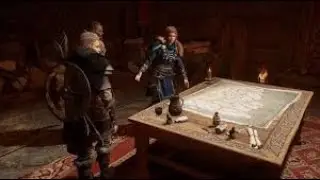
Lets Play: Assassin's Creed Valhalla Part 3: The Sea of Fate
Автор: Pipebomb Syndicate
Загружено: 2026-01-26
Просмотров: 1
Описание:
🛡️ Birthrights (Mission Breakdown)
What happens in-game:
Viking clans gather at an Althing called by Harald Fairhair
Basim teaches Eivor how to blend into crowds
Gorm is judged
Styrbjorn Sigvaldisson swears loyalty to Harald
Sigurd is furious
Norway effectively “ends” for Eivor’s clan
Now let’s separate history from Ubisoft drama.
⚖️ The Althing
In-game:
A big political summit where Harald consolidates power.
Real life:
The Althing was real. Vikings used these assemblies to:
Settle disputes
Pass laws
Decide alliances
Flex social power
Harald calling or influencing large assemblies to legitimize rule?
Absolutely plausible. Vikings didn’t do paperwork, they did public pressure.
👑 King Harald Fairhair
Was he real?
Yes. Almost certainly.
What history agrees on:
He unified Norway around 872–885 AD
Won the Battle of Hafrsfjord
Forced rival jarls to submit or flee
Many who refused… went to England and Iceland
So yeah, when people leave Norway in Valhalla?
That’s not symbolism. That’s history.
Did Harald want peace?
Short answer: No.
Long answer: He wanted order through dominance.
“Peace” under Harald meant:
No rival kings
One authority
Obedience
That’s not peace. That’s centralized control. Very Templar-coded, whether Ubisoft admits it or not.
🧔 Styrbjorn swearing loyalty
In-game:
Styrbjorn kneels to Harald, shocking Sigurd.
Real history parallel:
This happened constantly. Lesser jarls:
Submitted to survive
Kept land under a higher king
Avoided annihilation
So Styrbjorn’s choice makes sense historically.
Sigurd’s anger also makes sense emotionally.
This is generational conflict:
Father chooses survival
Son wants glory and autonomy
Very Viking. Very human.
🧨 Is this foreshadowing Templars?
Yes. Quietly.
Harald represents:
Unity
Law
Structure
Submission to a “greater good”
That is classic Templar philosophy, even if the name isn’t used yet.
Sigurd resisting it?
That’s Assassin energy, whether he understands it or not.
🗡️ Gorm’s Judgment
In-game:
Harald banishes Gorm no matter what.
Historically accurate vibe:
Kings often staged “justice” publicly while already deciding outcomes.
The appearance of fairness mattered more than fairness itself.
So the Althing scene is political theater.
Again. Very real.
🕶️ Basim teaching crowd blending
In-game:
Assassin tutorial.
Real history:
Spies, informants, and political eavesdropping absolutely existed.
The hooded crouch walk didn’t, but the idea of hiding in crowds did.
This is Ubisoft translating espionage into gameplay.
🌊 The Seas of Fate / Leaving Norway
In-game:
The end of the Norway arc. Eivor heads to England.
Real life:
Perfectly accurate.
Harald’s unification directly caused:
Viking expansion into England
Settlement of the Danelaw
Mass migration
Norway becoming “too small” for ambitious warriors is not metaphor. It’s documented history.
🧠 Modern Day: Layla
This part is pure Assassin’s Creed framing.
No history here, just narrative glue.
🧩 Final takeaway
Birthrights is one of Valhalla’s most historically grounded missions.
Harald isn’t evil.
He’s worse.
He’s right, in a way that crushes freedom.
Styrbjorn isn’t weak.
He’s pragmatic.
Sigurd isn’t reckless.
He’s refusing to kneel.
And Eivor?
She’s standing at the fault line where Viking independence dies and empire begins.
Broadcasted live on Twitch -- Watch live at / rkorocker98
Повторяем попытку...

Доступные форматы для скачивания:
Скачать видео
-
Информация по загрузке: