Love in the Middle Ages
Автор: History Guide
Загружено: 2025-10-28
Просмотров: 28
Описание:
#middleages #lovedocumentary
So, was love in the Middle Ages understood solely within a religious framework? Certainly not. Behind the stone walls of European palaces, a completely different kind of love was being staged: courtly love. The actresses and actors in this play were aristocratic women and their knightly lovers.
In medieval Europe, a concept of love had developed beyond the divine love we mentioned earlier.Here, love was not just a feeling, but a staged performance. The songs of the knight-poets echoing within the stone walls of the palaces created a new culture called courtly love or noble love. This approach to love made this emotion as much a part of spiritual exaltation as it was of the worldly. A knight's love for a noble woman he could never reach, a form of love that could not be confessed or practiced but was sustained by deep loyalty and suffering, became parallel to the Christian mysticism of the period. The following verses from the 12th-century poem “Lancelot: The Knight of the Cart” by French poet Chretien de Troyes are a good example of the glorification and idealization of love among knights:
“Once a man
Has fallen in love with a woman
No one in all the world
Can lavish such wild adoration
Even on the objects she owns,
Touching them a hundred thousand
Times, caressing with his eyes,
His lips, his forehead, his face…”
As can be seen, love here was a form of obedience, purified of sexuality and elevated.
B14 bolum The troubadours of this period addressed their beloved as “my lady” in their poems, sanctifying love with an almost religious fervor. This culture was a construct of honor that allowed the male knight to appear “noble” both on the battlefield and in his emotions. Knights carried the names of the ladies they would die for in tournaments, sometimes dying in duels for love. Love had become a stage for class identity and social power, beyond individual passion.
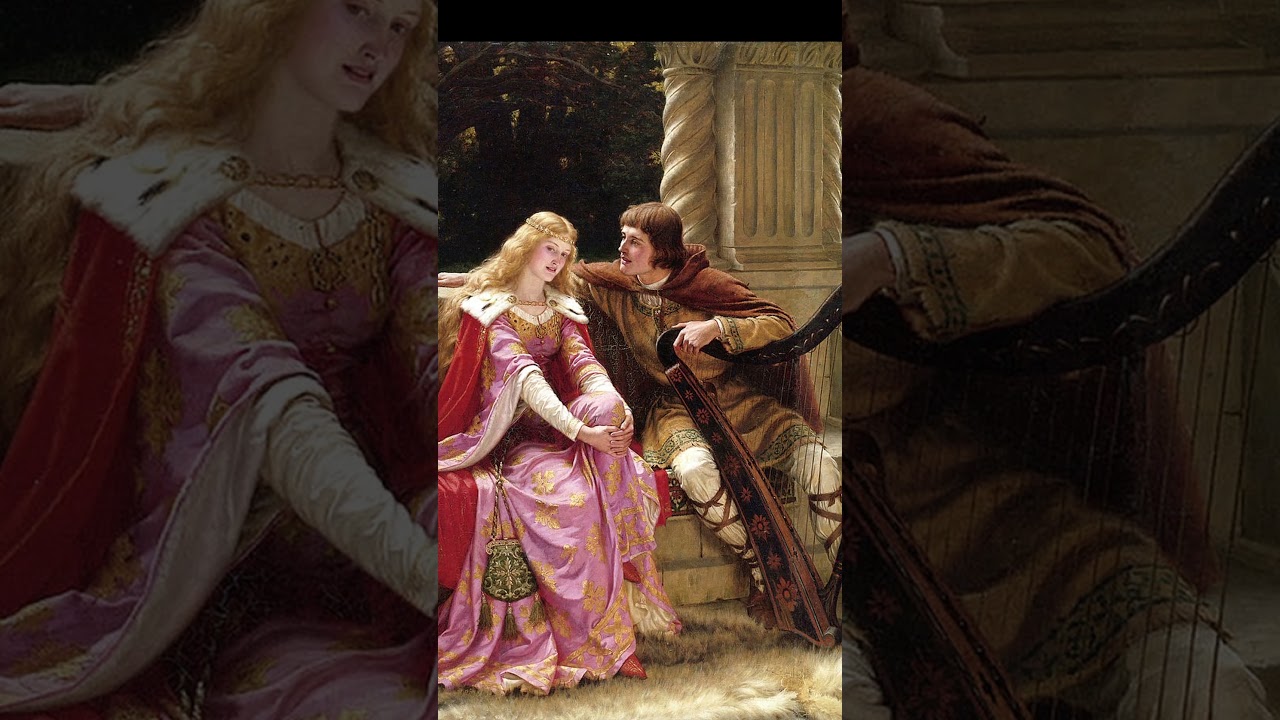
According to this interpretation of love, marriage was mostly a product of politics and inheritance plans, not emotions. For this reason, courtly love was exalted as an extramarital fantasy. The forbidden, the unattainable, gained value. Chrétien de Troyes's Lancelot narrative is one of the best-known examples of this style; the love of the Round Table knight Lancelot for Queen Guinevere symbolizes both chivalric virtues and the impossibility of love. The story of Tristan and Isolde is another striking example of this approach: two lovers bound together by a poisonous love potion only reunite in death. (Let us note here that Don Quixote, considered the first novel of the modern era, subverts these ideals of chivalry and love, presenting them in an unforgettable light of humor and unreality.)
Повторяем попытку...
Доступные форматы для скачивания:
Скачать видео
-
Информация по загрузке: