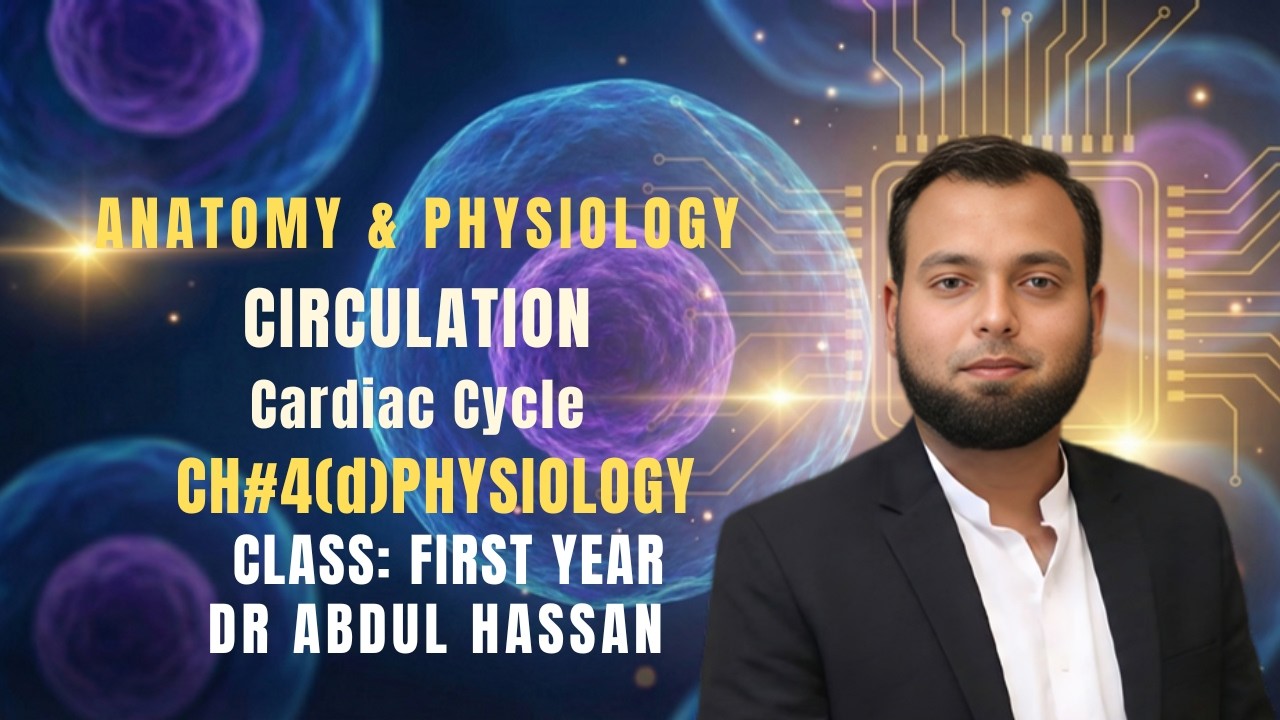
Functional Parts of Circulation in Physiology: Heart, Blood Vessels and Blood Components
Автор: PHARMA TECHNOLOGY
Загружено: 2026-03-02
Просмотров: 19
Описание:
In physiology, circulation is organized into functional parts that work together to maintain continuous blood flow and ensure proper delivery of oxygen and nutrients to tissues.
Heart – The heart is a muscular pumping organ that generates the force required to circulate blood. The right side pumps blood to the lungs (pulmonary circulation), while the left side pumps blood to the rest of the body (systemic circulation).
Blood Vessels – These form a closed transport system:
Arteries carry blood away from the heart under high pressure.
Capillaries are microscopic vessels where exchange of gases, nutrients, and waste products occurs.
Veins return blood back to the heart and act as blood reservoirs.
Blood – Blood is the circulating fluid that transports oxygen, carbon dioxide, nutrients, hormones, and waste products. It consists of plasma, red blood cells, white blood cells, and platelets.
Together, these functional parts maintain homeostasis, regulate blood pressure, support immunity, and ensure survival of body tissues.
#Circulation
#Physiology
#Heart
#BloodVessels
#Blood
#SystemicCirculation
#PulmonaryCirculation
#Homeostasis
#MedicalEducation
#BiologyNotes
Повторяем попытку...

Доступные форматы для скачивания:
Скачать видео
-
Информация по загрузке: