12) King of England: Edmund Ironside, 1016 to November 30, 1016
Автор: Histoire du Monde
Загружено: 2024-12-14
Просмотров: 44
Описание:
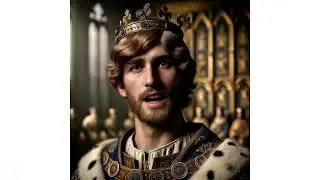
King Edmund Ironside (c. 993 – November 30, 1016) was one of England's most determined rulers, renowned for his fierce resistance against the Danish invasion led by Cnut the Great. His epithet, “Ironside,” symbolizes his unyielding spirit and resilience during one of the most tumultuous periods in England's early medieval history. Though his reign was tragically brief, Edmund’s legacy as a warrior king has endured through the ages.
Early Life
Edmund was the son of King Æthelred II, known as “the Unready,” and Queen Ælfgifu. Born into a time of instability and incessant Viking raids, Edmund grew up witnessing the struggles of his father’s reign. Æthelred’s inability to repel the Danes led to widespread unrest and the erosion of royal authority, sowing the seeds of conflict Edmund would later inherit.
Despite the chaos, Edmund emerged as a bold and capable leader, gaining early recognition for his martial prowess and unflinching resolve. He earned the respect of many English nobles, particularly those disillusioned with Æthelred’s inconsistent rule.
The Succession Crisis
By the early 1010s, England was on the brink of collapse. The Danish king Sweyn Forkbeard launched devastating campaigns, forcing Æthelred into exile in Normandy in 1013. Though Sweyn's sudden death in 1014 temporarily restored Æthelred to power, the Danes regrouped under Sweyn’s son, Cnut, a formidable leader who sought to conquer England.
In April 1016, Æthelred passed away, leaving the throne to Edmund. However, his succession was immediately contested. While the Witan (council of nobles) in London supported Edmund, much of the country, weary from years of conflict, sided with Cnut. Thus began Edmund’s desperate struggle to defend his crown.
Edmund’s Campaigns
Edmund’s reign was defined by a series of battles against Cnut, marked by his unwavering determination to rally resistance despite overwhelming odds.
The Battle of Penselwood: Edmund scored an early victory in the summer of 1016, rallying his forces and driving Cnut’s army back. This initial success bolstered his reputation and earned him the loyalty of many who had initially wavered.
The Battle of Sherston: In a brutal two-day engagement, Edmund and Cnut’s forces fought to a bloody stalemate. Though neither side emerged victorious, Edmund’s ability to hold the line against the Danes further cemented his reputation as a tenacious leader.
The Siege of London: As Cnut turned his attention to the capital, Edmund's leadership proved critical. London’s sturdy defenses and Edmund’s daring sorties frustrated Cnut’s efforts, forcing him to temporarily withdraw.
The Battle of Assandun (October 18, 1016): This decisive confrontation marked the turning point of Edmund’s campaign. Betrayed by Eadric Streona, the Earl of Mercia, Edmund’s forces were overwhelmed. Though he fought valiantly, the defeat shattered his army and left him with little choice but to negotiate with Cnut.
The Division of England
Following the Battle of Assandun, Edmund and Cnut met at a place traditionally identified as Deerhurst. There, they agreed to divide England, with Edmund retaining control of Wessex and Cnut ruling the north and Midlands. The agreement, however, was short-lived. On November 30, 1016, only weeks after the treaty, Edmund died under mysterious circumstances. While some suggest he succumbed to natural causes, others suspect foul play, possibly orchestrated by Cnut or treacherous nobles.
Legacy
Edmund’s death marked the end of his line’s direct claim to the throne. With no strong successor to challenge him, Cnut became the undisputed ruler of England, ushering in a new era of Danish control. Despite this, Edmund’s legacy as a courageous and determined king endures. His efforts to defend England against overwhelming odds have been celebrated in chronicles and inspired generations of English rulers.
Edmund’s reign, though brief, exemplifies the indomitable spirit of a leader who refused to surrender, even in the face of inevitable defeat. His story remains a testament to the resilience of the English people during one of their darkest chapters.
Повторяем попытку...

Доступные форматы для скачивания:
Скачать видео
-
Информация по загрузке:


![[4k, 60 fps, colorized] (1910) London to Manchester air race. First night flight ever.](https://image.4k-video.ru/id-video/hPnFSfATEOE)