Is the Philippines Asia's Banana Republic? Vertical Disintegration After Empire
Автор: Center for Southeast Asian Studies University of Michigan
Загружено: 2022-02-15
Просмотров: 717
Описание:
Presenter(s): Alyssa Paredes, LSA Collegiate Fellow, Department of Anthropology, University of Michigan
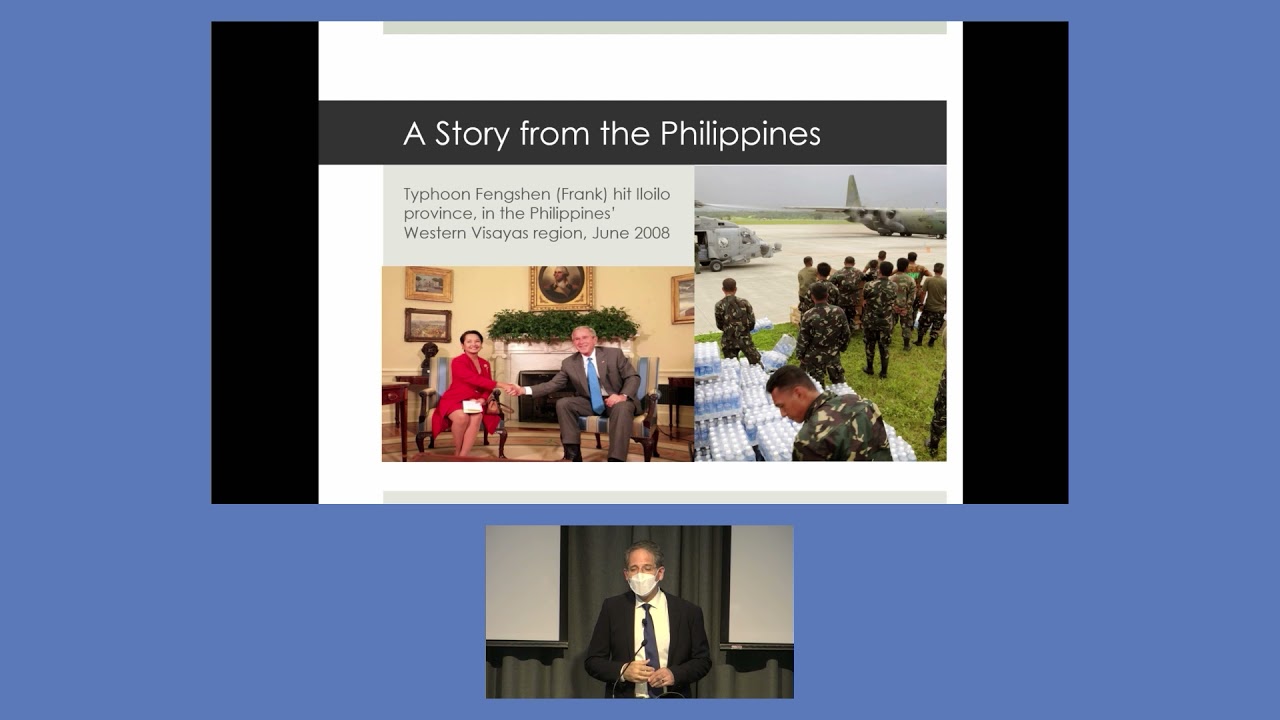
The term “banana republic,” a racializing pejorative used to describe Central American economies, does not usually conjure images of Asia. Yet it has become a common moniker for the state of the Philippines’ political and economic systems. Both journalistic and academic writing have used the label to characterize every administration from Ferdinand Marcos (1965 - 1986) to Rodrigo Duterte (2016 - current), citing U.S. intervention in politics, a state of bloodshed and rebellion, the persistence of kleptocracy in high office, the lack of government accountability, and the rampancy of inequality. These popular references suggest that notions of a “Philippine banana republic” have little to do with the tropical commodity on which the metaphor is based. This paper, in response, turns to the export banana zones of southeastern Mindanao as both the metaphoric root and a material source of the power asymmetries that envelop the agrarian landscape of the Philippine south. It offers historical comparisons between the Southeast Asian nation and Guatemala, Costa Rica, and Honduras to demonstrate how scholarly understandings of the “banana republics” shift in the Asian context. Focusing on (1) new land control schemes devised by the same American fruit conglomerates; (2) foundational ties to import markets in Japan, rather than to the U.S. and Europe; and (3) a history of peri-colonialism in Mindanao, this paper shows the role that the industry has played both in shaping local political and economic conditions, and in differentiating Philippine banana trade from networks in the same commodity elsewhere in the world.
Alyssa Paredes is LSA Collegiate Fellow in the Department of Anthropology between 2020-2022 and will be Assistant Professor of Anthropology beginning 2022. She is a socio-cultural anthropologist with research interests in the human, environmental, and metabolic infrastructures of transnational trade. She uses multi-sited, multi-scalar, and multi-lingual methods to carry out immersive and socially engaged fieldwork in the Philippines and Japan. She holds a Ph.D. in Anthropology with distinction from Yale University.
The Center for Southeast Asian Studies organizes and sponsors a number of events such as lectures, film screening, workshops, symposia, conferences, exhibits, and performances throughout the year. Several of these events are in collaboration with other U-M units, and are often free and open to the public. For more CSEAS events, please visit our 2021/22 Lecture Series page.
Повторяем попытку...

Доступные форматы для скачивания:
Скачать видео
-
Информация по загрузке: