Can You Legally Record the Police? — Your First Amendment Right
Автор: Know Your Rights USA - Just Awareness
Загружено: 2026-05-26
Просмотров: 8
Описание:
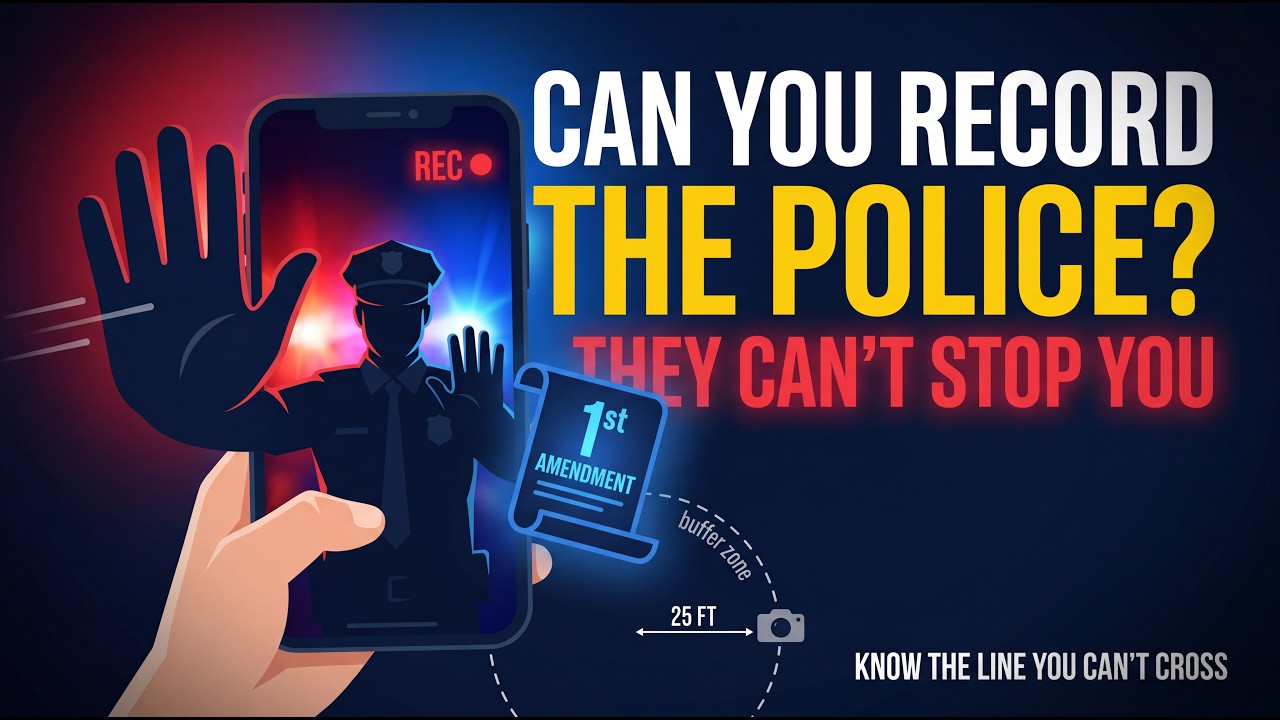
Picture this: you're on a public sidewalk, you pull out your phone to record a routine traffic stop. Suddenly an officer strides toward you, raises a hand, and barks an order to shut the camera off. Your heart pounds. When an armed authority figure issues a direct command, the most basic human instinct is to drop the phone and comply. But here's the reality of that interaction — and the exact protocol that protects you.
⚠️ This is educational analysis of constitutional law — NOT formal attorney-client advice.
📱 THE CORE RIGHT — THE FIRST AMENDMENT:
Gathering information on government employees performing their public duties is protected by the First Amendment. The officer does NOT have the legal authority to order you to stop recording. By keeping the lens focused on the encounter, you're not breaking the law — you're actively performing a protected constitutional function: documenting the state's use of power.
🎥 THE 3-STEP PROTOCOL:
1️⃣ KEEP RECORDING. If the encounter escalates, that raw video file is the only truly objective witness you have.
2️⃣ STATE YOUR PURPOSE OUT LOUD: "I am exercising my First Amendment right to record and I am not interfering."
3️⃣ COMPLY WITH PHYSICAL COMMANDS. If the officer tells you to step back to give them space, take the steps backward — just keep the camera rolling while you do it.
🚧 THE LIMITS — CONSTITUTIONAL RIGHTS HAVE BOUNDARIES:
While you have the right to FILM, you cannot physically INTERFERE with an active crime scene or obstruct an officer doing their job.
STATUTORY BUFFER ZONES: A growing legal trend. Several municipalities now legally require citizens to maintain a specific radius — often 8 to 25 feet — away from law enforcement during an active incident. (This protection generally does not extend to private property.)
NO EXPECTATION OF PRIVACY: When an official works in a public space, they have NO legal expectation of privacy regarding audio or video recording.
Strictly obeying these physical boundaries is crucial — staying out of the officer's way is the PREREQUISITE for holding them accountable in court later.
⚖️ IF THEY ARREST YOU ANYWAY — 42 U.S. CODE § 1983:
This is the federal statute used to sue state and local officials for civil rights violations. It explicitly defines state and municipal officials — including police officers — as "persons" liable in federal court.
THE TRIGGER: You must prove the official was "acting under color of state law" — meaning they were using the authority given to them by the government (flashing a badge, wearing a uniform) even while abusing that power. Section 1983 weaponizes the officer's own abuse of authority against them.
🛡️ THE BIGGEST HURDLE — QUALIFIED IMMUNITY:
This doctrine shields government officials from being sued for damages. There's a strict, mandatory TWO-STEP test to pierce it:
Step 1: Did the officer actually violate a constitutional right?
Step 2 (where cases usually fall apart): Was that right "clearly established" at the time?
Qualified immunity protects officers UNLESS you prove the violated right was already cemented by previous court rulings.
✅ WHY YOU CAN WIN THIS ONE:
Over two decades, cases of citizens recording police steadily worked through the appeals process. Circuit by circuit, federal judges have CONSISTENTLY ruled the First Amendment protects recording law enforcement in public — making this right "clearly established" nationwide. Because these precedents exist, an officer cannot walk into court claiming they didn't know recording was protected. Once a judge recognizes that precedent, the shield is PIERCED — and the officer can be held personally and financially liable.
💡 And civil court uses a LOWER burden of proof than criminal court: you only need to show liability by a "preponderance of the evidence" — meaning it's more likely than not that the violation occurred.
🔑 REMEMBER: Know your spatial boundaries, state your legal purpose out loud, and always keep the camera lens focused directly on the encounter.
TIMESTAMPS
00:00 The officer says "shut it off"
00:16 The instinct to comply
00:26 Your First Amendment right explained
00:38 Step 1 — Keep recording
00:54 Step 2 — State your purpose out loud
01:04 Step 3 — Comply with physical commands
01:26 The limits: you can't interfere
01:43 Statutory buffer zones (8-25 feet)
02:03 No expectation of privacy in public
02:11 42 U.S. Code § 1983 explained
02:43 "Acting under color of state law"
📌 SUBSCRIBE: / @protectyourrightstv
🎬 MORE constitutional breakdowns every week — subscribe so you're prepared before you need it.
⚠️ DISCLAIMER: General constitutional education, NOT legal advice. Marcus is a rights educator, not an attorney. Buffer-zone laws and procedures vary by state and city. Consult a licensed attorney for your specific situation.
#KnowYourRights #RecordingThePolice #FirstAmendment #FilmThePolice #ConstitutionalRights
Повторяем попытку...
Доступные форматы для скачивания:
Скачать видео
-
Информация по загрузке: