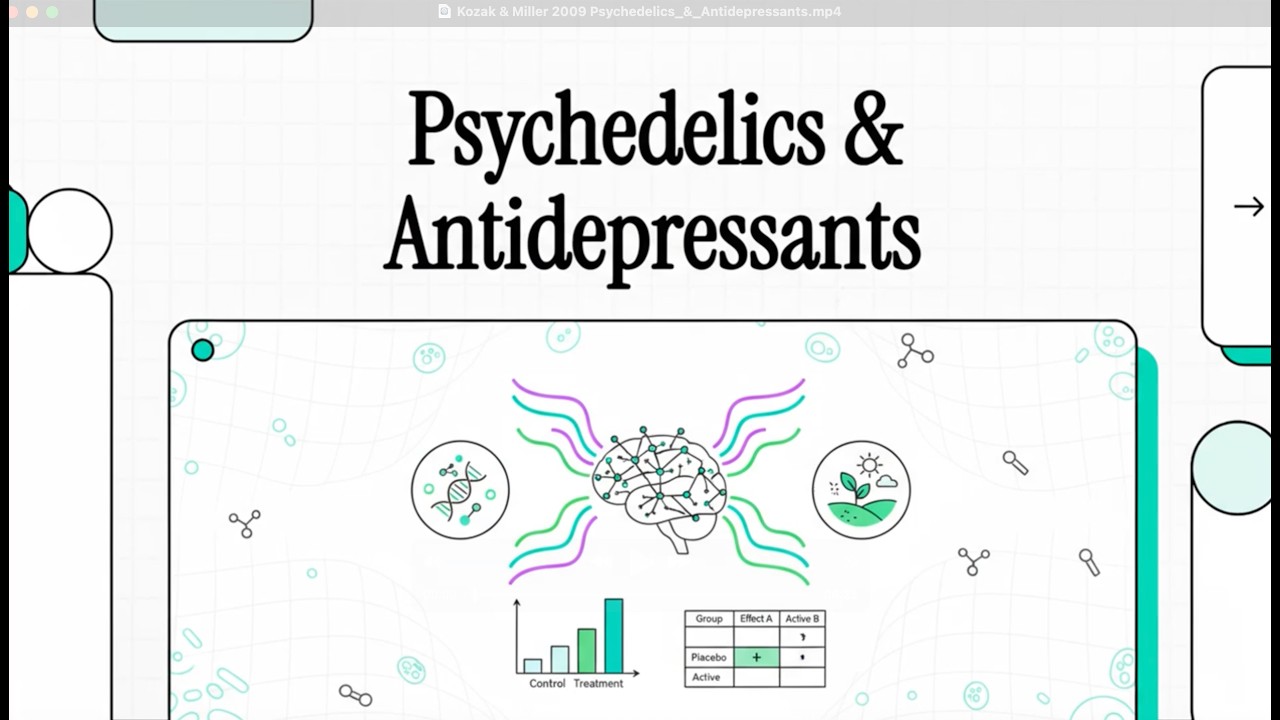
Psychedelics & Amygdala Function in Psychedelic Assisted Therapy (Moujaes et al., 2025)
Автор: NourishED Research Foundation
Загружено: 2026-02-25
Просмотров: 5
Описание:
I. Disclaimer
This is AI-generated content reviewed by a PhD researcher with a
PhD in Biomedical Science & neuroscience (Brenna Bray, PhD).
II. The Role of the Amygdala in Psychedelic Therapy
Psychedelics alter how the brain processes emotion.
Early studies focused on reduced amygdala reactivity.
New research reveals a much more complex mechanism.
Psychedelics help recalibrate limbic-cortical dynamics.
III. Healthy Brains and Depressed Brains
Healthy users show reduced amygdala reactivity at first.
This effect can last up to one week after dosing.
In depressed patients, the effect is very different.
Psilocybin increases reactivity to fearful faces.
This happens the morning after the dosing session.
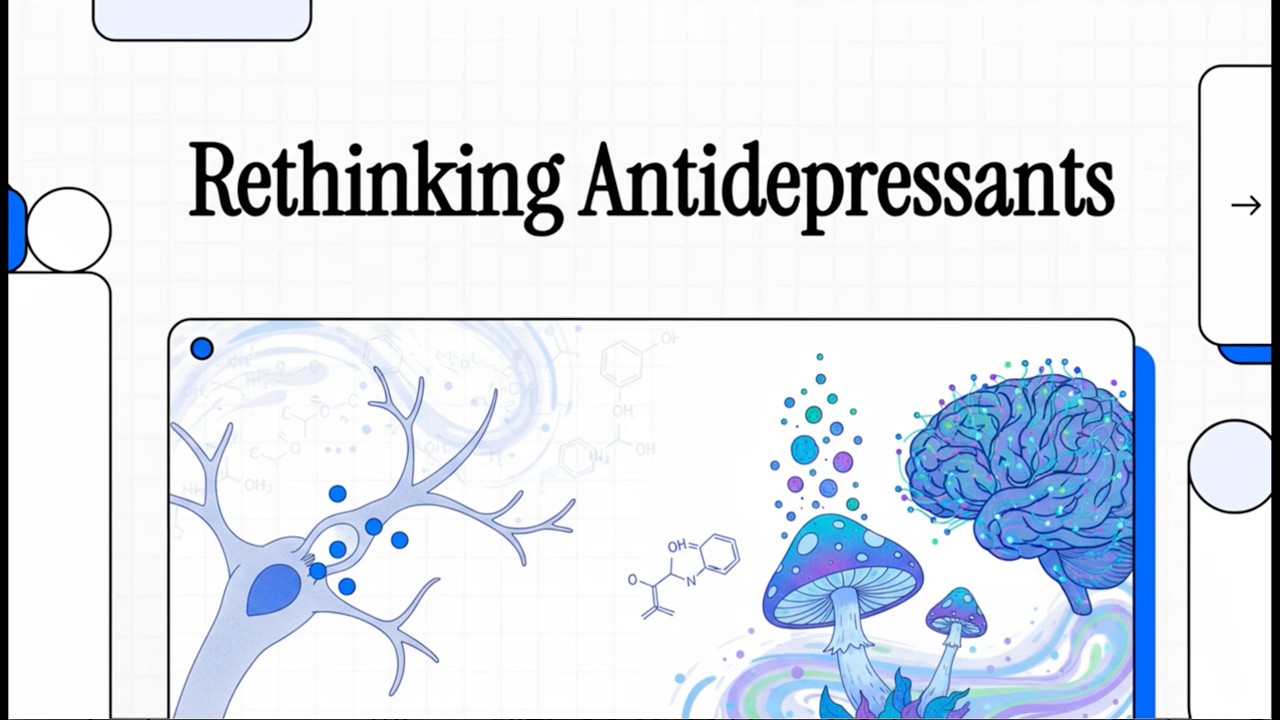
IV. Psilocybin and Traditional Antidepressants
SSRIs are common treatments for depression and anxiety.
Escitalopram reduces amygdala activation over six weeks.
This aligns with the affective blunting typical of SSRIs.
Psilocybin does not show this reduction at three weeks.
Instead, it promotes greater emotional intensity.
V. Emotional Re-engagement and Affective Blunting
Psychedelics do not simply blunt negative emotions.
They allow patients to confront emotional material.
Patients can integrate suppressed emotional experiences.
This process is called emotional re-engagement.
It helps to normalize negative affective biases.
VI. Additional Resource Support
See NourishED RFI's NotebookLM Resource Support Page.
notebooklm.google.com/notebook/09ed0205-cdd0-4434-b699-2ee946049f76
VII. Source
Moujaes, F., et al. (2025). Rethinking the role of amygdala function
in psychedelic-assisted therapy. Trends in Cognitive Sciences,
29(11), 1009.
#PsychedelicTherapy #MentalHealth #Neuroscience #Depression
#Psilocybin #SSRIs #CognitiveScience #BrainResearch #Amygdala
Повторяем попытку...
Доступные форматы для скачивания:
Скачать видео
-
Информация по загрузке: