NCCMT - URE - Relative Risk it’s easy to calculate and interpret
Автор: NCCMT | CCNMO
Загружено: 2016-07-04
Просмотров: 77160
Описание:
Video created: May 8, 2013
Knowing whether or not an intervention works is important when deciding which program or policy to implement. When looking at research evidence, relative risk is a way to determine the relationship between a risk factor and an outcome or the likelihood that an intervention will have an impact on a population.
This video uses two hypothetical but realistic public health examples to illustrate how to calculate and interpret relative risks.
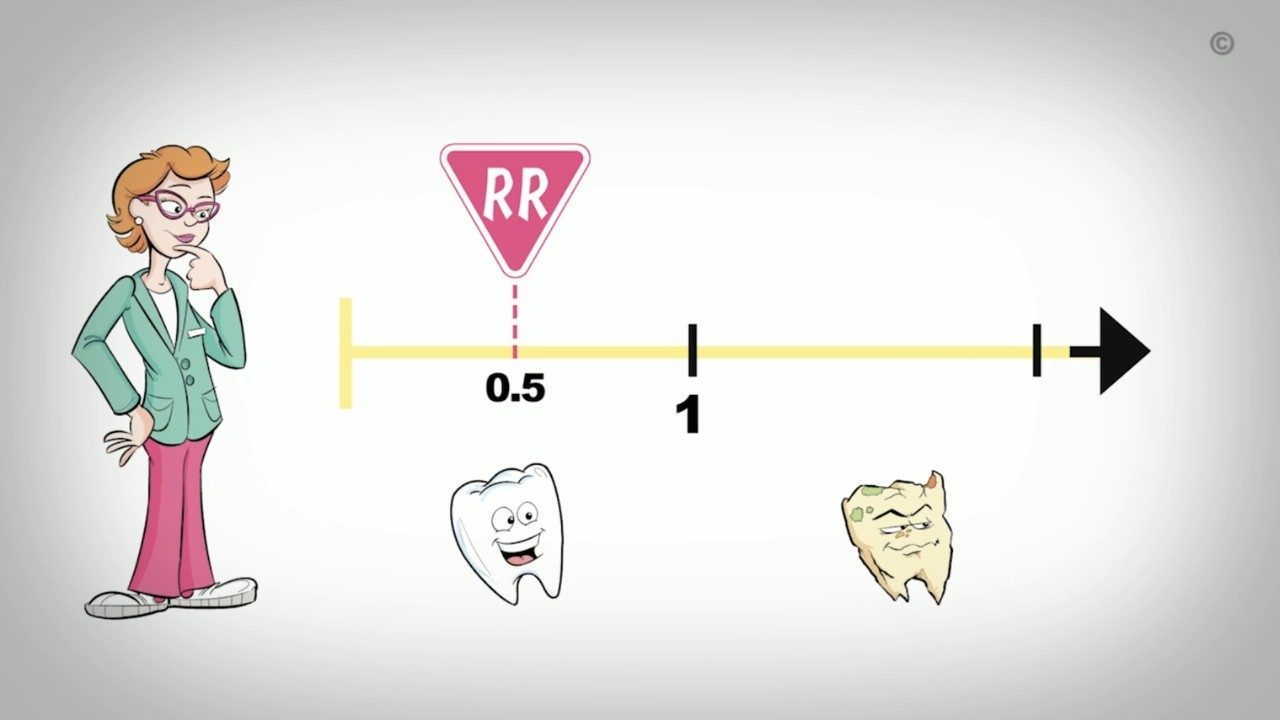
A relative risk can be interpreted in relation to 1. In one example, we want to know if children exposed to oral hygiene education will have a lower risk of dental caries. In this case, a negative outcome (or fewer dental caries) is desirable. We calculate that the relative risk was less than 1, indicating that the oral hygiene education is effective, because the outcome (dental caries) was less likely among children exposed to the intervention.
In another example, we look at a community-based intervention to increase the risk (likelihood) of adolescents’ physical activity. In this case, a positive outcome (or more physical activity) is desirable. We calculate that the relative risk was greater than 1, indicating that the intervention was effective because the outcome (physical activity in adolescents exposed to the intervention) was more likely.
In this video, we learn how to determine if a relationship exists between risk factors and outcomes, and how strong that relationship is. Calculating the relative risk can provide important evidence to help you assess the effectiveness of interventions.
It’s possible to calculate an Odds Ratio or Relative Risk from the same data. However, these statistics are used in different circumstances. “Calculation of risk requires the use of “people at risk” as the denominator. In retrospective (case-control) studies, where the total number of exposed people is not available, RR cannot be calculated and OR is used as a measure of the strength of association between exposure and outcome. By contrast, in prospective studies (cohort studies), where the number at risk (number exposed) is available, either RR or OR can be calculated.”
Ranganathan, P., Aggarwal, R., & Pramesh, C. S. (2015). Common pitfalls in statistical analysis: Odds versus risk. Perspectives in clinical research, 6(4), 222.
The National Collaborating Centre for Methods and Tools is funded by the Public Health Agency of Canada and affiliated with McMaster University. The views expressed herein do not necessarily represent the views of the Public Health Agency of Canada.
NCCMT is one of six National Collaborating Centres (NCCs) for Public Health. The Centres promote and improve the use of scientific research and other knowledge to strengthen public health practices and policies in Canada.
Повторяем попытку...
Доступные форматы для скачивания:
Скачать видео
-
Информация по загрузке: