Building a Professional Cable Schedule in Revit
Автор: Alex
Загружено: 2026-02-15
Просмотров: 41
Описание:
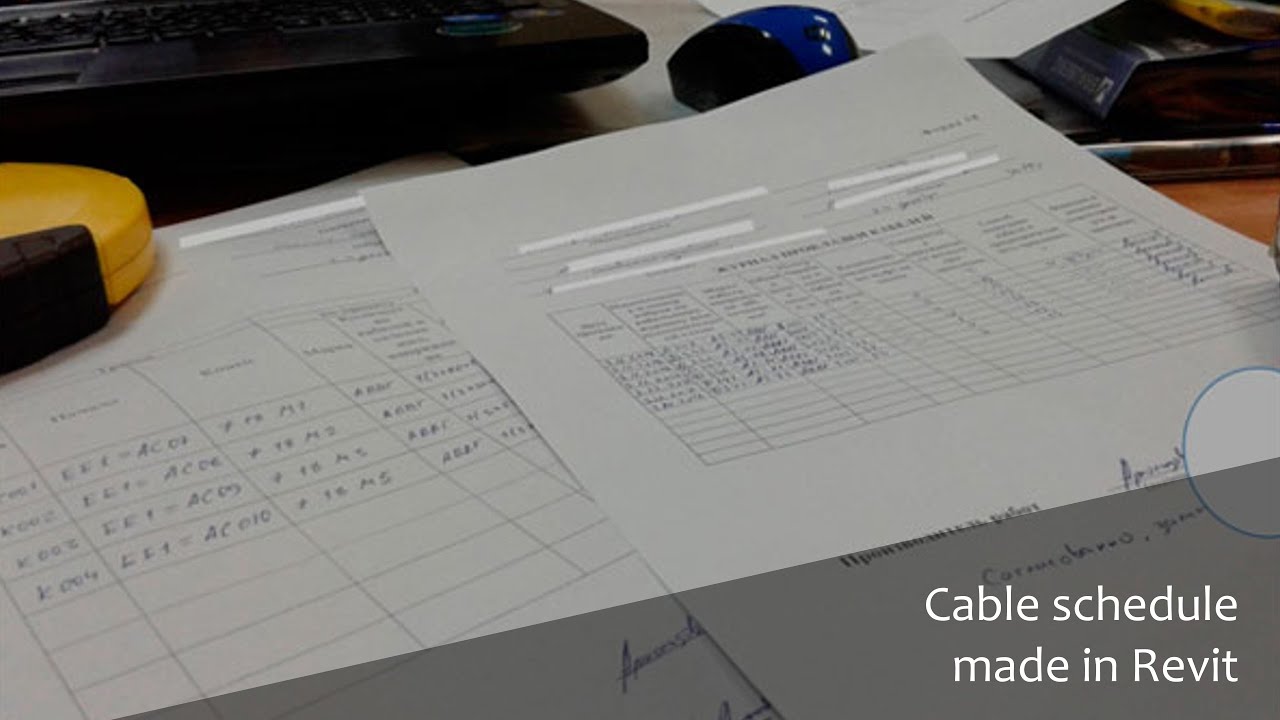
In this hands-on tutorial, I build a professional cable schedule for a 4-zone multiroom audio system in Revit.
Unlike generic tutorials, I show the real workflow: from creating custom speaker enclosure families with proper electrical connectors, to structuring a shared parameters file that actually makes sense for electrical projects, to automating room data extraction with custom Python scripts in Dynamo.
⏱️ TIMESTAMPS (real timestamps from the video):
00:00 — Introduction: Why I'm adding my approach to cable schedules
01:02 — Project scope: Simple 4-zone background music system
01:47 — Creating electrical circuits: Connecting speakers to amplifiers
02:01 — First problem: Identical amplifiers showing only family name
02:30 — Fixing amplifier naming: Panel names "Amp A" "Amp B" and "Amp С"
03:44 — Loading a proper amplifier family into the project
06:01 — Why I prefer custom enclosure families over multiple connectors
06:44 — Loading my universal speaker enclosure family
07:47 — Placing the enclosure: Height adjustment, rotation, visibility settings
09:02 — Cable schedule setup: Starting from a pre-configured template
09:41 — The real issue: ADSK default shared parameters aren't enough
10:56 — Building my own structured shared parameters file (with comments for Notepad editing)
13:08 — Adding custom parameters: cable takeoff start/end, room names, enclosure type
19:02 — Configuring the schedule: Replacing default parameters with custom ones
21:17 — Fixing formulas after parameter deletion (Revit warnings)
27:28 — Setting reserve coefficient (1.3) for automatic length calculation
28:34 — Formula setup: Total length = (actual length × reserve) + takeoff start + takeoff end
30:51 — Unit formatting: Millimeters → meters for readability
32:10 — Manual room naming example: "Hallway", room number "1"
33:55 — Batch parameter filling for multiple devices
35:18 — Expanding parameter scope: Making "Room Name" available for equipment categories
37:00 — Critical fix: Adjusting room height in linked file (2.438m → 2.900m) for Dynamo scripts to work
38:50 — Automation Part 1: Custom Python node in Dynamo to extract room data into families
39:33 — Why I switched from Clockwork/Archi-lab to custom Python (Revit update breaks)
41:14 — AI-assisted Python coding: How I built a 130-line working node in minutes
43:16 — Automation Part 2: Propagating family parameters to electrical circuits
44:51 — Visibility filter trick: Hiding amplifiers (2.500m cutoff) to avoid overwriting data
46:56 — Fixing connector classification: "Other" vs "Audio" — loading updated family
48:39 — Device numbering with ModPlus plugin
49:53 — Custom marking format: SPK1.1, SPK1.2 instead of default "1, 2, 3..."
51:54 — Propagating numbering to circuits via Dynamo script
53:10 — Final schedule result: Fully populated with room names, takeoffs
🔧 KEY TAKEAWAYS:
• Structured shared parameters file beats ADSK default chaos
• Real-world formula: Total cable length = (actual × reserve) + takeoffs
• Python nodes survive Revit updates better than Clockwork/Archi-lab dependencies
• Visibility filters prevent script errors when processing mixed equipment types
• Pricing fields enable real-time budget tracking during design phase
💡 WHY THIS MATTERS FOR PREMIUM PROJECTS:
In high-end residential work, a poorly documented cable schedule means:
• Installers improvising on site ("we'll figure it out")
• Budget overruns from inaccurate material estimates
• Client frustration when "hidden" equipment isn't properly documented
My workflow eliminates these risks by embedding all necessary data directly into the model — so the cable schedule isn't just a list, it's a production-ready document that electricians and installers actually use.
🔧 TOOLS USED:
• Revit (native electrical circuits & schedules)
• Custom shared parameters file
• Dynamo + custom Python nodes (room data extraction)
• ModPlus plugin (device numbering)
⚠️ REAL PROBLEMS SHOWN (no sugarcoating):
• Connector classification errors ("Other" instead of "Audio")
• Amplifier overwriting device data (solved with height adjustment)
This isn't a polished "perfect workflow" demo — it's an honest look at how I solve real documentation challenges on projects where details aren't optional.
#Revit #BIM #CableSchedule #SmartHome #ElectricalDesign #Dynamo #Python #MEP #MultiroomAudio #HomeAutomation
Повторяем попытку...
Доступные форматы для скачивания:
Скачать видео
-
Информация по загрузке:






![[#99] Home Assistant – первое знакомство, установка и проблемы](https://imager.clipsaver.ru/zLC8GuOkHl0/max.jpg)