VRF Systems Explained: Efficiency Wins and Hidden Costs with HAP Modeling
Автор: Energy & Heat
Загружено: 2025-09-06
Просмотров: 110
Описание:
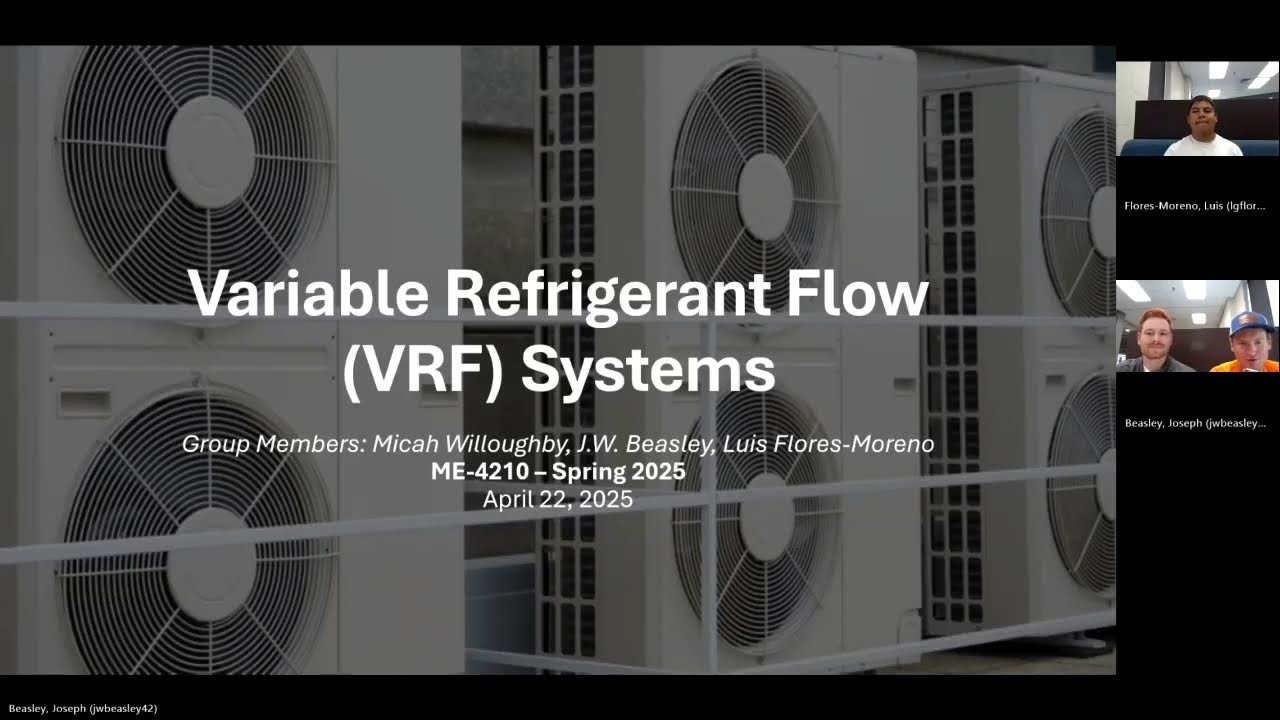
This video explores the performance of Variable Refrigerant Flow (VRF) systems compared to traditional Variable Air Volume (VAV) setups using HAP (Hourly Analysis Program) modeling. The team tested system performance across three building types—an office, a hotel, and a factory—to determine when VRF delivers the best results.
The office case showed strong advantages for VRF, including 12% lower operating costs, reduced electricity use, and lower emissions. In contrast, the hotel and factory models revealed limitations—VRF systems consumed more energy, carried higher heating costs, and produced significantly more CO₂ emissions. These findings highlight that VRF works best in multi-zone, medium-sized buildings, but is less suited for large-scale applications.
This project, completed by Micah Willoughby, J.W. Beasley, and Luis Flores-Moreno, demonstrates how building type and load profile play a crucial role in deciding whether VRF systems are the most cost-effective and sustainable HVAC solution.
Created for the HVAC Design course by Dr. Ethan Languri, Professor of Mechanical Engineering at Tennessee Tech University. April 2025. #HVAC #Chillers #EnergyEfficiency #MechanicalEngineering #BuildingRetrofit #Sustainability #TennesseeTech
Повторяем попытку...
Доступные форматы для скачивания:
Скачать видео
-
Информация по загрузке: