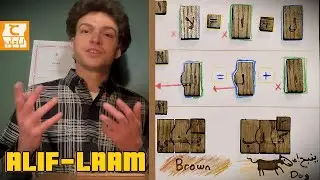
The "Magic" of Arabic Past Tense: A Tactile Hack (Al-Mādī/الفعل الماضي)
Загружено: 2025-12-22
Просмотров: 214
Описание:
In this lesson, we break down the mechanics of the Arabic Past Tense, Al-Māḍī (الماضي / الفعل الماضي), using the Hurūf Laʿb tactile system.
Instead of memorizing conjugation tables (جداول التصريف) by rote, we physically explore the Root & Pattern system (الجذر والوزن) to see how Arabic meaning is built through morphology, Ṣarf (الصرف / علم الصرف), with supportive grammar concepts, Naḥw (النحو).
Lesson Overview (نظرة عامة)
We begin with the archetypal form Faʿala (فَعَلَ) — a basic triliteral verb, fiʿl thulāthī mujarrad (فعل ثلاثي مجرّد) — meaning “he did” (هو فعلَ). Treat the root letters (حروف الجذر / حروف الأصل) as “hardware,” and treat the endings as attached pronouns/suffixes (ضمائر متصلة / لواحق) so you can change the subject (الفاعل) with pronouns (الضمائر: أنا / أنتَ / نحن / هم) without losing the core meaning.
This lesson uses a 50/50 Comprehensible Input approach (مدخل مفهوم) (English/Arabic), suitable for upper-beginner to lower-intermediate learners (مبتدئ عالي → متوسط منخفض).
Key Concepts Covered (مفاهيم أساسية)
• Baseline Form (الصيغة الأساسية): Faʿala (فَعَلَ) as the default 3rd person masculine singular past tense (الغائب المفرد المذكر) = “هو فعلَ”.
• Subject Endings (لواحق الضمائر / ضمائر متصلة): how to attach endings for “I / you / we / they” = (أنا / أنتَ / نحن / هم).
• Orthographic & Vowel Rules (قواعد الإملاء + الحركات): visualizing Sukūn (السكون), Tashkīl/ḥarakāt (التشكيل: فتحة/ضمة/كسرة), and the “separating alif” al-alif al-fāriqa (الألف الفارقة) in plural forms like “faʿalū” (فعلوا).
• Application (تطبيق): moving from the abstract Faʿala (فَعَلَ) to a concrete verb like Sabaḥa (سَبَحَ) “he swam” (هو سبحَ).
This lesson deconstructs Arabic Past Tense conjugation, Taṣrīf al-Māḍī (تصريف الماضي), using our tactile Arabic puzzle system. We break down a triliteral root (جذر ثلاثي) and show exactly where to place endings to form correct conjugations (التصريف), making Arabic verb morphology (علم الصرف) visual and easy to remember.
Timestamps (الطوابع الزمنية)
• 0:00 — Introduction to Al-Māḍī (الماضي / الفعل الماضي)
• 1:02 — The Archetype: Faʿala (فَعَلَ) = “هو فعلَ”
• 2:21 — First Person Singular: “I did” = Ana faʿaltu (أنا فعلتُ)
• 3:35 — First Person Plural: “We did” = Naḥnu faʿalnā (نحن فعلنا)
• 4:28 — Second Person Plural: “You all did” = Antum faʿaltum (أنتم فعلتم) + note on missing pieces
• 4:58 — Third Person Plural: “They did” = Hum faʿalū (هم فعلوا) + al-alif al-fāriqa (الألف الفارقة)
• 6:17 — Applied Practice: Sabaḥa (سَبَحَ) = “هو سبحَ”
• 8:11 — Learner Challenge: conjugate new roots (جذور)
About the System (عن النظام)
Hurūf Laʿb is a patent-pending educational tool that encodes the Arabic script into a modular puzzle system. Learners physically manipulate letters (الحروف), diacritics/vowel marks (الحركات / التشكيل), and even syntax pieces (قطع النحو) to “repair” language (إصلاح لغوي) and construct meaning—turning abstract grammar rules (قواعد النحو والصرف) into tangible logic.
Today’s Challenge (تحدّي اليوم)
We posted a list of three-letter roots (جذور ثلاثية) in the comments. Choose one root (جذر) and conjugate it in the past tense (الماضي) using the rules from the video: Ana / Anta / Naḥnu / Hum (أنا / أنتَ / نحن / هم).
www.huruflab.org
Keywords (Arabic): Al-Māḍī (الماضي) | al-fiʿl al-māḍī (الفعل الماضي) | taṣrīf (تصريف) | ṣarf (صرف / علم الصرف) | al-jidhr wa-l-wazn (الجذر والوزن) | al-ḍamāʾir al-muttaṣila (الضمائر المتصلة) | al-alif al-fāriqa (الألف الفارقة) | as-sukūn (السكون) | at-tashkīl (التشكيل)
Hashtags
#LearnArabic #ArabicGrammar #AlMadi #PastTense #Tasrif #Sarf #Nahw #ArabicMorphology #ArabicVerbs #ArabicScript #TactileLearning #HurufLab #الماضي #الفعل_الماضي #تصريف #صرف #النحو #علم_الصرف #الجذر #الوزن #الضمائر_المتصلة #السكون #التشكيل #الألف_الفارقة
Повторяем попытку...

Доступные форматы для скачивания:
Скачать видео
-
Информация по загрузке: